
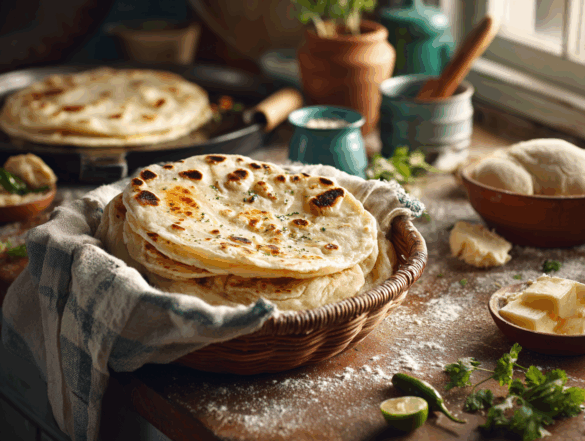
These are straightforward flour tortillas made with five pantry ingredients and ready in 30 minutes. They stay soft and pliable, which makes them genuinely useful for wrapping, folding, or just eating warm with butter. If you’ve been buying packaged tortillas out of habit, this recipe is fast enough to change that on a regular weeknight.
Before you start
Two things determine whether these tortillas turn out soft or stiff. First, use warm water — not hot, not cold. Warm water hydrates the flour evenly and keeps the dough from fighting you when you roll it. Second, don’t skip the 10-minute rest after mixing. Gluten tightens up during kneading, and if you go straight to rolling, the dough springs back and you end up with thick, uneven rounds. Ten minutes on the counter, covered, is enough for it to relax and roll out thin. Your pan also needs to be fully preheated before the first tortilla goes in — a lukewarm surface produces pale, rubbery results instead of the dark spots that signal the dough is cooking through quickly.
Shopping notes
- Fat: Lard gives the most tender result and is the traditional choice for Sonoran-style tortillas. Leaf lard from a butcher is ideal, but standard lard from the grocery store works fine. Solid vegetable shortening is a reliable substitute that behaves similarly. Liquid vegetable oil works but produces a slightly less pliable tortilla — skip the olive oil here, the flavor is too assertive.
- Flour: All-purpose flour is correct. Bread flour makes the dough too tough; cake flour makes it too fragile. No need to buy anything special.
- Baking powder: Make sure yours is fresh — if it’s been open for more than six months, test it before using. Flat baking powder means flat tortillas with no air pockets.
Troubleshooting
- Tortillas turn out stiff after cooling: This usually means they cooked too slowly on a pan that wasn’t hot enough, or they were left uncovered after cooking. Stack them immediately as they come off the heat and wrap in a clean kitchen towel — the trapped steam keeps them pliable.
- Dough tears when rolling: The dough hasn’t rested long enough, or it dried out during the rest. Cover it completely with plastic wrap or an inverted bowl, not just a loose towel. If it still tears, give it another five minutes.
- Tortillas puff up into a balloon and then deflate flat and dense: The pan is too hot. Aim for medium-high rather than maximum heat. A tortilla should puff gently in spots, not inflate all at once.
- Uneven thickness with thick edges: Start rolling from the center outward and rotate the dough a quarter turn after every two passes. Rolling back and forth in one direction without rotating is the most common cause of this.
- Tortillas stick to the pan: A dry cast iron or stainless pan should need no oil if it’s properly preheated. If you’re using a nonstick pan and still getting sticking, the pan isn’t hot enough yet.
Storage and reheating
Cooled tortillas keep well stacked in a zip-lock bag or airtight container in the fridge for up to five days — this is the main reason to make a full batch even if you only need a few tonight. For longer storage, freeze them in stacks of four to six with a small square of parchment between each one; they’ll keep for up to three months and separate easily straight from frozen. To reheat from the fridge, 20 to 30 seconds in a dry skillet over medium heat is better than the microwave, which can make them gummy. From frozen, let them thaw at room temperature for 10 minutes first, then use the skillet. The microwave works in a pinch — wrap in a damp paper towel and heat in 15-second bursts — but the skillet gives you a noticeably better texture, so use the microwave only when you’re truly short on time.
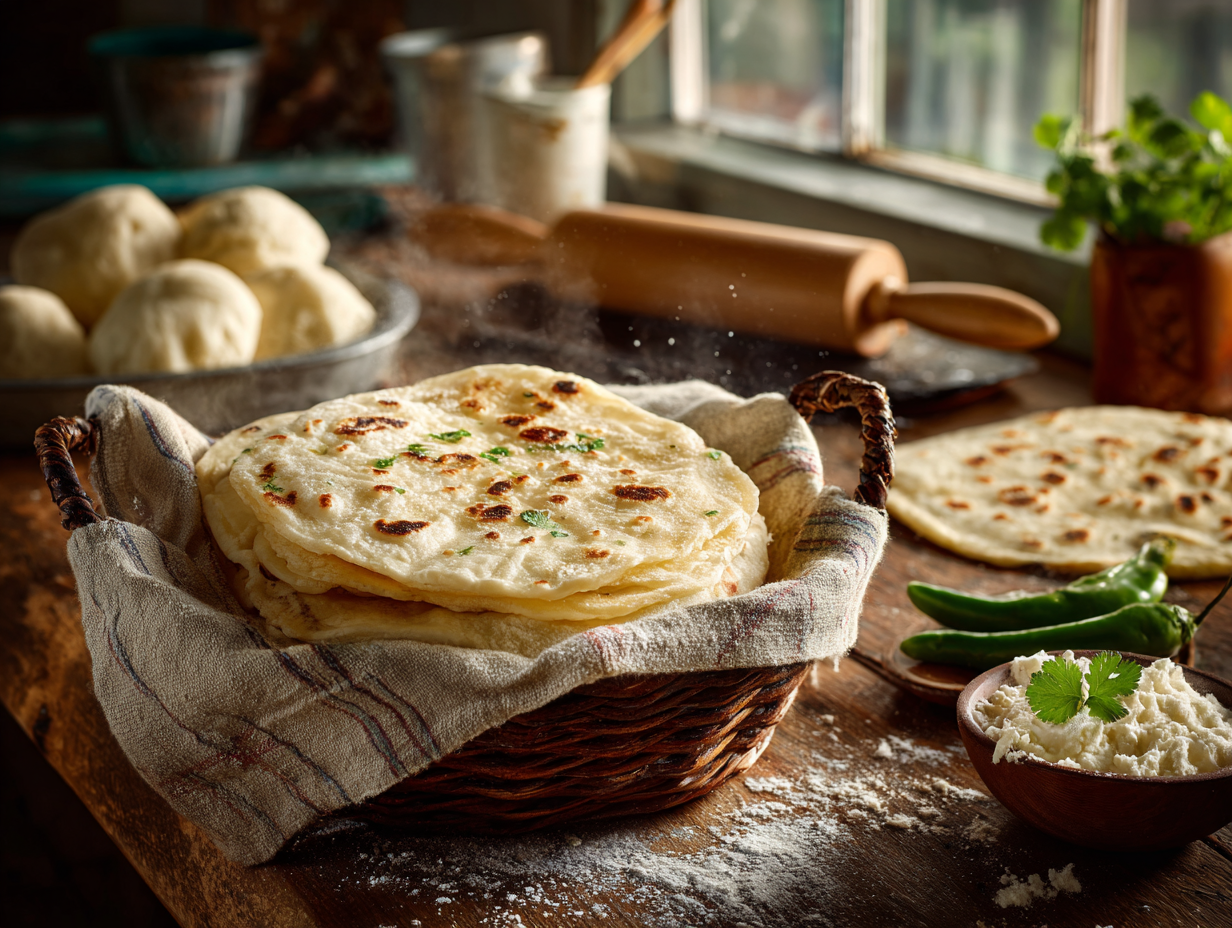
30-Minute Sonoran-Style Flour Tortillas

Equipment
- Large mixing bowl
- Measuring cups and spoons
- Fork or whisk
- Bench scraper or knife
- Rolling pin or tortilla press
- Cast-iron skillet or griddle
- Tongs
- Clean kitchen towel (for resting and keeping tortillas warm)
- Plastic wrap or plate (to cover dough)
- Infrared or instant-read thermometer (optional)
Ingredients
- 2 cups all-purpose flour scoop-and-level; choose a fresh, unbleached flour for best flavor
- 1 tsp fine sea salt fine grain disperses evenly
- 1 tsp baking powder traditional in many Northern Mexican tortillas for gentle lift
- 3 tbsp lard leaf lard for best flavor; substitute neutral oil or vegetable shortening
- ¾ cup warm water about 110°F/43°C; adjust by a tablespoon as needed for a soft dough
- ¼ cup all-purpose flour, for dusting use sparingly to avoid toughness
- 1 tbsp unsalted butter, melted (optional) for brushing warm tortillas before serving
Instructions
- Combine Dry Ingredients: In a large bowl, whisk together 2 cups all-purpose flour, 1 tsp fine sea salt, and 1 tsp baking powder until evenly combined and aerated (about 15–30 seconds).
- Cut in the Fat: Add 3 tbsp lard. Using fingertips, rub the fat into the flour until the mixture looks like fine, damp sand with a few pea-sized bits. This coats the flour and leads to tender tortillas. If using oil, drizzle it in and stir with a fork until shaggy.
- Add Warm Water and Bring to a Dough: Pour in 3/4 cup warm water (about 110°F/43°C). Stir with a fork until a shaggy mass forms, then knead in the bowl or on a lightly floured surface for 1–2 minutes until smooth and supple. The dough should feel soft but not sticky; add a teaspoon of water or dust of flour only if needed.
- Rest the Dough (10 minutes): Cover the bowl with plastic wrap or invert a plate over it and let the dough rest at room temperature for 10 minutes. This quick rest relaxes gluten, making rolling easier and improving puff.
- Portion: Turn the dough out and divide into 10 equal pieces (about golf-ball size). Roll each into a taut ball by cupping your hand and rotating on the counter. Keep covered with a towel so they don’t dry out.
- Preheat the Cooking Surface: Heat a dry cast-iron skillet or griddle over medium-high until a drop of water dances and evaporates on contact, about 2–3 minutes. Surface temp should be roughly 400–450°F (205–232°C). If you have an infrared thermometer, use it to dial in the heat.
- Roll the Tortillas: Working with one ball at a time, lightly flour the counter and rolling pin. Press the ball into a small disc, then roll from center outward, rotating a quarter turn between passes, to a thin 7–8 inch circle. Use only enough flour to prevent sticking; excess flour can toughen the tortillas.Tip: If using a tortilla press, line both sides with parchment or a cut-open zip-top bag, then press gently and finish with a light roll for even thinness.
- Cook (about 60–90 seconds each): Lay the tortilla on the hot skillet. Within 20–30 seconds, small bubbles should appear; cook until the underside has pale golden spots with a few deeper freckles (30–45 seconds). Flip and cook another 30–45 seconds, pressing gently with a spatula or towel to encourage puff. Adjust heat so they color without drying or burning.
- Keep Warm: Stack cooked tortillas in a towel-lined bowl or tortilla warmer, covering after each addition. Optional: brush lightly with melted butter for a glossy finish. Let the stack rest 1–2 minutes before serving to soften further.
Notes
Lisa’s Tips:
- Fat Choices: Lard yields classic flavor and pliability. For vegetarian, use 3 tbsp neutral oil or vegetable shortening; for buttery notes, use 2 tbsp oil + 1 tbsp butter.
- Extra Tenderness: Rest dough longer (20–30 minutes) if you have time—softer, puffier results.
- Whole-Wheat Variation: Swap 1/2 cup flour with whole wheat and add 1–2 tsp extra water as needed.
- Rolling Insurance: If edges crack, your dough is a touch dry—dab fingers in water and knead briefly.
- Make-Ahead: Dough balls keep, covered, in the fridge up to 24 hours. Return to room temp (15–20 minutes) before rolling.
- Storage: Cooled tortillas keep 2 days at room temp in a sealed bag, 1 week chilled, 2 months frozen. Reheat on a hot dry skillet 10–15 seconds per side.
- Yield: About 10 tortillas (7–8 inches), serving ~4 people. Keep the pan hot enough to spot and puff quickly without drying out; if they stiffen, your heat is too low or your tortillas too thick. For ultra-thin tortillas, let dough rest 20 minutes and use a lighter touch on the rolling pin with frequent quarter turns.
Serving Suggestions:
- Taco Night: Fill with citrus-marinated chicken, charred peppers, and a squeeze of lime. The tortillas should be pliable with light freckling—no brittle edges.
- Simple Luxury: Serve warm, brushed with butter and sprinkled with flaky salt and chopped cilantro.
- Quesadillas: Melt Oaxaca or Monterey Jack with roasted poblano; serve with salsa verde and a crisp lager or agua fresca.
- Plating: Stack in a linen-lined basket to trap steam; the aroma should be warm and wheaty with a hint of toast.
Culinary Context:
Flour tortillas trace strong roots to Northern Mexico and the Sonoran desert, where wheat cultivation shaped regional breads. My first lesson came from a Sonoran cook who emphasized heat and restraint—hot griddle, minimal flour, gentle pressure. Those principles create the signature puff and tender chew you’ll taste here.Optional Advanced Instructions:
- Parallel Prep: While the dough rests, preheat your skillet and set up a rolling station to save time.
- Par-Cook for Parties: Cook each tortilla 20 seconds per side, cool, stack, and finish 20–30 seconds per side before serving.
- Press vs. Roll: A press speeds shaping but often needs a quick finishing roll for ideal thinness.
Timing:
- Prep Time: 15 minutes (5 minutes mixing/kneading + 10 minutes rest).
- Cook Time: 15 minutes total (about 60–90 seconds per tortilla; cook as you roll to stay efficient).
Nutrition
Your questions, answered
Can I make the dough ahead of time?
Yes — the dough keeps in the fridge for up to 24 hours, wrapped tightly in plastic. Let it sit at room temperature for 15 minutes before rolling, otherwise it will be stiff and hard to work with.
Do I need a cast iron skillet, or will any pan work?
Any pan that holds steady high heat will work, including stainless steel or a heavy nonstick. Cast iron is preferred because it holds heat evenly and doesn’t drop in temperature when the cold dough hits it, but it’s not required.
My tortillas aren’t getting those dark spots. What’s wrong?
The pan isn’t hot enough. Let it preheat for at least two full minutes over medium-high before you cook the first tortilla. If you’re three or four tortillas in and still not seeing spots, turn the heat up slightly.
Can I use this recipe to make burrito-size tortillas?
Yes, just divide the dough into fewer, larger balls and roll them thinner to compensate for the larger surface area. Larger tortillas cook the same way but may need an extra 15 to 20 seconds per side.
Is there a gluten-free version?
A 1-to-1 gluten-free flour blend can work, but the results are noticeably different — less pliable and more prone to cracking. For wrapping and folding, standard flour tortillas made this way outperform any gluten-free version tested with this technique.
How many tortillas does one batch make, and is it worth doubling?
A standard batch makes eight to ten tortillas depending on how you size them. Doubling is absolutely worth it — the extra time is minimal since you’re already at the stove, and refrigerated or frozen tortillas reheat well all week.
Try these next
- Quick Chicken Enchiladas Rojas
- Sizzling Skillet Steak Fajitas
- Fresh Tomato Salsa Recipe
- Quick Skillet Garlic Flatbreads