
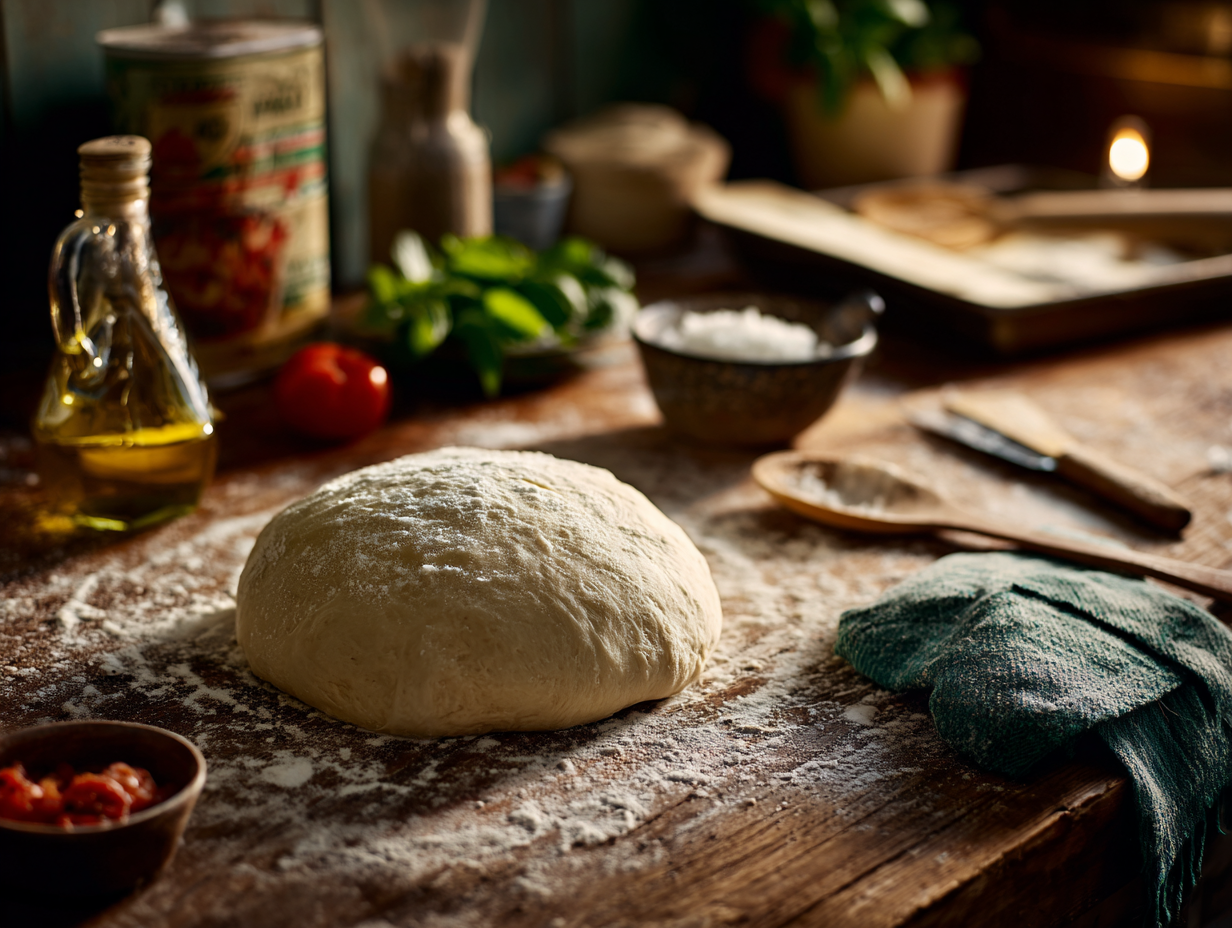
This dough comes together in about 20 minutes of active work using flour, yeast, olive oil, salt, and water — nothing you need to make a special trip for. It rests for 15 minutes while you prep toppings, then bakes in 15. The real reason to make it on a weeknight: one batch makes four portions, so you can use two tonight and stash the rest for later in the week.
What makes this version work
Two things actually matter here. First, the water temperature: 110°F activates active dry yeast quickly without killing it. Too cool and the dough won’t rise in the short rest time; too hot and the yeast is dead before you start. A kitchen thermometer takes the guesswork out entirely. Second, the sugar isn’t just a sweetener — it gives the yeast an immediate food source, which is what makes a 15-minute proof viable instead of the hour-plus you’d need without it. Get those two details right and the dough is forgiving on everything else.
Mistakes to avoid
- Skipping the proof check. Before mixing in the flour, confirm your yeast is actually foamy after 5–10 minutes in the warm water and sugar. If it’s flat, the yeast is dead or the water was off-temperature. Start over — adding dead yeast to flour just wastes the rest of your ingredients.
- Using cold flour straight from a cold pantry. In a chilly kitchen, cold flour can drop the dough temperature enough to slow the rise noticeably. Measure your flour and let it sit on the counter while the yeast proofs.
- Over-flouring when it sticks. Sticky dough is normal at first. Add extra flour only a tablespoon at a time. Too much flour makes the crust dense and dry rather than chewy.
- Rushing the rest with a tight cover. The dough needs to expand during its 15-minute rest. Cover it loosely with a towel or lightly oiled plastic wrap — a sealed container can restrict the rise and give you a tighter, less airy crust.
- Stretching cold dough. If you’re using refrigerated dough from a previous batch, let it sit at room temperature for at least 20 minutes first. Cold dough tears and springs back instead of stretching out evenly.
Keeping and reheating
Uncooked dough keeps in the fridge for up to 3 days — portion it into individual balls, coat lightly with olive oil, and store each one in a zip-lock bag or covered bowl. For longer storage, freeze the portioned balls for up to 3 months; move them to the fridge the night before you plan to use them. Skip freezing already-baked crusts — they go cardboard-dry on reheat. If you’ve baked a full pizza and have leftovers, a skillet on medium heat for 3–4 minutes revives the crust far better than a microwave, which just makes it soggy. Leftover dough balls in the fridge actually improve slightly by day two as the slow cold fermentation builds a little more flavor, so don’t feel like you need to use them all at once.
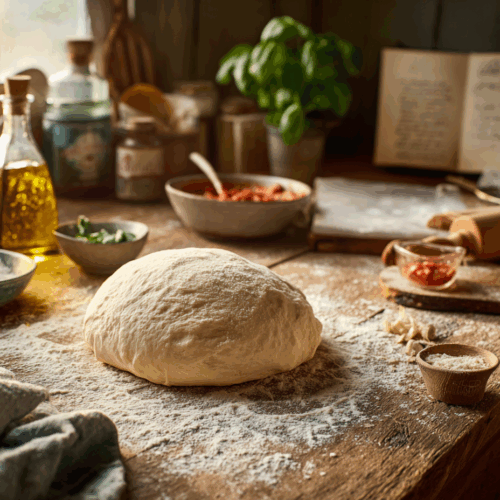
Quick Homemade Pizza Dough

Equipment
- Large mixing bowl
- Wooden Spoon or Dough Hook
- Clean Kitchen Towel or Plastic Wrap
- Measuring cups and spoons
- Rolling Pin (optional)
- Baking Sheet or Pizza Stone
- Bench Scraper or Knife for dividing dough
Ingredients
- 3 ½ cups all-purpose flour unbleached, plus extra for dusting
- 1 tbsp sugar helps wake the yeast
- 2 ¼ tsp active dry yeast 1 packet
- 1 ¼ cups warm water 110°F / 43°C to activate yeast
- 2 tbsp olive oil good quality extra virgin
- 1 tsp kosher salt or sea salt
Instructions
- In a large mixing bowl, combine warm water (110°F / 43°C), sugar, and active dry yeast. Stir and let sit for 5-10 minutes until the surface becomes foamy. This activates the yeast—it should smell slightly sweet and yeasty.
- Add olive oil and salt to the yeast mixture. Stir to combine.
- Gradually mix in the flour, 1 cup at a time, using a wooden spoon or dough hook. When the dough forms a shaggy ball, transfer it to a floured surface.
- Knead the dough for about 5–6 minutes until smooth and elastic. If the dough feels sticky, sprinkle in a little more flour until manageable but still soft.
- Form the dough into a ball and place it in a lightly oiled bowl. Cover with a damp towel or plastic wrap and let rest in a warm spot for 15 minutes. It won’t double, but should puff up slightly and feel airy inside.
- Preheat your oven to 475°F (245°C). If using a pizza stone, preheat it in the oven now.
- Divide the dough into 2 to 4 pieces depending on your preferred pizza size. Roll each piece into a rough circle on a floured surface to your desired thickness—thinner for a crisper crust, thicker for a chewier result.
- Top with sauce, cheese, and desired toppings. Bake each pizza for 12–15 minutes. The edges should puff and brown, and the bottom should be golden and crisp.
Notes
- Substitute: You can use bread flour for a chewier, more elastic crust.
- Vegan Adaptation: This dough is naturally vegan; just avoid cheese/toppings with animal products.
- Speed up Rising: Let the dough rise in a warm oven that was preheated to 150°F (65°C) and turned off—place the bowl inside for a faster rise.
Nutrition
Frequently asked questions
Can I use instant yeast instead of active dry yeast?
Yes — use the same amount and you can skip the proofing step, mixing it directly into the flour. The dough may rise a bit faster, so check it at 10 minutes rather than 15.
Can I make this dough without a stand mixer?
Absolutely — a wooden spoon and your hands work fine. Mix until it comes together in the bowl, then knead on a floured surface for about 5 minutes until the dough is smooth and springs back when you poke it.
My dough is tearing when I stretch it. What’s wrong?
The gluten is too tight — let the dough rest for another 5 minutes uncovered and try again. This is the most common issue and it fixes itself with a short rest; don’t fight it.
Can I make the dough ahead and use it the next day?
Yes, and it’s worth doing. Refrigerate the portioned dough balls overnight and the slow cold rest improves the texture and flavor noticeably. Just bring them to room temperature for 20 minutes before stretching.
Does this recipe work for calzones or other shapes, not just pizza?
It works well for calzones, flatbreads, and garlic knots. The dough is versatile enough that one batch can cover two different meals across the week — use two portions for pizza tonight and two for calzones on Thursday.
What to cook next
- Quick Weeknight Calzone Recipe
- Quick Skillet Garlic Flatbreads
- Classic Basil Pesto Recipe
- Quick Soft Pretzels