
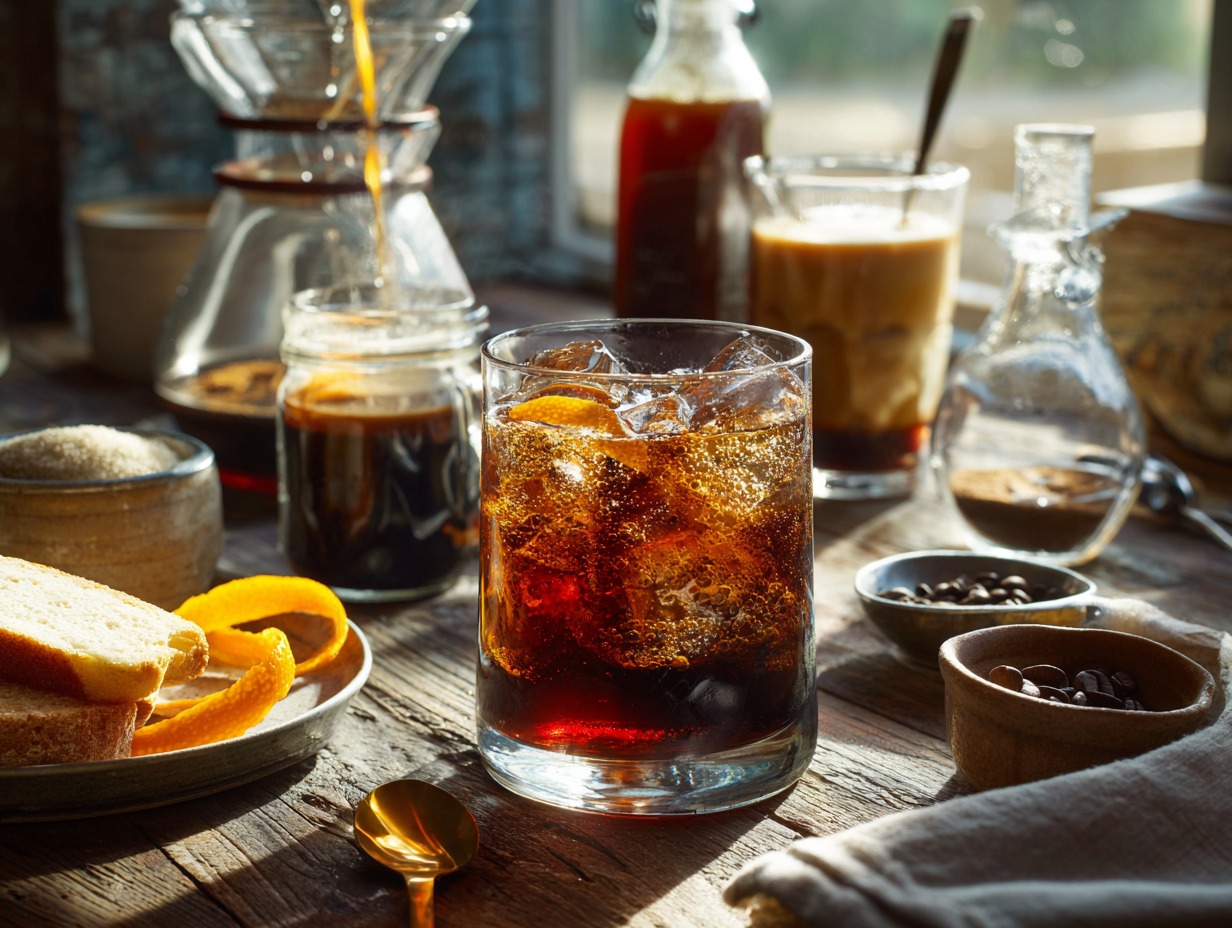
This is a simple cold brew concentrate made with coarsely ground coffee and cold water — no special equipment required beyond a jar and a strainer. Active prep is about 10 minutes; the rest is just waiting. If you want smooth, low-acid coffee ready every morning without buying it by the cup, this is the most practical way to get there.
The short version of why this works
Two things actually matter here: grind size and steep time. Coarse grounds — think texture close to raw sugar, not table salt — let water move through freely and filter cleanly. Too fine and you end up with muddy, over-extracted concentrate that no amount of dilution fixes. Steep time determines strength: 12 hours gives you a lighter result, 24 hours a more intense concentrate. Cold water extracts slowly and skips most of the acidic compounds that hot brewing pulls out fast, which is why the finished cup tastes noticeably smoother without any extra steps.
Ingredient notes
- Coffee beans: Any medium or dark roast works. Pre-ground is fine if that’s what you have — just buy the coarsest grind the store offers (usually labeled “French press” or “percolator”). Avoid espresso grind entirely.
- Chicory root (optional): Sold at some grocery stores and online. It stretches your coffee further and adds a slightly earthy, roasted note. If you skip it, the recipe is complete without it. If you want to try it but can’t find it, a small amount of roasted dandelion root (sold as herbal tea) is a reasonable stand-in.
- Water: Filtered water makes a cleaner-tasting concentrate, but tap water works. If your tap water has a strong taste, that flavor will carry through — filtered is worth it in that case.
- Jar: A standard quart mason jar is ideal. A French press is even easier since the plunger handles the first stage of filtering. Any large lidded container works.
Make-ahead notes
Once strained, the concentrate keeps in a sealed jar in the refrigerator for up to two weeks — flavor is best in the first week. There’s no freezer step needed since the fridge life is already long, but if you want to freeze individual portions, ice cube trays work well; pop the cubes into a zip bag and use within two months. To serve, dilute concentrate with water or milk roughly 1:1, adjusting to taste. No reheating needed for iced coffee; for a hot drink, just add hot water or steamed milk directly to the concentrate.
What can go wrong
- Concentrate tastes sour or weak: Under-extraction. This usually means the grind was too coarse or the steep time too short. Next batch, go slightly finer on the grind or add a few more hours.
- Concentrate tastes bitter or muddy: Over-extraction or too-fine a grind. If you used pre-ground coffee labeled for drip machines, it may be too fine for cold brew. Stick to French press grind next time, and don’t push past 24 hours.
- Filtering takes forever or clogs: Fine grounds are the culprit. Pour in smaller batches through the sieve, and skip the paper filter if it’s sealing up — a double layer of cheesecloth or a clean cotton cloth moves liquid faster. Letting the grounds settle for 10 minutes before pouring also helps.
- Concentrate is too strong to drink: That’s expected — it’s a concentrate. Start with a 1:1 ratio of concentrate to water or milk, then adjust from there. Some people go 1:2 for a lighter cup. Skip buying extra dilution vessels; a measuring cup does the job fine.
- Jar leaks or seal fails in the fridge: Plastic lids for mason jars are cheap and seal better than the standard two-piece metal lids for liquid storage. If you’re using a French press, just cover the top with plastic wrap before pressing the plunger down.
Classic Cold Brew Coffee (Barista-Style Concentrate)

Equipment
- Digital kitchen scale (for accuracy)
- Burr coffee grinder (coarse setting)
- 1-quart glass jar or French press (with lid)
- Long spoon or silicone spatula
- Fine mesh sieve
- Paper coffee filters or nut-milk bag
- Pitcher for storing concentrate
- Measuring cups and spoons
Ingredients
Cold Brew Base
- 6 oz whole coffee beans Medium-to-dark roast; freshly roasted within 2–3 weeks for best bloom and sweetness.
- 1 tbsp roasted ground chicory (optional) For classic New Orleans character; adds gentle cocoa-bittersweet depth.
- 4 cups filtered water, room temperature Clean, low-mineral water highlights sweetness and clarity.
To Serve
- 4 cups ice cubes Large-format cubes melt slower and keep dilution controlled.
- 1 cup milk or half-and-half (optional) Or use a creamy oat or almond milk for dairy-free.
- 4 tbsp simple syrup (optional) 1:1 sugar to water; adjust to taste. Honey syrup also works well.
- 1 strip orange peel (optional garnish) Adds a bright aromatic top note.
Instructions
- Grind the beans: Using a burr grinder, grind coffee on a coarse setting—think raw sugar or sea salt. Coarser grind reduces bitterness and haze.
- Combine in vessel: Add the ground coffee to a clean 1-quart jar or French press. If using, stir in the chicory. Pour in 4 cups of room-temperature filtered water, saturating all grounds. Stir slowly for 20–30 seconds until no dry pockets remain.
- Steep: Cover and steep at room temperature, ideally 68–72°F (20–22°C), for 12 hours. For a stronger concentrate, go up to 16–18 hours. You’ll smell cocoa, caramel, and toasted nut aromas when extraction is on point.
- First strain: Pass the brew through a fine-mesh sieve into a pitcher to remove the bulk of the grounds. Do not press; pressing can add bitterness.
- Polish filter: Rinse the sieve, line it with a damp paper coffee filter (or use a nut-milk bag), and strain again for a clear, silky concentrate. This may take 3–5 minutes—patience yields a cleaner cup.
- Serve: For an iced coffee strength, mix concentrate 1:1 with cold water or milk over plenty of ice. For a richer latte style, try 2 parts concentrate to 1 part milk. Sweeten with simple syrup to taste.
- Store: Refrigerate concentrate in a sealed container at 34–40°F (1–4°C) for up to 10 days. Flavor stays brighter in glass than in plastic.
Notes
Lisa’s Tips
- Dial the ratio: For a bolder concentrate, use 7–8 oz beans per 4 cups water; for lighter, 5 oz per 4 cups.
- Grind size matters: Too fine = silty and bitter; too coarse = weak and sour. Aim for an even, coarse grind.
- Water quality: Use filtered water; high mineral content can mute sweetness and clarity.
- Optional chicory: Start with 1 tsp if you’re new to it; it adds chocolatey depth and classic NOLA character.
- Sweeteners: Simple syrup blends seamlessly; try brown sugar syrup or maple for caramel notes.
- Flavor infusions: Add a split vanilla bean or a cinnamon stick during steep; remove before final filtering.
Serving Suggestions
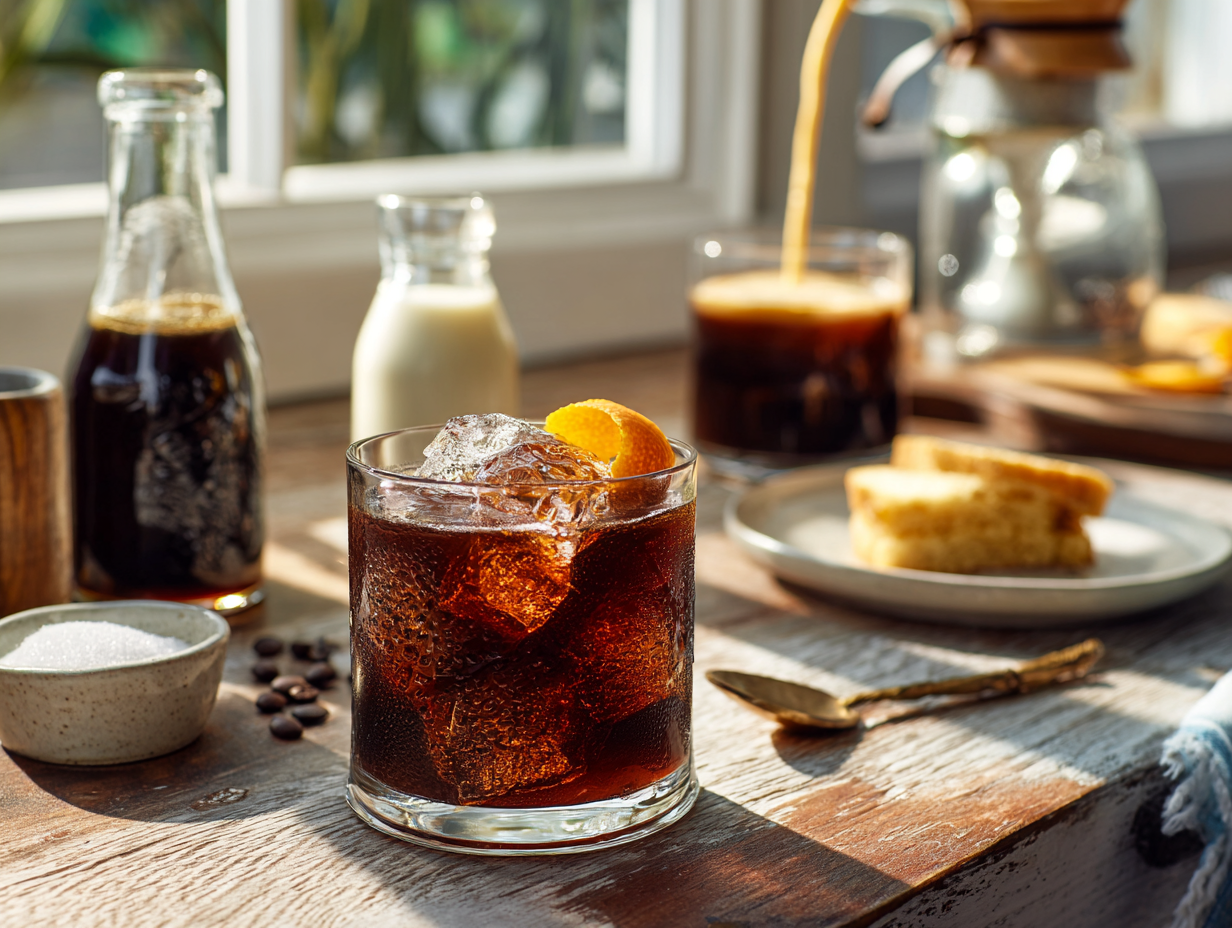
Pour into a chilled rocks glass with large ice. Garnish with an orange peel expressed over the rim for citrus oils and a glossy sheen. The brew should appear deep mahogany with a clear, jewel-like glow. Pair with a slice of brioche or a lemon shortbread to emphasize the coffee’s caramel-cocoa aromatics.Culinary Context
Cold brew traces roots to centuries-old slow-drip methods in Kyoto and became a New Orleans staple with chicory during the 19th century. Today’s immersion style highlights sweetness and velvety texture, making it ideal for iced service and batching.Optional Advanced Instructions
- Make-ahead: Scale up to 2–3 quarts using the same ratio; steep in the refrigerator to slow extraction for extra clarity (add 2–4 hours to steep time).
- French press method: Steep directly in a French press; plunge gently before polishing through a paper filter for a cleaner cup.
- Quick(ish) small-batch: If you’re in a rush, agitate gently every 10 minutes during a 4–6 hour steep at room temp; flavor won’t be as rounded as the 12–18 hour version but remains pleasantly smooth.
Timing
- Prep Time: 10 minutes
- Cook/Steep Time: 12 hours (720 minutes)
- Total Time: 12 hours 10 minutes (730 minutes)
Course
BreakfastOrigin
American, New Orleans influenceNutrition
FAQ
Can I use regular pre-ground coffee from the grocery store?
Yes, as long as it’s a coarse grind — look for bags labeled “French press” or “percolator” grind. Standard drip-grind coffee is too fine for cold brew and will make filtering a slow, messy process with a higher chance of a bitter result.
Do I have to steep it in the fridge, or can I leave it on the counter?
Either works. Counter steeping at room temperature (around 68–72°F) takes 12–16 hours and produces a slightly fuller-bodied concentrate. Fridge steeping takes closer to 18–24 hours but gives a cleaner, milder flavor — and there’s no food-safety concern either way since coffee is shelf-stable dry and the steep time is short.
What’s the ratio of concentrate to water when I’m ready to drink it?
Start with equal parts concentrate and cold water or milk, then adjust to your taste. If it still tastes strong at 1:1, go to 1:2 — there’s no wrong answer here, just personal preference.