
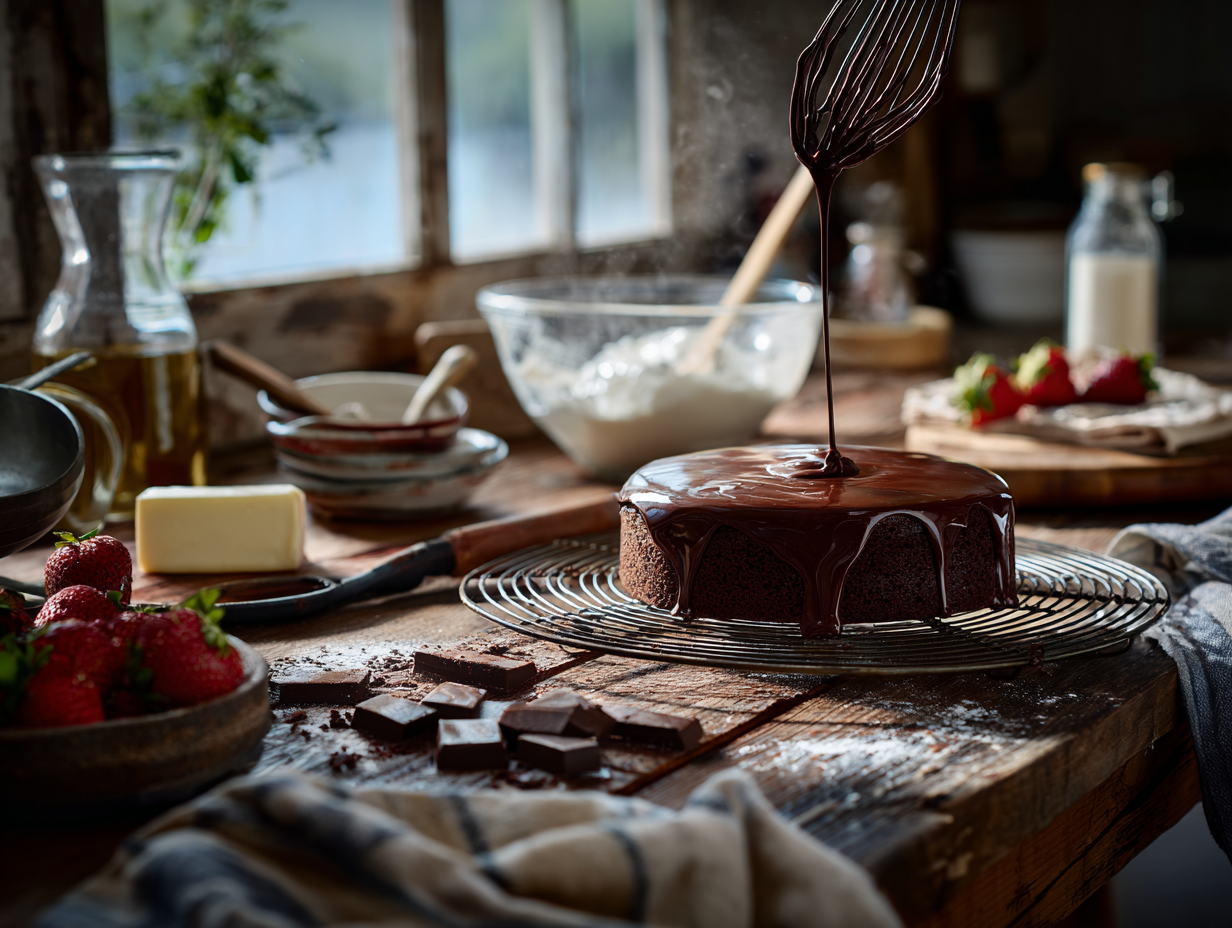
Chocolate ganache is two ingredients — heavy cream and good chocolate — combined in about 15 minutes of hands-on work. The ratio you use determines whether you end up with a pourable glaze, a thick filling, or a base for truffles, so it’s genuinely useful to understand before you start. This is the recipe to make when you need something that looks impressive but won’t add stress to an already busy evening.
The short version of why this works
Two things actually matter here. First, the cream needs to be hot enough to fully melt the chocolate — if it’s just warm, you’ll get lumps that no amount of stirring will fix. Heat it until you see small bubbles forming at the edges and wisps of steam rising, then pour it over the chopped chocolate and let it sit undisturbed for about two minutes before you touch it. That resting time lets the heat distribute evenly through the chocolate. Second, stir from the center outward in slow, steady circles rather than whisking aggressively. Vigorous whisking introduces air bubbles and can break the emulsion, leaving you with a greasy, grainy mess instead of a smooth, glossy result. Patience on both counts is the whole technique.
Ingredient notes
- Chocolate: Use a bar or block, not chips. Chips contain stabilizers that resist melting and can make the finished ganache slightly grainy. Aim for chocolate with a cacao percentage listed on the label — it tells you what you’re working with. Higher cacao (70%+) produces a less sweet, firmer ganache; if you’re scaling up for a crowd and want a more crowd-pleasing result, 55–60% is a reliable middle ground.
- Heavy cream: Standard heavy whipping cream (36% fat or higher) works best. Half-and-half will produce a thinner, less stable ganache that doesn’t set as firmly — fine for a quick drizzle, but not ideal if you need it to hold shape as a filling or truffle base.
- Dairy-free swap: Full-fat canned coconut milk works as a 1:1 substitute for the cream. Shake the can well before opening. The coconut flavor is mild once the chocolate is in, but it is detectable — worth knowing before you serve it to guests.
Mistakes to avoid
- Scaling up the recipe but not the bowl: When you double or triple the batch, use a bowl that’s at least twice the volume of your ingredients. Ganache needs room to be stirred without splashing, and a cramped bowl makes it hard to incorporate everything evenly.
- Pouring cream that’s too hot: If the cream reaches a full boil, it can scorch the chocolate and introduce bitterness you can’t fix. Pull it off the heat the moment you see edge bubbles and steam — don’t wait for a rolling boil.
- Skipping the digital scale: Volume measurements for chocolate are unreliable because chopped chocolate packs differently every time. A few ounces off in either direction shifts the texture noticeably, especially in larger batches. Weigh both ingredients.
- Chilling it too fast: Putting warm ganache straight into the fridge causes the surface to set unevenly and can create a dull, streaky finish. Let it cool at room temperature until it’s no longer steaming before refrigerating — skip the garnish at this stage too, not worth the extra dish until it’s fully set.
- Reheating in a regular saucepan over direct heat: Direct heat scorches the bottom before the rest warms through. Use a microwave in 15-second bursts, stirring between each, or set the bowl over a pot of barely simmering water.
Make-ahead notes
Ganache keeps well in an airtight container in the refrigerator for up to two weeks, which makes it genuinely useful when you’re prepping for a gathering. Press a piece of plastic wrap directly onto the surface before sealing to prevent a skin from forming. To bring it back to a pourable consistency, microwave in 15-second intervals, stirring between each, until just fluid — it usually takes two or three rounds. For longer storage, ganache freezes for up to three months; thaw it overnight in the fridge, then reheat gently as above. If it looks slightly separated after reheating, a slow stir from the center outward for about 30 seconds will bring it back together.
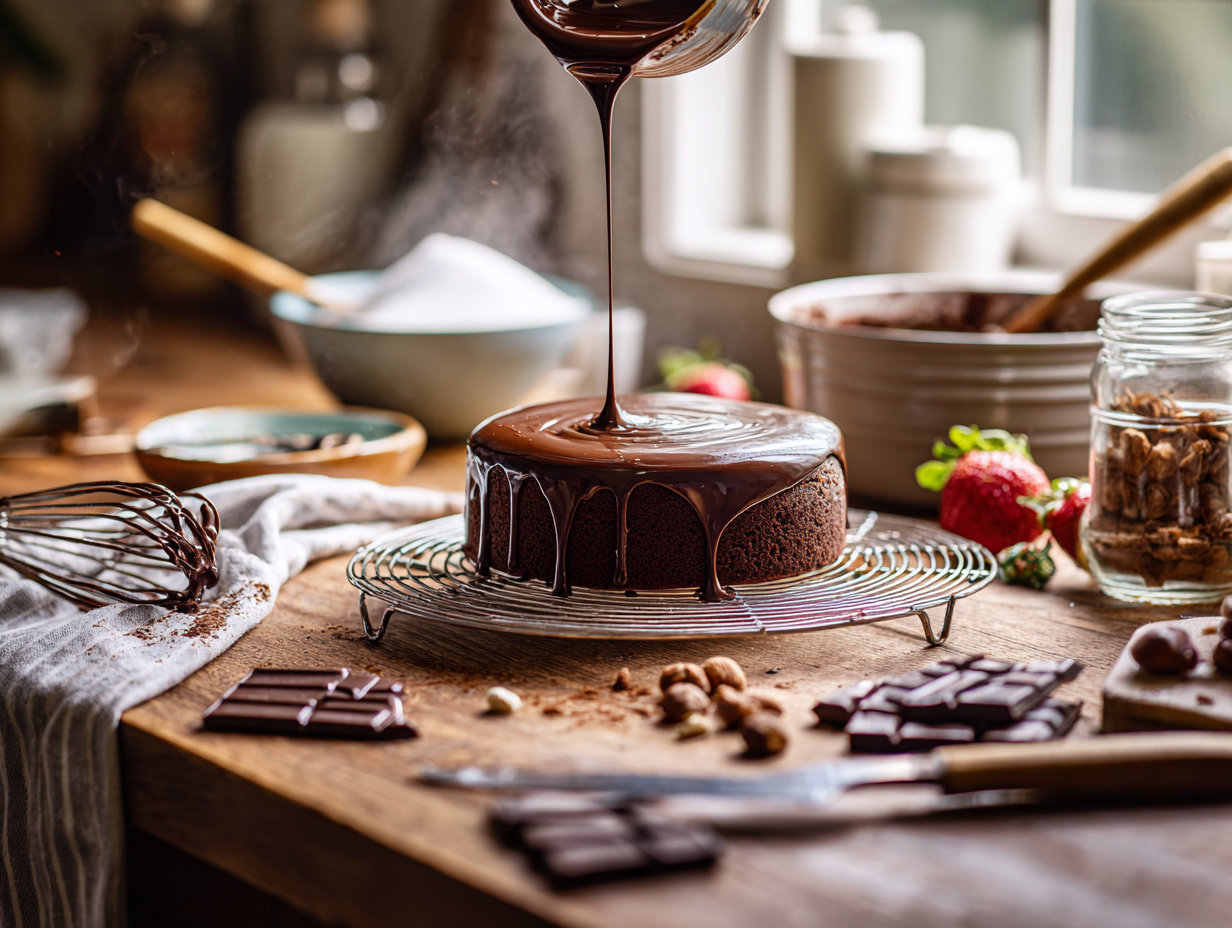
30-Minute Silky Chocolate Ganache

Equipment
- Digital kitchen scale (recommended for chocolate)
- Chefs Knife
- Cutting board
- Small saucepan
- Heatproof mixing bowl (preferably glass)
- Silicone spatula
- Balloon whisk
- Instant-read thermometer (optional, for precision)
- Immersion blender (optional, ultra-smooth finish)
- Fine mesh sieve (optional, for extra refinement)
Ingredients
- 8 oz bittersweet chocolate (60–70% cacao), finely chopped use high-quality bars like Valrhona, Guittard, or Callebaut; avoid chocolate chips for best melt
- 1 cup heavy cream (36% milkfat) very fresh cream yields a cleaner dairy flavor; ultra-pasteurized is fine
- 1 pinch fine sea salt balances sweetness and sharpens chocolate notes
- 1 tsp light corn syrup (optional) adds extra gloss and slightly softer set for glazing
- 1 tbsp unsalted butter, room temperature, diced (optional) for added shine and silky mouthfeel
- 1 tsp pure vanilla extract (optional) stir in at the end to preserve aroma
Instructions
- Read First: Keep your bowl completely dry; a drop of water can cause seizing. Work with finely chopped chocolate for a smooth, fast melt.
- Set Up (1 minute): Place the finely chopped chocolate in a clean, dry, heatproof bowl. Keep a silicone spatula and whisk by your side.
- Heat the Cream (3–5 minutes): In a small saucepan, combine the heavy cream, fine sea salt, and optional corn syrup. Warm over medium heat until the cream is steaming with small bubbles just forming at the edges, about 180°F / 82°C. Do not let it boil vigorously. Aroma cue: a gentle dairy sweetness without any scorched smell.
- Pour and Steep (2 minutes): Immediately pour the hot cream evenly over the chocolate. Tap the bowl to settle, then let stand undisturbed for 2 minutes to soften the chocolate. Visual cue: the chocolate edges begin to look glossy and partially melted.
- Emulsify from the Center (1–2 minutes): Using a whisk, start in the center and make small circles to create a thick, shiny core, gradually widening your strokes until the mixture is unified and glossy. If you see tiny unmelted bits, keep whisking gently. Optional: use an immersion blender for 20–30 seconds for an ultra-smooth finish (keep the head fully submerged to avoid bubbles).
- Finish (1 minute): Whisk in the butter until melted and glossy, then stir in vanilla (if using). For a pourable glaze, aim to use ganache around 90–95°F / 32–35°C. Texture cue: it should ribbon fluidly from the spatula and settle into a mirror-like surface within a few seconds.
- Choose Your Texture (5–15 minutes, optional): For spreadable ganache (frosting consistency), let it cool at room temperature for 10–15 minutes, stirring occasionally. For a slightly thicker drip, cool 5–8 minutes. For dipping, let it cool until it lightly clings to a spoon yet still flows smoothly.Microwave Method Alternative: Heat cream in a microwave-safe vessel in 20–30 second bursts until steaming; proceed as above. Texture may incorporate more bubbles than stovetop.
Notes
Lisa’s Tips:
- Chocolate Choice: 60–70% cacao balances sweetness and depth. If using milk or white chocolate, reduce cream to 3/4 cup per 8 oz chocolate for a similar thickness.
- Prevent Splitting: If ganache looks greasy or broken, whisk in 1–2 tsp warm cream or use an immersion blender to re-emulsify.
- Dairy-Free: Substitute 1 cup full-fat canned coconut milk for the cream; heat just to steaming.
- Flavor Twists: Infuse the cream with orange zest, espresso powder (1–2 tsp), cinnamon, or a splash of bourbon after heating (off heat).
- Truffle Base: Use a 2:1 chocolate-to-cream ratio (e.g., 12 oz chocolate to 3/4 cup cream), chill until scoopable, then roll.
- Faster Cooling: Spread ganache in a shallow dish to increase surface area; it will thicken more quickly.
Nutrition
Frequently asked questions
Can I make ganache ahead of time for a party and keep it warm for serving?
Yes — keep it in a heatproof bowl set over a pot of barely simmering water (a bain-marie) for up to an hour, stirring occasionally. Don’t let the water boil or touch the bottom of the bowl, or the chocolate near the edges will overheat and turn grainy.
My ganache turned out grainy and separated — is it ruined?
Usually not. Add a tablespoon of warm cream and stir slowly from the center out; this often brings a broken ganache back together. If it’s still grainy, try transferring it to a blender and blending for 20–30 seconds — the friction and movement re-emulsifies it in most cases.
How do I know which chocolate-to-cream ratio to use for what I’m making?
A 1:1 ratio by weight gives you a medium ganache that works as a glaze or tart filling and sets to a soft, sliceable texture when chilled. For truffles or a firmer filling, use 2 parts chocolate to 1 part cream. For a thin, pourable drizzle or a sauce, flip it — 1 part chocolate to 2 parts cream.
Try these next
- Quick Double Chocolate Cookies
- Silky Chocolate Cream Pie
- Quick French Cream Puffs
- Quick Sicilian Cannoli Recipe