
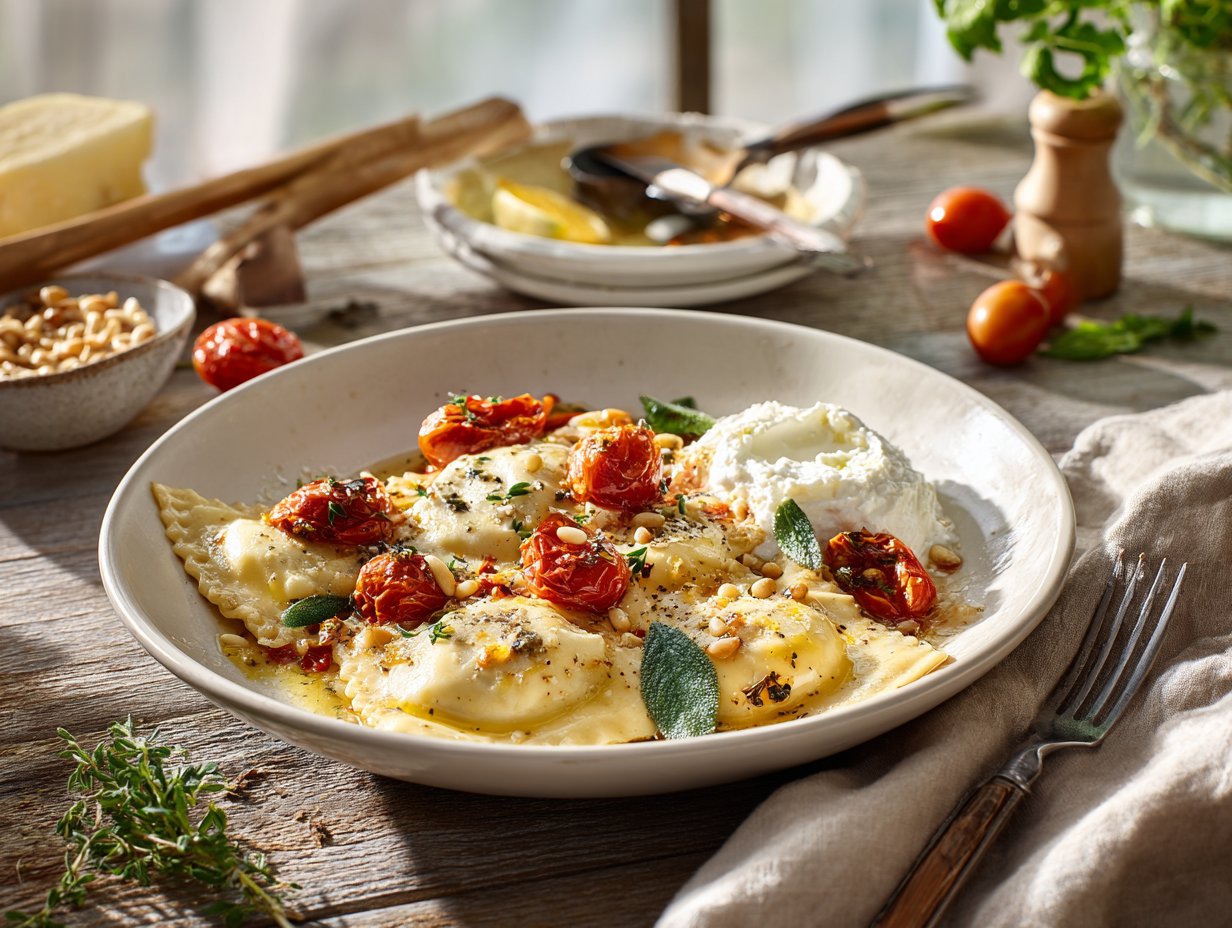
This is store-bought ravioli cooked in a brown butter and sage pan sauce, finished with blistered cherry tomatoes, a spoonful of lemon ricotta, and toasted pine nuts. The whole thing takes 27 minutes and uses one pot and one skillet. It tastes like you spent more effort than you did — which is exactly the point on a Wednesday night.
Substitutions that actually work
- Ravioli filling: Cheese, mushroom, or butternut squash all work well here. Meat-filled ravioli is fine but makes the dish heavier — keep the portions a little smaller.
- Pine nuts: Expensive and easy to burn. Roughly chopped walnuts or slivered almonds toast the same way and cost less.
- Fresh sage: Dried sage does not crisp in butter the way fresh does — skip the dried version entirely and use fresh flat-leaf parsley as a garnish instead if fresh sage isn’t available. The flavor profile changes, but the dish still works.
- Ricotta: Full-fat ricotta gives the creamiest result. Part-skim works. Cottage cheese blended smooth is a reasonable substitute if that’s what you have.
- Cherry tomatoes: Grape tomatoes blister just as well. Out of season, a few spoonfuls of good canned crushed tomatoes stirred in at the end gives similar acidity.
Why this recipe works
Two things actually matter here. First, browning the butter properly — not just melting it — is what gives the sauce its nutty depth. That happens when the milk solids toast past the foaming stage and turn golden. A light-colored skillet lets you see the color change clearly; a dark pan makes it easy to miss the window and burn it. Second, adding a small amount of starchy pasta water to the skillet before the ravioli go in helps the butter emulsify into a loose sauce that clings to the pasta instead of pooling at the bottom of the bowl. Those two steps are the difference between a greasy plate and a cohesive dish.
Troubleshooting
- Butter smells sharp or looks dark brown-black: It’s burned — start over. Burned butter is bitter and can’t be rescued. Wipe the pan, reduce the heat slightly, and go again. It takes less than 2 minutes to brown a fresh batch.
- Ravioli sticking together after draining: Don’t drain and walk away. Move the ravioli straight from the water into the skillet with tongs or a spider. If they do stick, a splash of warm pasta water loosens them without tearing the pasta.
- Sauce is greasy and separated: The skillet was too hot when the ravioli went in, or there wasn’t enough pasta water. Add 2–3 tablespoons of pasta water and toss gently over low heat — it usually comes back together.
- Sage leaves are soggy, not crisp: The butter wasn’t hot enough when the sage went in, or the leaves were wet. Dry them thoroughly before they hit the pan and make sure the butter is actively foaming.
- Tomatoes turned mushy instead of blistered: Overcrowded pan. Cook tomatoes in a single layer and don’t stir them constantly — let them sit for 30–45 seconds before moving so they get color and blister rather than steam.
Leftovers and make-ahead
Leftover ravioli keeps in the fridge for up to 3 days in an airtight container — store the lemon ricotta separately so it doesn’t make the pasta soggy. To reheat, put the ravioli in a skillet with a tablespoon of water or olive oil over medium-low heat, cover for 2 minutes, then uncover to let any extra moisture cook off. The microwave works in a pinch but softens the pasta more than the stovetop does. If you’re planning ahead, the lemon ricotta can be made up to 2 days in advance and refrigerated. The pine nuts can be toasted in a dry pan and stored at room temperature in a small jar for up to a week — skip toasting them fresh every time you use them, since a batch takes the same effort as a single serving. Freeze uncooked store-bought ravioli straight from the package if you find a good brand; cooked ravioli doesn’t freeze well once sauced.

30-Minute Brown Butter Sage Ravioli with Burst Tomatoes & Lemon Ricotta

Equipment
- Large pot (at least 5 quarts)
- 12-inch skillet (preferably light-colored to monitor browning)
- Spider strainer or slotted spoon
- Ladle
- Colander
- Microplane zester
- Tongs
- Measuring cups and spoons
- Small bowl (for ricotta)
- Wooden spoon or silicone spatula
Ingredients
- 1 tablespoon Kosher salt for seasoning pasta water; adjust to taste. Diamond Crystal preferred
- 2 tablespoons pine nuts toast for crunch and nuttiness
- 6 tablespoons unsalted butter high-quality European-style butter browns beautifully
- 1 teaspoon extra-virgin olive oil a touch helps stabilize the butter as it browns
- 12 leaves fresh sage whole leaves; large and vibrant if possible
- 2 cloves garlic thinly sliced
- ¼ teaspoon crushed red pepper flakes optional heat; adjust to taste
- 1 ½ cups cherry or grape tomatoes halved; choose sweet, firm tomatoes (about 8 oz)
- 18 ounces fresh cheese ravioli refrigerated; 4-cheese or spinach-ricotta. Two 9-oz packages
- 1 teaspoon lemon zest from 1 medium lemon, finely grated
- 1 tablespoon fresh lemon juice squeezed just before using
- ½ cup reserved pasta water starchy water helps emulsify the sauce
- ½ cup whole-milk ricotta look for a creamy artisanal brand; drain if watery
- ⅓ cup Parmigiano Reggiano finely grated, plus extra for serving
- ½ teaspoon freshly ground black pepper coarsely ground for aroma
- 1 cup baby arugula optional; for a peppery finish
- 1 pinch flaky sea salt optional finishing salt
Instructions
- Boil Water and Optionally Warm Plates (2–3 minutes active): Fill a large pot with water and bring to a rolling boil. Salt generously with 1 tablespoon kosher salt—it should taste like the sea. Optional for perfect service: warm bowls/plates in a 200°F (95°C) oven.
- Toast Pine Nuts (2–3 minutes): In a dry 12-inch skillet over medium heat, toast pine nuts, shaking the pan until golden and fragrant. Transfer to a small plate to prevent over-browning.
- Brown the Butter with Sage (4–6 minutes): Add 6 tablespoons butter and 1 teaspoon olive oil to the skillet over medium heat. When the butter foams, add sage leaves. Cook, swirling, until the milk solids turn deep golden and the aroma is nutty, 3–5 minutes. Watch closely—golden brown is flavorful; black is bitter.
- Aromatics and Tomatoes (1–2 minutes): Stir in sliced garlic and red pepper flakes for 30 seconds. Add halved cherry tomatoes and toss just until skins blister and release a little juice, about 60–90 seconds. Reduce heat to low to hold.
- Cook the Ravioli (3–4 minutes): Slide fresh ravioli into the boiling water. Stir gently to prevent sticking. Cook until they float and are just tender, 3–4 minutes. Reserve 1/2 cup pasta water, then transfer ravioli directly to the skillet using a spider or slotted spoon.
- Emulsify and Brighten (1–2 minutes): Turn skillet to low. Add lemon zest, lemon juice, and about 1/4 cup reserved pasta water. Toss gently to coat and emulsify until the sauce looks glossy and lightly thickened. Sprinkle in Parmigiano and black pepper; toss again. Add more pasta water by the tablespoon if needed for a silky, loose coating.
- Season the Ricotta (1 minute): In a small bowl, mix ricotta with a pinch of salt, a crack of pepper, and a few drops of olive oil. If very thick, loosen with 1–2 teaspoons warm pasta water to make it spoonable.
- Finish and Plate (2 minutes): Taste and adjust salt or lemon. Fold in baby arugula just to wilt. Plate the ravioli, spoon over tomatoes and brown butter, dollop ricotta, shower with toasted pine nuts and extra Parmigiano. Finish with flaky sea salt and a thread of olive oil. Serve immediately on warm plates.
Notes
Lisa’s Tips:
- Butter Insurance: A teaspoon of olive oil raises butter’s smoke point, reducing the risk of burning while browning.
- Ravioli Care: Use a gentle boil, not a raging one, to keep seams intact. Stir once right after adding.
- Tomato Swap: In winter, use high-quality sun-dried tomatoes (oil-packed, patted dry) for consistent sweetness.
- Herb Variations: Replace sage with thyme or a few basil leaves added off heat for a different perfume.
- Cheese Choices: Pecorino Romano adds a saltier, sharper edge; use 1/4 cup to start and adjust.
- Dairy-Free: Brown 3 tablespoons olive oil until aromatic with sage; it won’t “brown” the same way, but you’ll get a toasty, herbal oil.
- Gluten-Free: Choose gluten-free ravioli and skim foam from butter to clarify if sensitive to milk solids.
Serving Suggestions:
- Plate in warm shallow bowls. Let the ravioli sit slightly off-center and spoon the brown butter and tomatoes to one side for a painterly effect.
- Garnish with whole crisped sage leaves, pine nuts, lemon zest, and a final microplane of Parmigiano.
- Pair with a crisp Pinot Grigio or a light, lemony spritz; a simple arugula salad with shaved fennel makes a perfect side.
- Visual Cues: Glossy sauce, ruby tomatoes, flecks of zest, and steam rising—these signal you’ve nailed it.
Optional Advanced Instructions:
- Make-Ahead: Toast pine nuts and zest the lemon up to 2 days ahead. Wash/dry sage and store wrapped in a paper towel.
- Parallel Cooking: Start browning butter while the water heats; drop ravioli as the butter reaches hazelnut-brown so both finish together.
- No Microplane? Finely mince zest with a sharp knife. No spider? Use a slotted spoon and work gently.
Timing:
Prep Time: 15 minutes (0 hr 15 min)Cook Time: 12 minutes (0 hr 12 min)
Total Time: 27 minutes (0 hr 27 min)
Nutrition
FAQ
Can I use frozen ravioli instead of fresh?
Yes, frozen ravioli works fine — just cook it according to the package directions, which usually adds 2–3 minutes to the boil time. Don’t thaw it first; drop it straight into the boiling salted water.
How do I know when the butter is actually brown and not just melted?
Watch for the foam to subside and look for small golden-brown specks settling at the bottom of the pan — that’s the milk solids toasting. It should smell nutty, not sharp. The whole process takes about 3–4 minutes over medium heat.
Can I make this without the ricotta?
Yes, the dish is complete without it. The ricotta adds creaminess and a citrus note, but the brown butter sauce stands on its own. A light grating of Parmesan over the top at serving is a simpler alternative.
My grocery store only has large sage leaves. Do I need to adjust anything?
Tear large leaves in half before frying so they crisp evenly and fit better on the fork. Whole large leaves can stay soft in the center even when the edges are done.
What to cook next
- Classic Basil Pesto Recipe
- Zucchini’s Creamy Lemon Dream
- Quick Weeknight Calzone Recipe
- Smoky Mediterranean Bean Skillet