
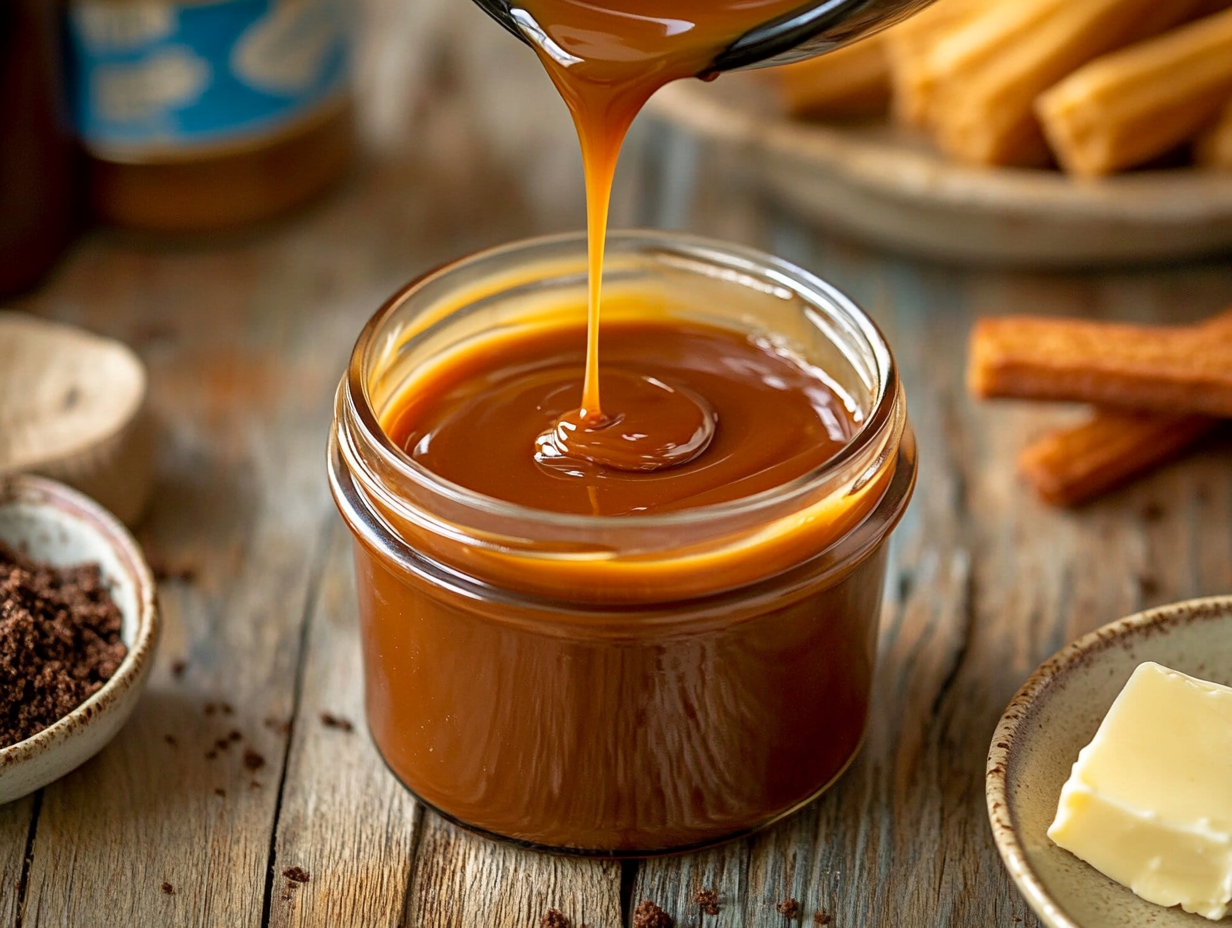
This is a four-ingredient stovetop glaze — sweetened condensed milk, dark brown sugar, butter, and vanilla — that cooks down to a thick, glossy caramel sauce in about 30 minutes. It tastes like the real thing because the technique is essentially the same: slow heat, constant stirring, and patience while the sugars deepen. Make it once and you’ll keep a jar in the fridge all week.
What makes this version work
Two things matter here. First, using dark brown sugar instead of light — the extra molasses content gives the glaze a deeper, slightly bitter edge that keeps it from tasting flat or one-note. Light brown sugar will work in a pinch, but the result is noticeably sweeter and less complex. Second, the heat transition is critical: you start at medium to dissolve the sugar and get the mixture moving, then drop to low before it has a chance to scorch. Full-fat condensed milk holds up to that sustained low heat without breaking or turning grainy, which is why swapping in a reduced-fat version tends to produce a thinner, less stable glaze.
Leftovers and make-ahead
The glaze keeps in a sealed jar in the refrigerator for up to one week. It will firm up considerably when cold — that’s normal. To reheat, spoon out what you need and warm it in a small saucepan over low heat, stirring until it loosens. A 20-second microwave burst in a heatproof bowl also works; stir well before using. If you’re making this for a gathering, you can double or triple the batch without changing the technique — just use a larger saucepan with higher sides to prevent splattering as the mixture bubbles. The glaze does not freeze well; the texture turns grainy after thawing, so stick to the fridge.
What can go wrong
- Glaze seizes into a grainy mass: This happens when the heat spikes too fast. If you see the mixture pulling away from the sides and clumping, add one tablespoon of warm water and stir vigorously over the lowest heat setting until it smooths out.
- Glaze stays too thin after 20 minutes: Your burner may run cool. Increase heat slightly — still low, but a notch higher — and keep stirring for another 5 minutes. The glaze thickens further as it cools, so pull it off the heat when it coats the back of a spoon.
- Bitter or burnt undertone: The bottom of the pan got too hot while you stepped away. Skip the garnish on the finished dish — not worth the extra dish — but do not skip the stirring. There’s no fixing a scorched batch; start fresh and stay at the stove.
- Butter pools on top instead of incorporating: The butter was added while the mixture was still too hot. Let it sit off the heat for 60 seconds before stirring in the butter pieces, then whisk firmly until the glaze looks uniform and glossy.
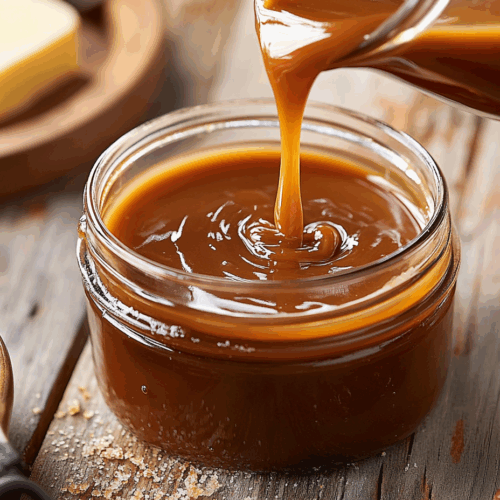
Argentinian Dulce de Leche Glaze

Equipment
- Medium saucepan
- Wooden spoon
- Whisk
Ingredients
- 1 cup sweetened condensed milk full-fat provides better flavor
- ¼ cup brown sugar preferably dark brown for richer flavor
- 2 tbsp unsalted butter cut into pieces to melt evenly
- 1 tsp vanilla extract pure vanilla enhances the caramel notes
Instructions
- In a medium saucepan, combine the sweetened condensed milk and brown sugar. Stir gently to mix them evenly.
- Place the saucepan over medium heat. Stir continuously with a wooden spoon until the sugar is dissolved and the mixture begins to simmer. This should take about 5 minutes. Look for slight bubbling around the edges.
- Reduce the heat to low and continue stirring for another 10-15 minutes, or until the mixture thickens to a glaze consistency and turns a rich caramel color. As it heats, the aroma should be sweet and inviting.
- Remove the saucepan from the heat and stir in the butter until it's fully melted and incorporated.
- Add the vanilla extract and mix well using a whisk to ensure a smooth and glossy finish.
Notes
Lisa’s Tips:
- For a smoother texture, allow the glaze to cool slightly before straining it through a fine mesh sieve.
- If you prefer a lighter flavor, you can substitute half of the condensed milk with cream.
- Ensure continuous stirring to prevent the mixture from sticking and burning at the bottom of the pan.
- This glaze can be made in advance and stored in a sealed jar in the refrigerator for up to a week; gently reheat before use.
Nutrition
Common questions
Can I make this glaze ahead for a party?
Yes — it’s actually better made a day ahead. Make a full or doubled batch, jar it, and refrigerate; it reheats smoothly in a saucepan over low heat with a quick stir, so you’re not standing over the stove when guests arrive.
What’s the difference between this glaze and store-bought dulce de leche?
Store-bought dulce de leche is typically thicker and spreadable, closer to a paste. This glaze is looser and pourable by design, which makes it better for drizzling over cakes, pancakes, or ice cream straight from the jar.
Can I use salted butter instead of unsalted?
You can, and some people prefer it — the salt sharpens the caramel flavor noticeably. Just don’t add any additional salt elsewhere, and taste before serving since condensed milk already contains some sodium.
How do I know when the glaze is thick enough to stop cooking?
Drag a wooden spoon through the mixture and lift it — the glaze should coat the back of the spoon and hold a clear line when you run your finger across it. Remember it thickens as it cools, so pull it off the heat slightly before it looks done.
More quick recipes to try
- Quick Double Chocolate Cookies
- Quick No-Yeast Beignets
- Easy Classic French Crêpes
- Quick Hot-Milk Sponge Cake