
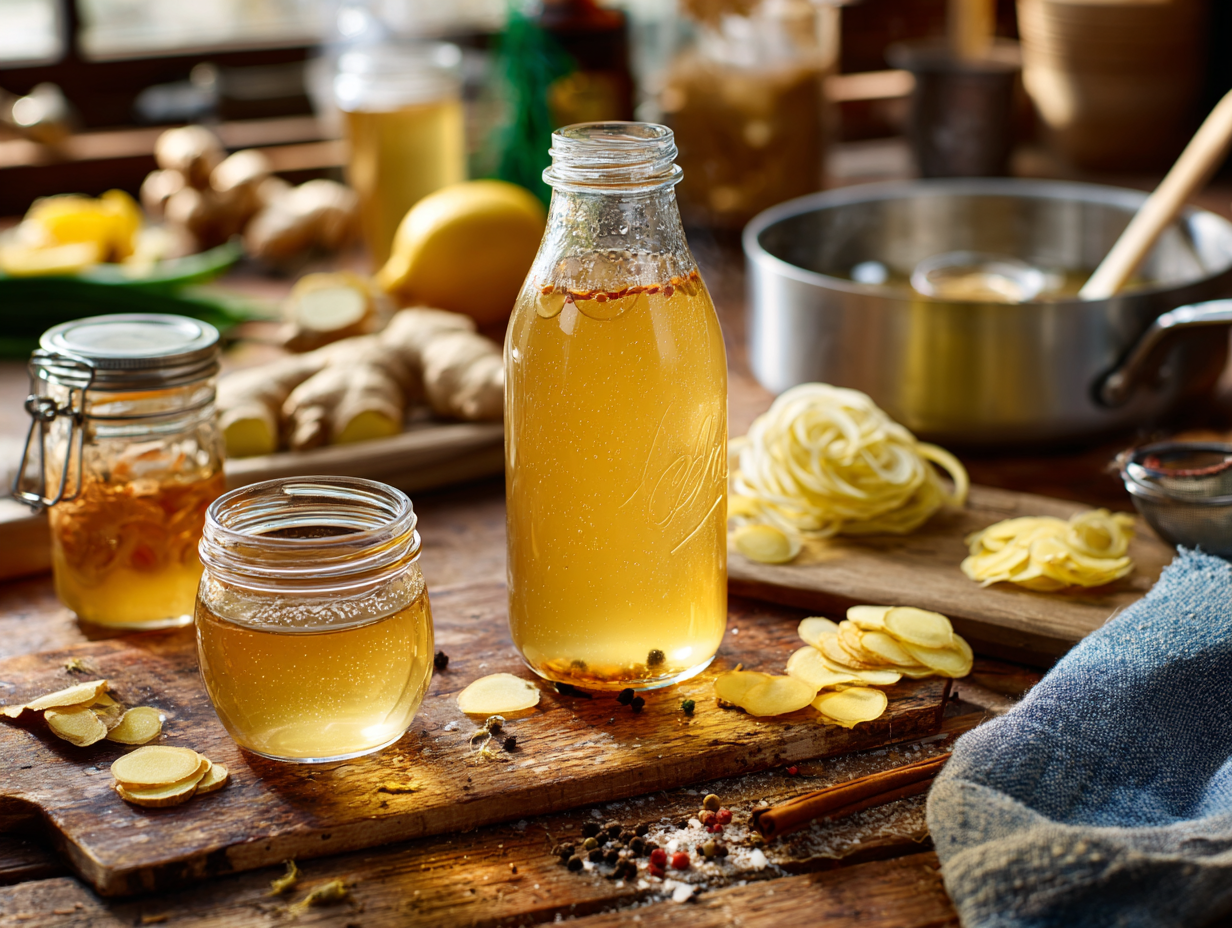
This is a stovetop fire cider that goes from raw ingredients to a strained, bottled tonic in 30 minutes flat. Instead of cold-infusing for weeks, you gently heat apple cider vinegar with ginger, horseradish, garlic, and chiles to pull out the same bold flavors fast. If you want a sharp, useful condiment tonight — for shots, dressings, or splashing into soups — this is the one to make.
The short version of why this works
Two things make this method reliable. First, keeping the vinegar around 150°F — warm but never simmering — extracts the aromatic compounds from ginger, horseradish, and garlic without cooking off the volatile oils that give fire cider its bite. Go hotter and you lose the sharpness; go cooler and you’re just soaking. Second, slicing the ginger thin and grating or finely chopping the horseradish maximizes surface area, so the heat has less work to do. Those two details are what let 15 minutes of cooking replace weeks of waiting.
What can go wrong
- Vinegar boils and turns harsh: Once ACV boils, the acetic acid volatilizes and the flavor goes flat and sharp in a bad way. Use a thermometer or watch for the first wisps of steam — that’s your ceiling. Pull the heat down immediately.
- Horseradish turns bitter: Dried or pre-jarred horseradish can turn acrid under heat. Use fresh root if at all possible; peel it and grate it right before it goes in the pot.
- Honey seizes or clouds the tonic: Adding raw honey while the liquid is still very hot can destroy its enzymes and make the tonic look murky. Let the strained liquid cool to around 100°F before stirring in honey.
- Straining leaves grit behind: A single pass through a fine-mesh strainer often leaves fine particles. Line the strainer with a piece of cheesecloth or a clean coffee filter for a cleaner result.
- Bottle seal fails in the fridge: Fire cider is acidic enough to corrode metal lids over time. Use a glass jar with a plastic lid, or place a piece of plastic wrap between a metal lid and the jar before sealing.
Substitutions that actually work
- Fresh horseradish: This is the one ingredient worth tracking down fresh. Jarred prepared horseradish contains added vinegar and salt that throw off the balance — skip it if fresh isn’t available and double the ginger instead.
- Raw honey: Regular processed honey works fine for flavor, but raw honey keeps more of the enzymes intact. Either way, add it off heat.
- Fresh turmeric vs. dried: Fresh turmeric gives a brighter, less earthy flavor and a deeper orange color. Dried turmeric works but use about one-third the amount — it’s more concentrated and can turn the tonic muddy-tasting if overdone. Skip the garnish of fresh turmeric slices on the bottle — not worth the extra prep.
- Chile type: Any fresh hot chile works here. Jalapeño is mild, serrano is medium, habanero is hot. Dried chiles like cayenne can substitute at roughly half the volume of fresh.
Storage and reheating
Store the finished tonic in a sealed glass jar or bottle in the refrigerator. It keeps well for up to 3 months — the high acidity of the vinegar acts as a preservative. The flavor actually sharpens a little after a day or two in the fridge as the honey fully integrates. Fire cider doesn’t need reheating; use it cold or at room temperature. Freezing isn’t recommended — the texture of the honey changes and the volatile aromatics that give it its punch tend to dull after a freeze-thaw cycle.
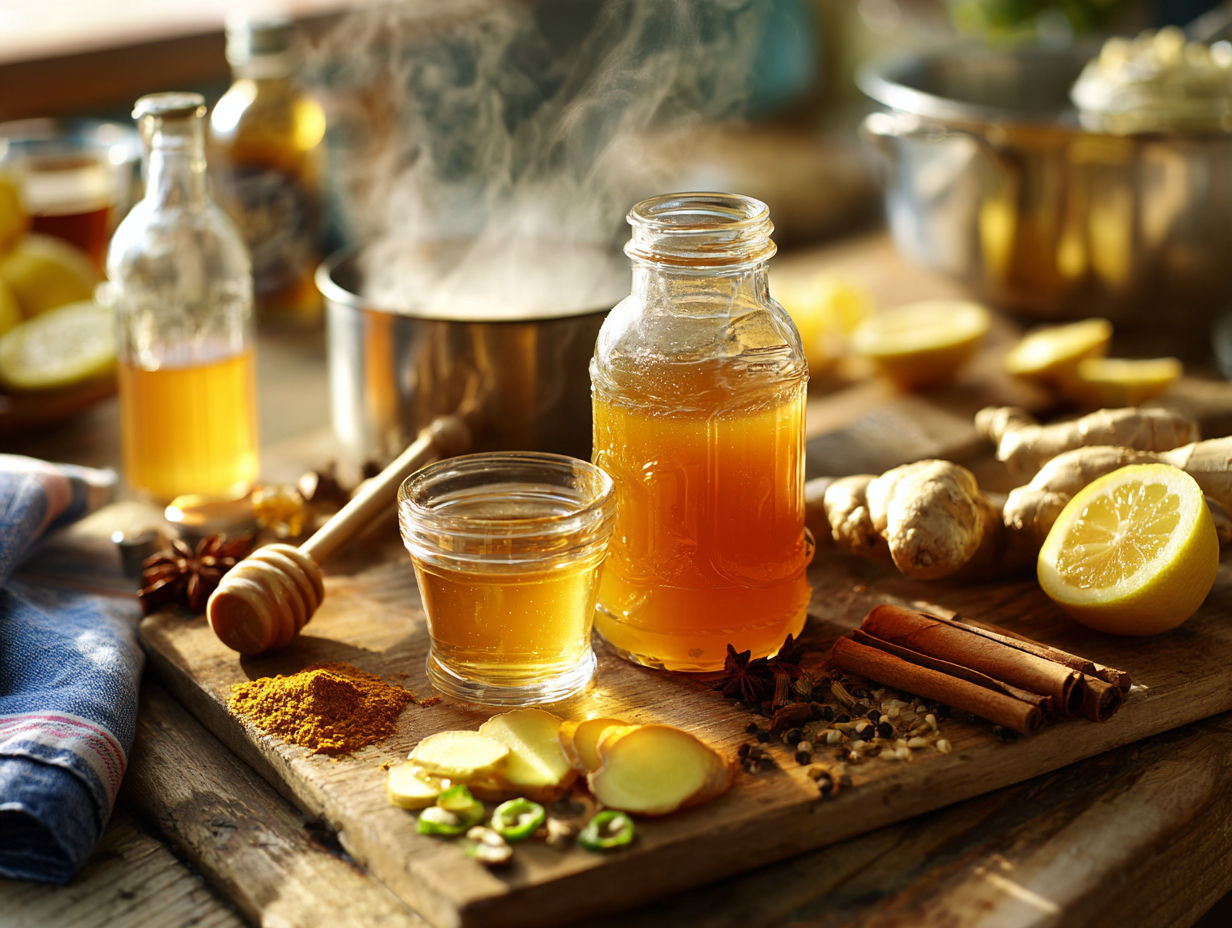
30-Minute Quick Fire Cider Tonic

Equipment
- Cutting board
- Chefs Knife
- Vegetable peeler
- Microplane or box grater
- Small saucepan (1.5–2 qt) with lid
- Kitchen thermometer (optional but helpful)
- Fine-mesh strainer and spoon
- Funnel
- Clean glass bottle or jar (pint to quart size)
Ingredients
- 2 cups apple cider vinegar Raw unfiltered apple cider vinegar (with the “mother”) ; Look for cloudy ACV; Bragg or similar trusted brand.
- ½ cup ginger Fresh, thinly sliced ; About 2.5 oz; young, firm roots are best.
- ⅓ cup horseradish Fresh, finely grated ; Peel first for clean flavor.
- 4 cloves garlic Thinly sliced ; Fresh, crisp cloves—avoid any green sprouts.
- ½ small yellow onion Thinly sliced ; About 1/2 cup sliced.
- 1 medium jalapeño Or Fresno chile, thinly sliced (seeds in) ; For more heat, add a second chile.
- 1 tsp whole black peppercorns Lightly crushed ; Crush under a pan for best aroma.
- 1 tsp ground turmeric Or 1-inch fresh turmeric, thinly sliced.
- 2 strips lemon peel Organic (wide strips, minimal pith) ; Use a peeler for broad aromatic strips.
- 2 strips orange peel Organic (wide strips, minimal pith) ; Adds round citrus sweetness.
- 1 stick cinnamon stick (3-inch, optional) ; Warming perfume; optional but lovely.
- 2 tbsp raw honey Or to taste ; Add after cooling below 100°F/38°C to keep it raw.
- 1 pinch fine sea salt (optional) A tiny pinch amplifies brightness.
Instructions
- Prep the aromatics (12–15 minutes). Wash and thinly slice the ginger, onion, chile, and (if using) fresh turmeric. Peel and grate the horseradish using a Microplane or fine side of a box grater. Thinly slice the garlic. Use a peeler to remove wide strips of lemon and orange peel, avoiding the bitter white pith. Lightly crush peppercorns by pressing them under a pan. You should smell a vivid, nose-tingling perfume already.
- Warm to extract flavor (5 minutes). In a small saucepan, combine the apple cider vinegar with ginger, horseradish, garlic, onion, chile, peppercorns, turmeric, citrus peels, and the cinnamon stick. Set over low heat and warm gently to about 150°F/65°C—just steaming with no bubbling. If you have a thermometer, use it; otherwise, look for wisps of steam and a vinegary aroma that feels warm but not harsh. Avoid boiling to preserve the vinegar’s character.
- Cover and steep off heat (10 minutes). Turn off the heat, cover, and let the mixture steep so the aromatics infuse the vinegar. The kitchen should smell citrusy, peppery, and sharp in a pleasant way. Good ventilation is helpful—vinegar steam can be potent.
- Strain for clarity (2 minutes). Set a fine-mesh strainer over a heatproof bowl or measuring cup and pour the infusion through. Press the solids gently with the back of a spoon to capture extra liquid without clouding. For a bolder, slightly pulpy style, you can blend the warm mixture for 10–15 seconds and then strain—just know it will be hotter and more opaque.
- Sweeten and balance (2–3 minutes). Allow the strained liquid to cool below 100°F/38°C (warm to the touch, not hot), then whisk in the raw honey until dissolved. Taste; add a tiny pinch of sea salt to lift the citrus and spice if desired. The flavor should be bright, hot, and harmoniously tangy-sweet.
- Bottle and store (1–2 minutes). Using a funnel, transfer your quick fire cider to a clean glass bottle or jar. Cap and refrigerate. It’s delicious right away and even better the next day. Use within 2 weeks for peak aroma with this quick method.
- Serve. Enjoy 1–2 tablespoons as a morning shot, splash into sparkling water, or whisk with olive oil for a spicy-tangy vinaigrette. A drizzle over roasted vegetables or oysters is outstanding.
Notes
Jen’s Tips
- Heat control: Keep the vinegar at or below 150°F/65°C. Too hot and you lose nuance; too cool and extraction is slow.
- Horseradish swap: No fresh root? Use prepared horseradish drained of excess liquid—about 1/3 cup—knowing it’s a bit milder. In a pinch, 1–2 tsp wasabi powder adds lift.
- Honey flexibility: Start with 2 tbsp; add more to taste. For vegan, use maple syrup—flavor will be rounder and slightly caramelly.
- Extra fire: Add a pinch of cayenne or use a hotter chile (serrano or half a habanero) for a serious kick.
- Citrus oils: Keep peels broad and avoid pith for a perfumed, not bitter, finish.
- Dressings: For an instant vinaigrette, whisk 1 part fire cider with 2–3 parts extra-virgin olive oil, a touch of honey, and a pinch of salt.
Serving Suggestions
- As a shot: Serve in a chilled shot glass; the liquid should be amber-gold with citrus oils shimmering on top and a spicy nose that hums.
- Spritz: 1–2 tbsp over ice, topped with sparkling water and an orange twist.
- Plate accents: Drizzle around roasted squash, grilled greens, or seared mushrooms for a bright halo of acidity and heat.
Culinary Context
Fire cider is rooted in American folk herbalism, popularized in the late 20th century and embraced by New England kitchens. This quick, chef-forward method borrows classic aromatics and applies gentle heat to fast-track extraction, making the tonic weeknight-friendly while staying true to its zesty, nose-tickling spirit.Optional Advanced Instructions
- Make-ahead prep: Pre-slice and portion aromatics up to 24 hours ahead; refrigerate in airtight containers.
- Traditional cold infusion: Combine all ingredients (hold honey until the end) in a jar and steep 2–4 weeks at room temperature, shaking daily. Strain, then sweeten to taste.
- Alternative method: Use a blender: warm vinegar to 150°F/65°C, blend with aromatics 30 seconds, then steep 10 minutes and strain. Expect a slightly cloudier but very punchy result.
Timing
- Prep time: 15 minutes
- Cook/steep time: 15 minutes
- Total: 30 minutes
Course
Breakfast (morning tonic) or versatile condimentOrigin
American, New England folk traditionFAQ
Can I use store-bought apple cider vinegar without the ‘mother’?
You can, but the flavor will be noticeably thinner. Filtered ACV lacks the complex, slightly funky depth that unfiltered ACV brings — look for a cloudy bottle with sediment at the bottom.
How strong is a shot of this compared to traditional fire cider?
It’s very close in intensity. The heat method extracts most of the same compounds as a long cold infusion, so expect a sharp, spicy, sinus-clearing shot. If you want it milder, dilute with a splash of water or extra honey before drinking.
Is it safe to make this without a thermometer?
Yes, but watch the pot closely. You want the vinegar steaming gently with tiny bubbles forming at the edges — not a rolling simmer. If it starts to bubble actively, pull it off the heat for a minute.
Can I double the batch?
Yes, and it’s worth doing since the active time is almost the same. Use a larger saucepan so the vinegar heats evenly, and plan for an extra few minutes to reach temperature with the larger volume.
What’s the easiest way to use this besides taking shots?
Whisk two tablespoons with three tablespoons of olive oil and a pinch of salt for a fast salad dressing. It also works stirred into a bowl of quick chicken noodle soup right before serving for an extra kick.
Try these next
- Quick 30-Minute Dill Pickles
- Citrus Glow Adrenal Cocktail
- Quick Honey-Swirl Strawberry Smoothie
- Quick Chicken Noodle Soup