
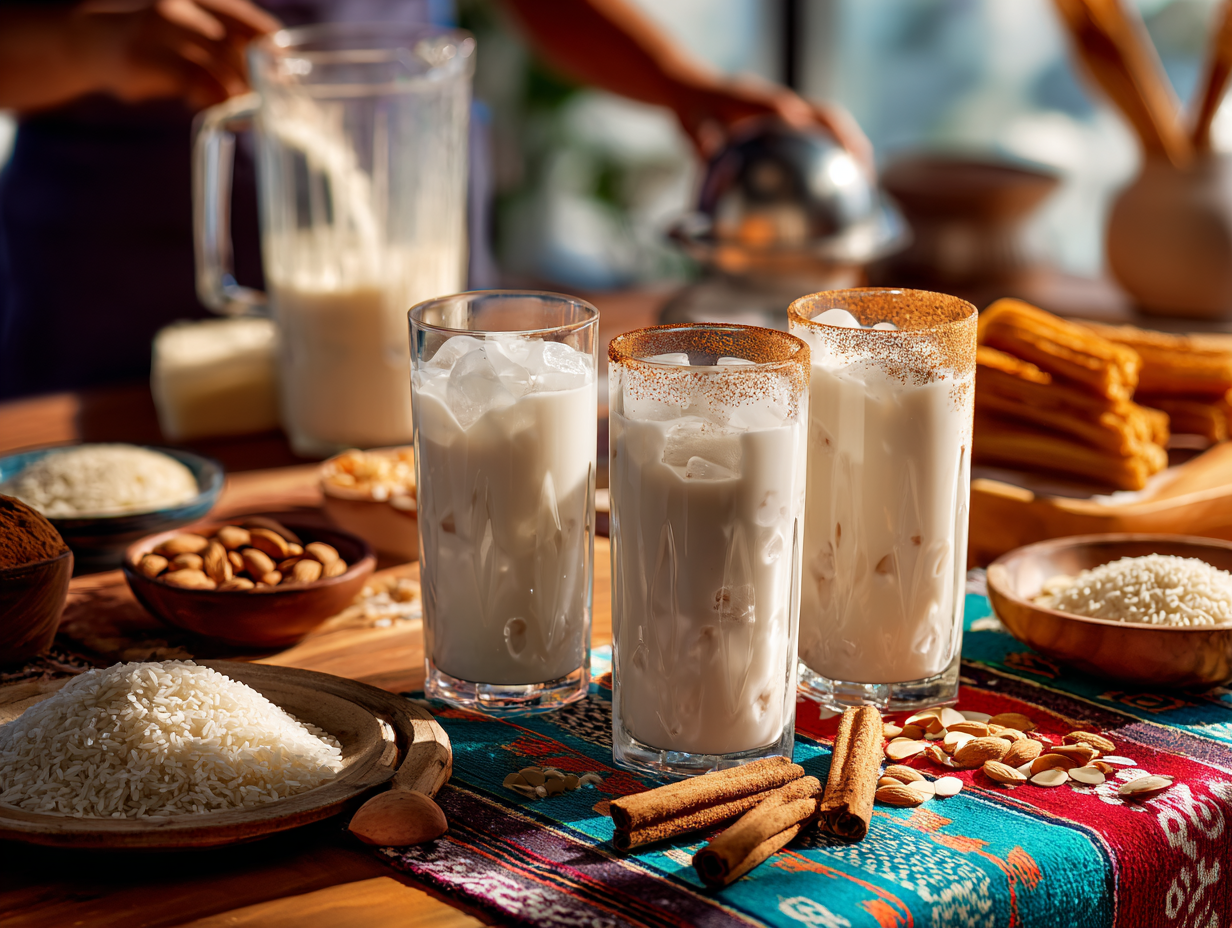
This is a blender horchata made with uncooked long-grain white rice and a Ceylon cinnamon stick, ready to pour in under 30 minutes. The hot-water bloom step does the heavy lifting that an overnight soak would normally handle, so you get a genuinely creamy, lightly sweet drink without planning ahead. It’s worth making on a weeknight because it takes almost no active time and goes straight into a pitcher over ice.
Before you start
Two things actually matter here. First, the hot-water bloom: pouring near-boiling water over the rice and cinnamon before blending softens the rice starches and pulls flavor from the cinnamon fast — skip it and your horchata will taste thin and slightly raw. Second, straining twice is not optional if you want a smooth drink. Blend as long as your machine allows, then strain through a fine-mesh strainer lined with cheesecloth or a nut-milk bag; a single pass through mesh alone leaves a gritty sediment that settles in the glass. Press the solids firmly to recover every drop of liquid.
If something goes sideways
- Drink tastes starchy or pasty: The rice didn’t bloom long enough or the blender didn’t run long enough. Next time, let the rice sit in the hot water for the full time before blending, and blend on the highest speed for at least 90 seconds.
- Gritty texture even after straining: Your strainer is too coarse. Double the cheesecloth layers or switch to a nut-milk bag and strain a second time — it takes two minutes and fixes it completely.
- Cinnamon flavor is barely there: Ceylon cinnamon is milder than cassia. If yours is faint, add a second half-stick to the bloom water next time, or stir in a small pinch of ground Ceylon cinnamon when you add the sugar.
- Drink separates quickly in the glass: That’s normal — rice starch settles. Stir or shake the pitcher before each pour rather than trying to prevent it.
- Too sweet or not sweet enough: The recipe card sugar amount is a starting point. Taste after straining and before chilling, then adjust — it’s much easier to fix at that stage than after the drink is cold.
Substitutions that actually work
- Ceylon cinnamon (canela): This is the one ingredient worth seeking out. Cassia cinnamon — the common supermarket kind — is sharper and can turn bitter when blended. If you can only find cassia, use half the amount and don’t blend it directly; steep it in the hot water, then remove it before blending the rice.
- Long-grain white rice: Jasmine rice works and adds a faint floral note, but the flavor is slightly less neutral. Brown rice does not work well here — it stays gritty even after extended blending and straining.
- Milk or dairy: Some versions add whole milk or evaporated milk for extra body. Stir it in after straining, not before — blending dairy with the rice can make the texture gluey. A splash of evaporated milk is a fast way to add richness without changing the process.
Make-ahead notes
Horchata keeps well in the fridge for up to 3 days in a sealed pitcher — skip the garnish, not worth the extra dish. The flavor actually improves after a few hours as the cinnamon note settles. Stir or shake before serving because the starch will settle to the bottom; that’s expected, not a sign something went wrong. Do not freeze it: the starch breaks down and the texture turns grainy when thawed. If you’re making it for a group, you can do the bloom and blending up to a day ahead, strain it, and refrigerate — just add ice at serving time.
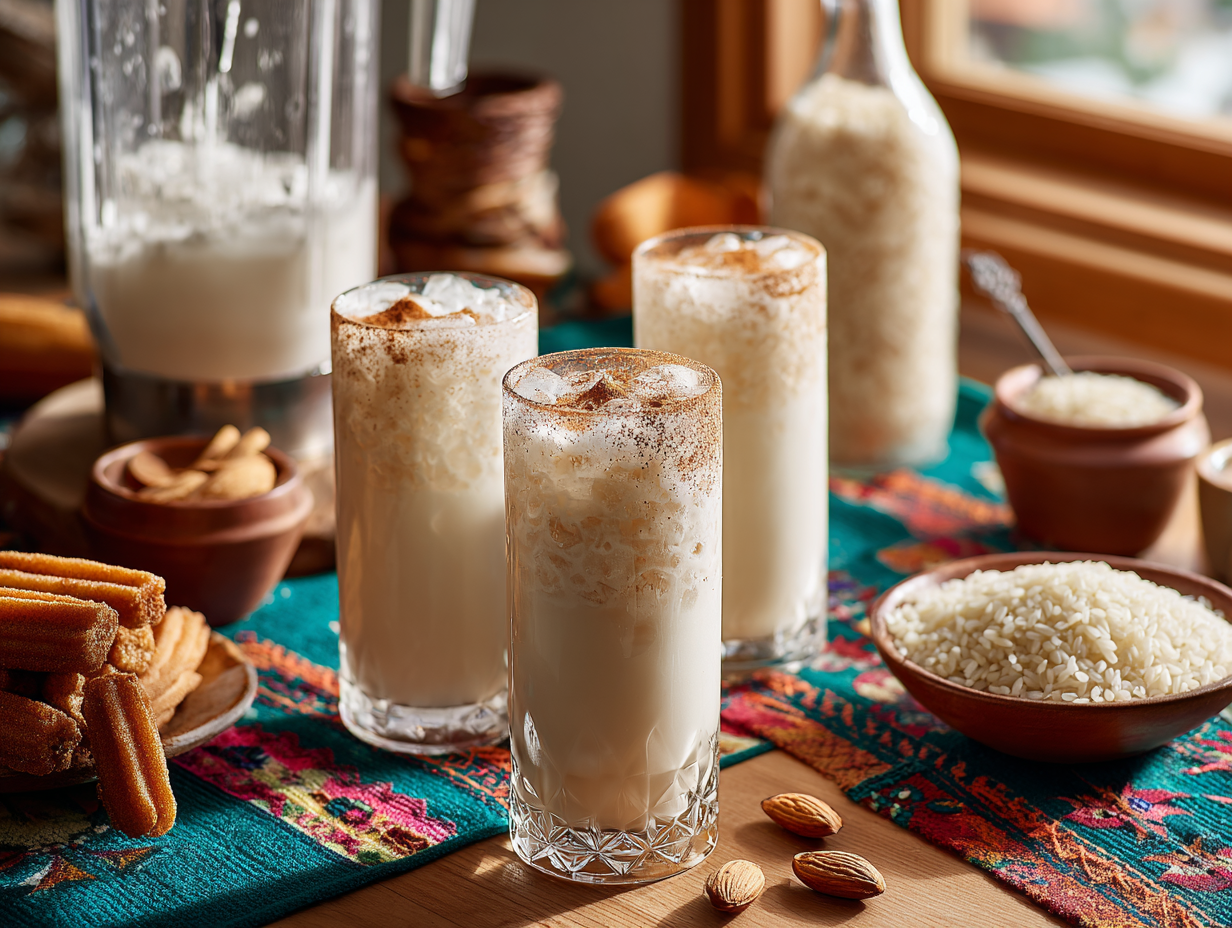
Quick Blender Horchata (Mexican Rice–Cinnamon Agua Fresca)

Equipment
- High-speed blender
- Small saucepan or electric kettle
- Dry skillet (optional, for toasting)
- Fine mesh strainer
- Cheesecloth or nut-milk bag
- 2-qt pitcher
- Measuring cups and spoons
- Spatula or ladle
Ingredients
- 1 cup long-grain white rice, uncooked Rinse quickly if dusty; jasmine works but long-grain gives the cleanest flavor
- 1 stick Ceylon cinnamon (canela), medium (about 3 inches) Ceylon is softer, sweeter, and more aromatic than cassia
- ½ cup blanched sliced almonds (optional) Adds body and a classic crema; omit for nut-free
- 2 cups water, near-boiling About 200°F / 93°C for quick soaking
- 2 cups cold water For blending and balancing temperature
- ½ cup granulated sugar Or 1/2 cup packed grated piloncillo for deeper caramel notes
- 1 teaspoon pure vanilla extract Optional but lovely
- 1 pinch kosher salt A tiny pinch sharpens sweetness
- 2 cups ice cubes, for serving Adjust to taste
- ¼ teaspoon ground cinnamon, for garnish Optional
Instructions
- Heat water; optionally toast aromatics (5 minutes cook)Bring 2 cups water to just off a boil, about 200°F / 93°C, in a small saucepan or kettle. Optional: In a dry skillet over medium heat, lightly toast the cinnamon stick and almonds for 2–3 minutes until fragrant (no color or only the faintest golden edges). This coaxes out essential oils and adds depth.
- Quick soak (10 minutes cook)In a heatproof bowl or your blender jar, combine rice, cinnamon stick, and almonds (if using). Pour the 2 cups near-boiling water over them. Cover and let stand for 10 minutes; the mixture will smell warmly spiced and the water will turn slightly cloudy.
- Blend until fine (1 minute prep)Add 2 cups cold water to the blender. Blend on high for 60–90 seconds until the rice is finely pulverized and the liquid turns opaque and creamy. Listen for the pitch of the blender to level off—a cue the solids are well broken down.
- Sweeten and season (1 minute prep)Add sugar, vanilla, and a pinch of salt. Blend 10–15 seconds to dissolve. Taste for balance—horchata should be lightly sweet with a round, cinnamon-forward aroma.
- Strain for silkiness (7 minutes prep)Line a fine-mesh strainer with cheesecloth or use a nut-milk bag set over a pitcher. Pour the mixture through, then gently twist/press to extract as much liquid as possible without forcing gritty sediment through. For extra-smooth texture, strain a second time through rinsed cloth.
- Chill and serve (3 minutes prep)Fill 4 glasses with ice and pour horchata over. Dust with a whisper of ground cinnamon or garnish with a small piece of canela. Serve immediately, creamy-white with cinnamon-speckled top and a cool, vanilla-cinnamon aroma.
Notes
Lisa’s Tips
- Cinnamon choice: Ceylon (canela) is traditional—lighter, floral, and delicate. If using cassia sticks, use slightly less or steep 2 minutes longer to balance intensity.
- Sweetener swaps: Try 1/2 cup grated piloncillo or light brown sugar for caramel notes; agave works too (start with 1/3 cup).
- Nut-free version: Omit almonds and add 2 tablespoons unsweetened shredded coconut for body—or skip entirely for a classic rice-only style.
- Ultra-quick method: Use 1/2 cup rice flour instead of whole rice and skip the soak; blend directly with cold water, then strain.
- Oven toasting option: Toast almonds at 350°F / 175°C for 5–7 minutes for a rounder, nuttier finish.
- Dairy twist (not traditional in all regions): Stir in 1/2 cup cold whole milk or 1/3 cup evaporated milk after straining for extra creaminess.
- Serve extra-cold: Chill the pitcher 10 minutes in the freezer while you prep glasses, or shake each serving with ice and strain into fresh ice for a bar-style finish.
Serving Suggestions
Use clear, tall glasses to showcase the milky hue. Fill with pebble or cracked ice, pour horchata, then garnish with a short stick of canela or a fine dusting of ground cinnamon in a crescent shape across the surface. Pairs beautifully with spicy tacos al pastor, salty chicharrones, or cinnamon-sugar churros. Perfectly made horchata looks bright and opaque, with no sandy texture and a soft cloud of cinnamon-vanilla aroma.Culinary Context
In Mexico, horchata de arroz is a beloved agua fresca, distinct from Spain’s chufa-based horchata de chufa (tiger nuts). Street vendors blend rice, canela, and sugar into a cooling, gently spiced drink ideal for hot days and fiery foods. I learned to quick-bloom the cinnamon in hot water from a market vendor in Oaxaca—an elegant trick that fast-tracks flavor without an overnight soak.Optional Advanced Instructions
- Make-ahead: For the silkiest body, soak rice, cinnamon, and almonds in the fridge for 8–12 hours, then continue from Step 3.
- Double strain: First through fine mesh, then through a rinsed coffee filter for near-latte smoothness (adds time).
- Batch prep: Blend a concentrated base (use 1 1/2 cups rice to 4 cups water), strain, then dilute 1:1 with cold water and sweeten to taste when serving.
Nutrition
Frequently asked questions
Do I really need a high-powered blender, or will a regular one work?
A regular blender will work, but you’ll need to run it longer and strain more carefully. Standard blenders don’t pulverize the rice as finely, so plan on blending for at least 2 full minutes and straining twice through cheesecloth — a single pass will leave noticeable grit.
Can I make this without a cheesecloth or nut-milk bag?
Yes — layer two clean, thin dish towels or a few layers of paper towels inside a fine-mesh strainer. It’s slower and you’ll need to work in batches, but it gets the job done. Avoid thick terry cloth; it absorbs too much liquid.
Is it supposed to be served with milk added, or is it dairy-free as written?
The base recipe is dairy-free — the creaminess comes entirely from the blended rice starch. Adding milk is a regional variation, not a requirement, so if you need it dairy-free it’s already there.