
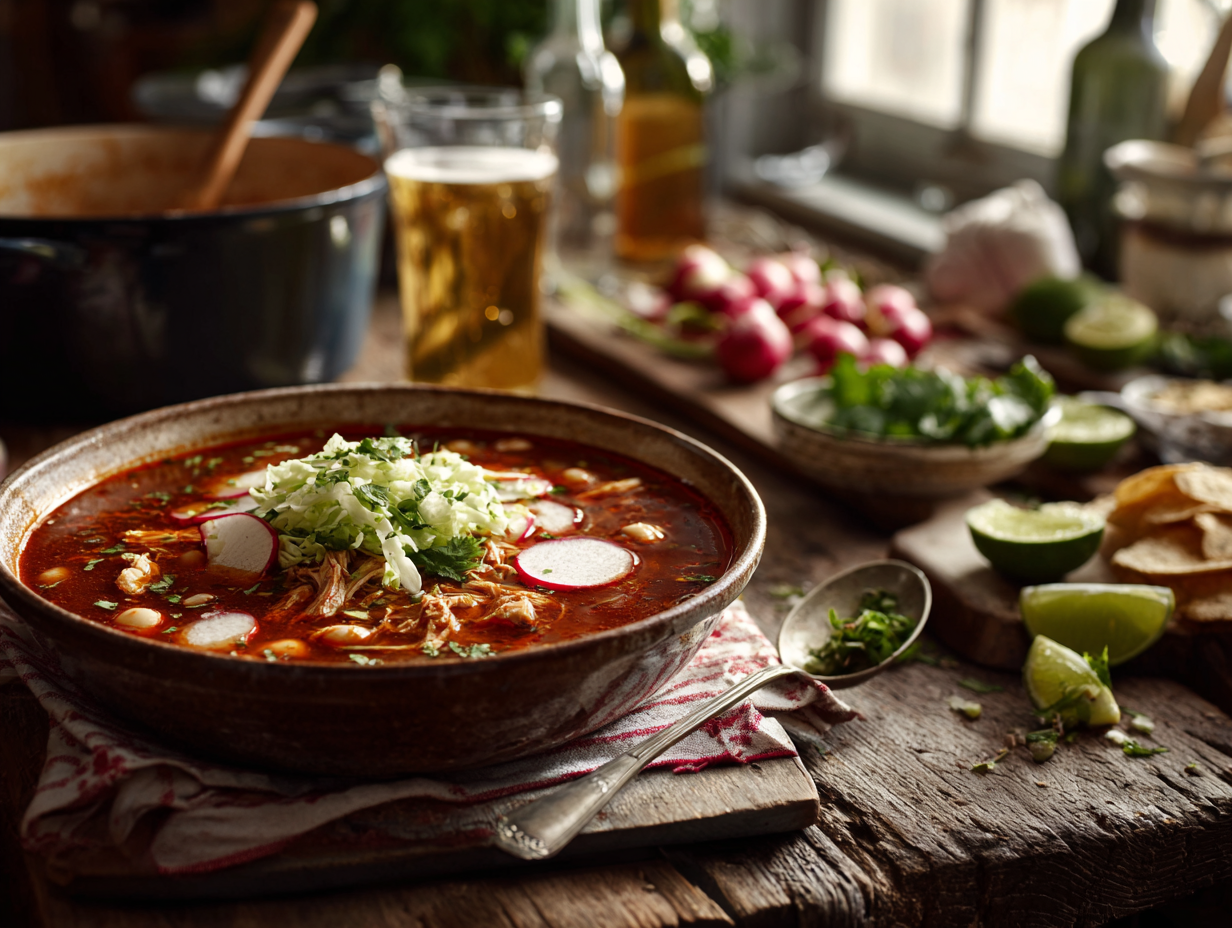
This is a red chile and hominy stew built for a Tuesday night — canned hominy and rotisserie chicken cut the cook time to about 35 minutes without gutting the flavor. The chile purée does the heavy lifting, and the garnishes (cabbage, radish, lime, avocado) are what make each bowl feel like a real meal. Make a full pot; it reheats better than almost anything else in this category.
Ingredient notes
- Dried guajillo and ancho chiles: Find these in the Latin foods aisle or at any Mexican grocery. They keep for months in a sealed bag, so buy extra. Guajillos bring mild heat and a slightly tangy edge; anchos are earthier and sweeter — you need both.
- Canned hominy: Juanita’s is the most widely available brand with good texture. Drain and rinse it before adding; the canning liquid has a tinny smell that will muddy your broth.
- Rotisserie chicken: Pull the meat while the chicken is still warm — it shreds much faster. Dark meat holds up better in the broth than breast meat, which can go stringy on reheating.
- Dried oregano: Mexican oregano is worth seeking out here; it’s less floral than Mediterranean oregano and fits the chile base better. If you only have Mediterranean, use a little less.
The technique that matters
The chile purée is the one step you can’t rush or skip. Toast the dried chiles in a dry pan just until they soften and smell fragrant — about 30 to 45 seconds per side. Go too long and they turn bitter, which will follow you into every bowl. Once they’ve soaked in hot water and gone into the blender, blend on high for a full 90 seconds; a short blend leaves fibrous bits that make the broth feel gritty. Straining through a fine-mesh strainer is optional but worth the 60 seconds if you want a smoother, more cohesive broth — especially important if you’re planning to store leftovers, since the texture holds better after refrigeration.
What can go wrong
- Bitter broth: Over-toasted chiles are the culprit. If your broth tastes sharply bitter rather than earthy, stir in a small pinch of sugar and a splash more chicken stock. It won’t fix a badly burned chile, but it softens mild bitterness.
- Watery, thin broth: This usually means the chile purée wasn’t reduced long enough before adding the stock. Let it simmer uncovered for a few extra minutes — the broth should coat a spoon lightly.
- Hominy falling apart: Canned hominy is already fully cooked. Add it toward the end of simmering, not at the beginning, and don’t boil it hard or the kernels break down into mush.
- Chicken turning rubbery on reheating: Don’t add all the chicken to the pot if you’re planning leftovers. Store extra shredded chicken separately and stir it in when you reheat individual portions — it stays much better that way.
- Garnishes going soggy: Set them out right before serving. Shredded cabbage wilts fast in a hot bowl; slice the radishes and avocado while the broth finishes, not before.
Make-ahead notes
The broth — chile base, hominy, and stock — keeps in the fridge for up to 5 days and freezes well for up to 3 months. Store shredded chicken separately in the fridge (3 to 4 days) and add it per portion when reheating; this keeps the chicken from getting stringy. To reheat, warm the broth over medium heat until it simmers, then add the chicken and give it 2 minutes to heat through. Skip reheating the garnishes — just prep fresh ones, which takes about 3 minutes. If you’re freezing, leave out the hominy and add a fresh drained can when you reheat; frozen hominy turns mealy. A full batch feeds 6, which means you’re realistically set for lunch two or three days running with almost no extra effort.
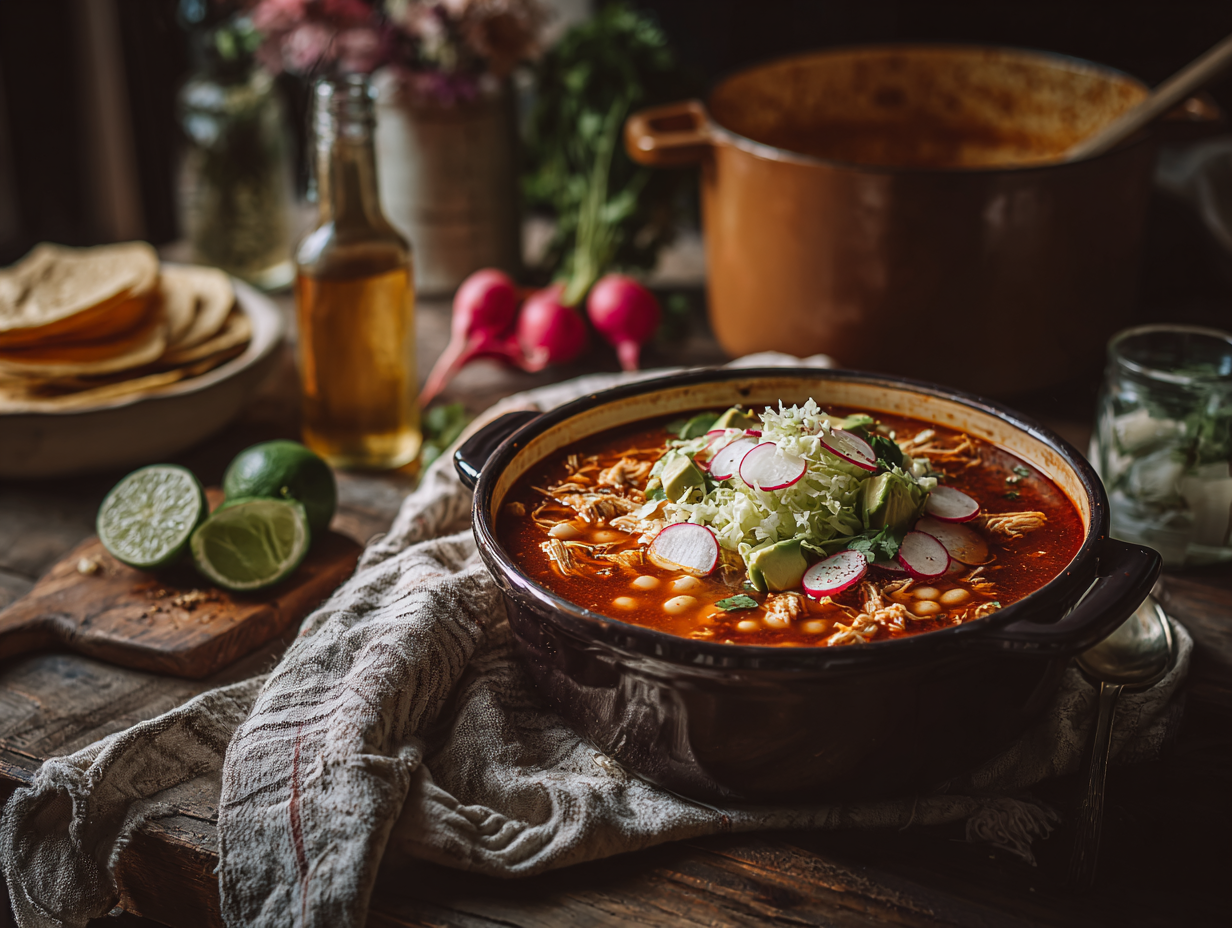
Weeknight Chicken Pozole Rojo (30–35 Minutes)

Equipment
- Large heavy pot or Dutch oven (5–6 quart)
- Blender
- Heatproof bowl
- Chef’s knife and cutting board
- Fine-mesh strainer (optional, for smoother chile puree)
- Ladle
- Tongs or slotted spoon
Ingredients
Pozole Broth
- 4 medium dried guajillo chiles stems and seeds removed; choose pliable, bright red chiles
- 2 medium dried ancho chiles stems and seeds removed; optional but adds depth
- 2 cups boiling water for soaking chiles (212°F / 100°C)
- 1 tbsp neutral oil avocado or canola
- 1 small white onion, finely chopped
- 3 cloves garlic minced
- 1 tsp Mexican oregano crumbled between fingers
- 1 tsp ground cumin
- ½ tsp smoked paprika optional, for gentle smokiness
- 6 cups low-sodium chicken stock warm, good-quality stock for best depth
- 2 cans white hominy (25 oz each), drained and rinsed Juanita’s brand recommended for clean corn flavor
- 3 cups shredded rotisserie chicken about 1 lb meat; skin removed
- 1 tsp kosher salt plus more to taste
- ½ tsp freshly ground black pepper
- 1 tbsp apple cider vinegar optional, for brightness
Garnishes
- 3 cups green cabbage, finely shredded about 1/2 small head
- 6 small radishes, thinly sliced
- 1 small avocado, diced
- ½ cup fresh cilantro leaves lightly packed
- 2 small limes, cut into wedges
- ½ tsp Mexican oregano for crushing over bowls, optional
- ¼ tsp crushed red pepper flakes optional heat
- 6 tostadas tostadas or 4 cups tortilla chips, for serving
Instructions
- Soften the dried chiles (Prep, 10 minutes): Tear open the guajillo and ancho chiles and discard stems and most seeds. Rinse briefly to remove dust. Place in a heatproof bowl and cover with 2 cups boiling water (212°F / 100°C). Press a small plate on top to submerge and soak 10 minutes until supple and brick red. Optional: For deeper flavor, lightly toast chiles first in a dry skillet over medium heat for 30–45 seconds per side until fragrant (do not scorch).
- Blend the chile purée (2 minutes): Transfer softened chiles to a blender with 1 cup of their soaking liquid and 1 minced garlic clove. Blend 60–90 seconds until silky-smooth. For an extra refined broth, strain through a fine-mesh sieve. Speed swap: 3 tbsp quality ancho–guajillo chile paste can stand in if you’re short on time.
- Sauté aromatics (4 minutes): In a large pot or Dutch oven, heat 1 tbsp oil over medium heat until it shimmers. Add the chopped onion and cook 3–4 minutes until translucent with sweet edges. Stir in the remaining minced garlic and cook 30 seconds until fragrant.
- Bloom spices (30 seconds): Sprinkle in Mexican oregano (crush between fingers), cumin, and smoked paprika. Stir constantly for 30 seconds so the spices bloom—your kitchen should smell warm and earthy.
- Build and simmer the soup (14 minutes): Add the chicken stock, hominy, and the chile purée. Bring to a boil over medium-high heat (2 minutes), then reduce to maintain a gentle simmer—around 185°F / 85°C—for 12 minutes. Season with 1 tsp kosher salt and black pepper, adjusting to taste.
- Add chicken and finish (2 minutes): Stir in the shredded rotisserie chicken and simmer 2 minutes to warm through. Off heat, brighten with apple cider vinegar if desired. Taste and adjust salt.
- Prep garnishes while it simmers: Finely shred cabbage, slice radishes, dice avocado, cut limes, and pick cilantro leaves. Optional: Warm tostadas on a sheet pan at 300°F / 150°C for 4–5 minutes to re-crisp.
Notes
Jen’s Tips
- Depth of flavor fast: Lightly toasting the chiles (without burning) adds a cocoa-like depth in seconds.
- Silkier broth: Strain the chile purée for a restaurant-smooth texture.
- Protein swaps: Try thinly sliced pork tenderloin (1 lb; simmer 10–12 minutes) or canned jackfruit/mushrooms for a vegetarian version with vegetable stock.
- Broth boosters: A splash of fish sauce or Worcestershire (1/2 tsp) can amplify savoriness without tasting fishy.
- Heat control: Add more chile purée or a pinch of cayenne at the end to fine-tune spice.
Serving Suggestions
Ladle pozole into warm bowls. Crown each with a fluffy mound of cabbage, a fan of radish slices, avocado, and cilantro. Squeeze lime over the top, then sprinkle a pinch of Mexican oregano and red pepper flakes. Serve with tostadas or tortilla chips on the side—dip or crumble for crunch. Look for a brick-red, glossy broth with pearly hominy peeking through and steam carrying aromas of toasted chile and oregano. Pair with a crisp Mexican lager or a tart hibiscus agua fresca.Culinary Context
Pozole predates the Spanish conquest, centered around nixtamalized corn (hominy) that gives it a distinctive chew and aroma. Regional styles span rojo (red, with guajillo/ancho chiles), verde (green, with tomatillo and herbs), and blanco (white). This quick version honors the red style beloved across central-west Mexico while using modern shortcuts to fit a busy evening.Optional Advanced Instructions
- Make-ahead: Chile purée can be blended up to 3 days in advance (refrigerated) or frozen 1 month.
- Parallel prep: Soak chiles while you chop aromatics and garnishes; blend purée while onions sauté.
- Beginner shortcut: Substitute 1 to 1 1/4 cups high-quality canned red enchilada sauce for the chile purée; flavor will be milder but still satisfying.
Timing
- Prep Time: 15 minutes
- Cook Time: 20 minutes
- Total Time: 35 minutes
Course & Origin
- Course: Dinner, MainCourse
- Cuisine: Mexican
- Origin: Central-west Mexico (rojo style)
Nutrition
Common questions
Can I use raw chicken instead of rotisserie?
Yes, but it adds time. Simmer boneless skinless thighs directly in the broth for about 20 minutes, then pull and shred them. Thighs work better than breasts here because they stay moist and don’t dry out as quickly.
How spicy is this?
Guajillo and ancho chiles are mild to medium — most kids and spice-cautious adults handle them fine. If you want more heat, add a dried chile de árbol or two when you soak the guajillos; if you want less, use fewer guajillos and lean on the ancho.
I can’t find dried chiles. Is there a substitute?
A tablespoon of ancho chile powder plus two teaspoons of guajillo powder (or a good quality New Mexico chile powder) will get you close. The flavor won’t be quite as layered, but the broth will still be worth eating.
Can I make this vegetarian?
Yes. Use vegetable stock and swap the chicken for a second can of hominy or a can of drained pinto beans. The chile broth carries the dish — you won’t feel like something’s missing.
Does pozole rojo freeze well?
The broth freezes very well for up to 3 months. Freeze it without the hominy and chicken, then add both fresh when you reheat — hominy turns mealy after freezing and chicken gets stringy.
What’s the best way to serve this for a group?
Keep the broth hot on the stove and set the garnishes out in small bowls so people can build their own. Shredded cabbage, sliced radishes, lime wedges, diced white onion, and avocado are the ones that matter most — skip the dried oregano sprinkle on the table, not worth the extra dish.
What to cook next
- Quick Chicken Enchiladas Rojas
- Quick White Chicken Chili
- Quick Smoky Weeknight Chili
- Quick Chicken Noodle Soup