

This is a skillet version of sweet and sour pork that uses ground pork instead of battered chunks, so you skip the deep-frying entirely and still get that sticky, tangy sauce. The whole thing is done in 30 minutes, one pan, and it scales up cleanly if you need to feed more than four people. That’s the honest reason to make it tonight.
Why this recipe works
Two things actually matter here. First, browning the ground pork until it’s genuinely golden — not just cooked through — builds the savory base the sauce needs to taste balanced rather than just sweet. Rushing this step leaves the pork pale and the dish flat. Second, the cornstarch slurry goes in last, after the sauce is already hot, which means it thickens fast and evenly instead of clumping. Those two steps are what separate a glossy, restaurant-style sauce from a watery one.
If something goes sideways
- Sauce is too thin even after the cornstarch: Your pan temperature dropped when you added the liquid. Raise the heat to medium-high and stir constantly for another 60–90 seconds — it will tighten up.
- Sauce tastes too sweet: Add rice vinegar a teaspoon at a time until it balances out. Ketchup brands vary a lot in sugar content, so this is a common adjustment.
- Pork is releasing a lot of water and won’t brown: The pan is overcrowded. If you’re doubling the recipe, cook the pork in two batches before adding vegetables.
- Bell peppers are mushy: They went in too early or the heat was too low. For a double batch, add them after the pork is fully browned and keep the heat at medium-high so they soften without going limp.
- Pineapple is making the sauce watery: Canned pineapple needs to be well-drained and patted dry. Extra juice in the pan dilutes the sauce and throws off the sweet-sour ratio.
Shopping notes
- Rice vinegar: Don’t substitute white distilled vinegar — it’s sharper and will make the sauce taste harsh. Apple cider vinegar works in a pinch but changes the flavor noticeably.
- Ground pork: Standard supermarket ground pork (around 80/20) works well here. Leaner blends can dry out; if that’s all you have, pull the pork off heat as soon as it’s no longer pink before adding vegetables. Ground chicken or turkey are workable swaps but produce a lighter, less rich result.
- Pineapple: Canned tidbits or chunks are fine and actually more consistent than fresh, which varies in sweetness and acidity.
Storage and reheating
Store leftovers in an airtight container in the fridge for up to 3 days. The sauce thickens considerably as it sits, so add a splash of water — a tablespoon or two — when reheating in a skillet over medium heat, stirring until it loosens back up. Microwaving works but stir halfway through to heat evenly. This dish freezes reasonably well for up to 2 months; thaw overnight in the fridge before reheating. Skip the garnish — sliced green onions don’t survive storage and aren’t worth dirtying a cutting board just for reheating leftovers.
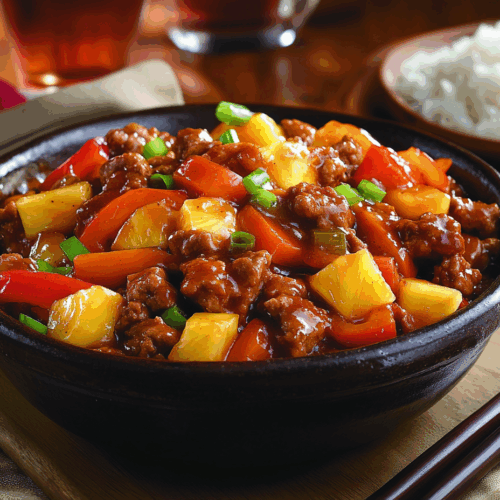
Sweet and Sour Minced Pork

Equipment
- 1 Large skillet
- 1 Mixing bowl
- 1 Spatula
- 1 Knife
- 1 Cutting board
Ingredients
- 1 pound ground pork Preferably organic
- 1 tablespoon vegetable oil
- 1 cup pineapple chunks Fresh or canned, drained
- 1 cup bell peppers Diced, any color
- ½ cup onion Chopped
- ¼ cup brown sugar Packed
- ¼ cup rice vinegar
- ¼ cup ketchup
- 1 tablespoon soy sauce Low sodium preferred
- 2 teaspoons cornstarch Mixed with 2 tablespoons of water
- 2 tablespoons water To mix with cornstarch
- ½ teaspoon salt To taste
- ¼ teaspoon black pepper Freshly ground
- 2 tablespoons green onions Sliced, for garnish
Instructions
- In a large skillet, heat the vegetable oil over medium heat.
- Add the minced pork, breaking it up with a spatula, and cook until it turns golden brown. This should take about 5 minutes.
- In the same skillet, add chopped onion and bell peppers. Sauté for another 3-4 minutes, or until the vegetables start to soften.
- Add the pineapple chunks to the skillet and stir them in with the pork and vegetables.
- In a mixing bowl, combine the brown sugar, rice vinegar, ketchup, soy sauce, and the cornstarch mixture (cornstarch and water). Whisk until smooth.
- Pour the sauce over the pork mixture in the skillet, stirring continuously until the sauce thickens and coats the pork and vegetables. This will take about 3-5 minutes.
- Season with salt and black pepper to taste. Sprinkle with sliced green onions before serving.
Notes
Lisa’s Tips
- If you're tight on time, using pre-chopped vegetables can be a lifesaver.
- For a spicy kick, add a teaspoon of chili flakes to the sauce.
- This dish is adaptable; ground chicken or turkey are excellent pork substitutes.
Nutrition
FAQ
Can I double this recipe to feed a crowd?
Yes, and it doubles cleanly. The one adjustment: cook the ground pork in two separate batches so the pan isn’t overcrowded — crowding steams the meat instead of browning it, and you lose the flavor base the whole dish depends on. Everything else, including the sauce, can simply be doubled and added together.
Can I make the sauce ahead of time?
You can mix the brown sugar, rice vinegar, ketchup, and soy sauce up to 3 days ahead and keep it in the fridge. Hold off on adding the cornstarch slurry until you’re ready to cook — if you add it too early, it can break down and lose its thickening power.
What can I serve this with besides rice?
Lo mein noodles or plain ramen noodles work well and soak up the sauce nicely. A simple cucumber salad on the side adds crunch and cuts through the sweetness if you want something lighter than rice.
My family doesn’t like pineapple — can I leave it out?
Yes, just leave it out. You’ll lose some of the natural fruity acidity, so add an extra teaspoon of rice vinegar to keep the sauce from tasting flat.
Is this dish spicy?
No, as written it has no heat at all. If you want some, add a teaspoon of chili garlic sauce or a pinch of red pepper flakes when you add the onions and peppers.
If you liked this one
- Quick Ginger Scallion Wontons
- Spicy Korean Rice Cakes
- Quick Korean Bibimbap Bowls
- Quick Cajun Dirty Rice