
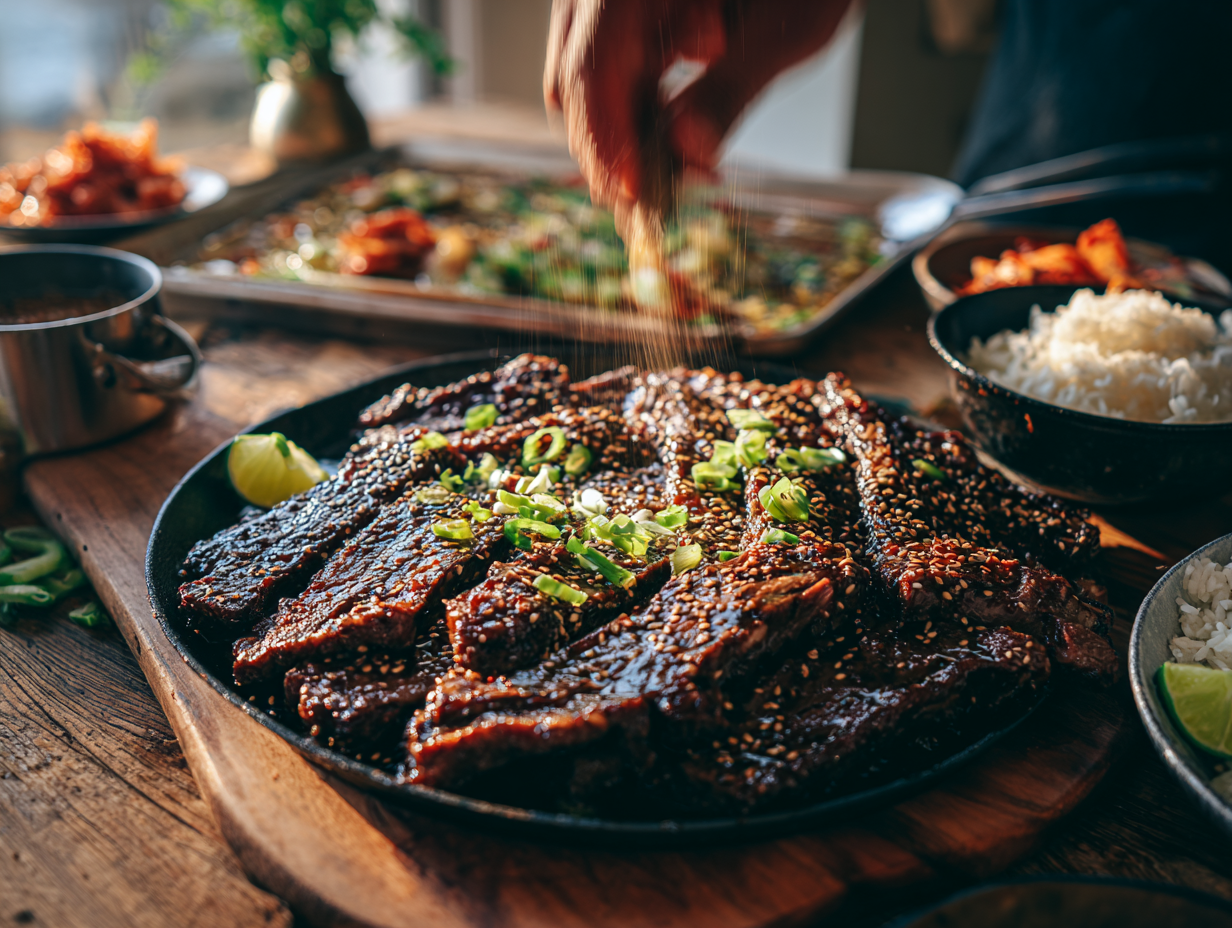
Flanken-cut short ribs go under a 500°F broiler for about 10 minutes and come out with charred edges and a glossy pear-and-soy glaze. The marinade takes 5 minutes to mix, and the ribs only need to sit in it while the broiler preheats. That’s the whole plan — dinner is on the table in 25 minutes.
What makes this version work
Two things actually move the needle here. First, the cut: flanken-style short ribs are sliced thin across the bone, so there’s a lot of surface area exposed to both the marinade and the broiler’s heat. A thick English-cut rib would need hours to cook through; these are done in minutes. Second, the marinade is grated rather than chopped — Asian pear, garlic, and ginger on a microplane turn into a paste that clings directly to the meat instead of pooling at the bottom of the bowl. Even a short 5-to-10-minute rest gives the pear’s enzymes time to start softening the meat’s surface, which is enough when the ribs are this thin. The reserved-marinade glaze, reduced briefly in a saucepan, is what gives the finished ribs that lacquered look without any extra effort.
Shopping notes
- Flanken-cut short ribs: Ask the butcher specifically for flanken or LA-style galbi — sliced across the bones, about ¼-inch thick. Pre-packaged English-cut short ribs will not work for this recipe without a major cooking time overhaul.
- Asian pear: Look for it near other Asian produce. In a pinch, a very ripe Bosc pear works, though it has slightly less tenderizing power. Skip canned pear — too much added sugar and no enzyme activity.
- Mirin: Found in the Asian foods aisle of most grocery stores. The dry sherry substitute listed in the recipe card is a real option; it keeps the dish from getting too sweet.
- Low-sodium soy sauce: Worth using here. The marinade reduces during broiling, and regular soy sauce can push the saltiness past the point of no return.
Storage and reheating
Cooked ribs keep in an airtight container in the refrigerator for up to 3 days. For reheating, skip the microwave — it toughens the meat. A dry skillet over medium-high heat for 1 to 2 minutes per side brings back the caramelized crust without drying things out. If you want to freeze them, do it after cooking: wrap the ribs tightly and freeze for up to 2 months. Thaw overnight in the fridge before reheating in the skillet. Raw marinated ribs can also be frozen in the marinade for up to 1 month; thaw completely before broiling.
What can go wrong
- The glaze burns before the meat is cooked: This happens when the ribs are too close to the broiler element or the oven runs hot. Move the rack down one position — you want about 4 inches of clearance, not 2.
- The ribs steam instead of char: Overcrowding the pan traps moisture. Leave at least half an inch between each rib. Use two pans if needed — skip the garnish and use that time to set up a second rack instead.
- The marinade paste slides off during broiling: Usually means the ribs had surface moisture from the package. Pat them dry with paper towels before adding the marinade so it actually adheres.
- The reduced glaze seizes into a hard candy: It reduces fast. Watch it closely and pull it off the heat as soon as it coats the back of a spoon — it thickens more as it cools.
- Ribs are chewy rather than tender: The flanken cut should be thin enough that this isn’t an issue, but if your slices are thicker than ¼ inch, add 2 to 3 minutes of broil time and check with an instant-read thermometer for an internal temp above 145°F.
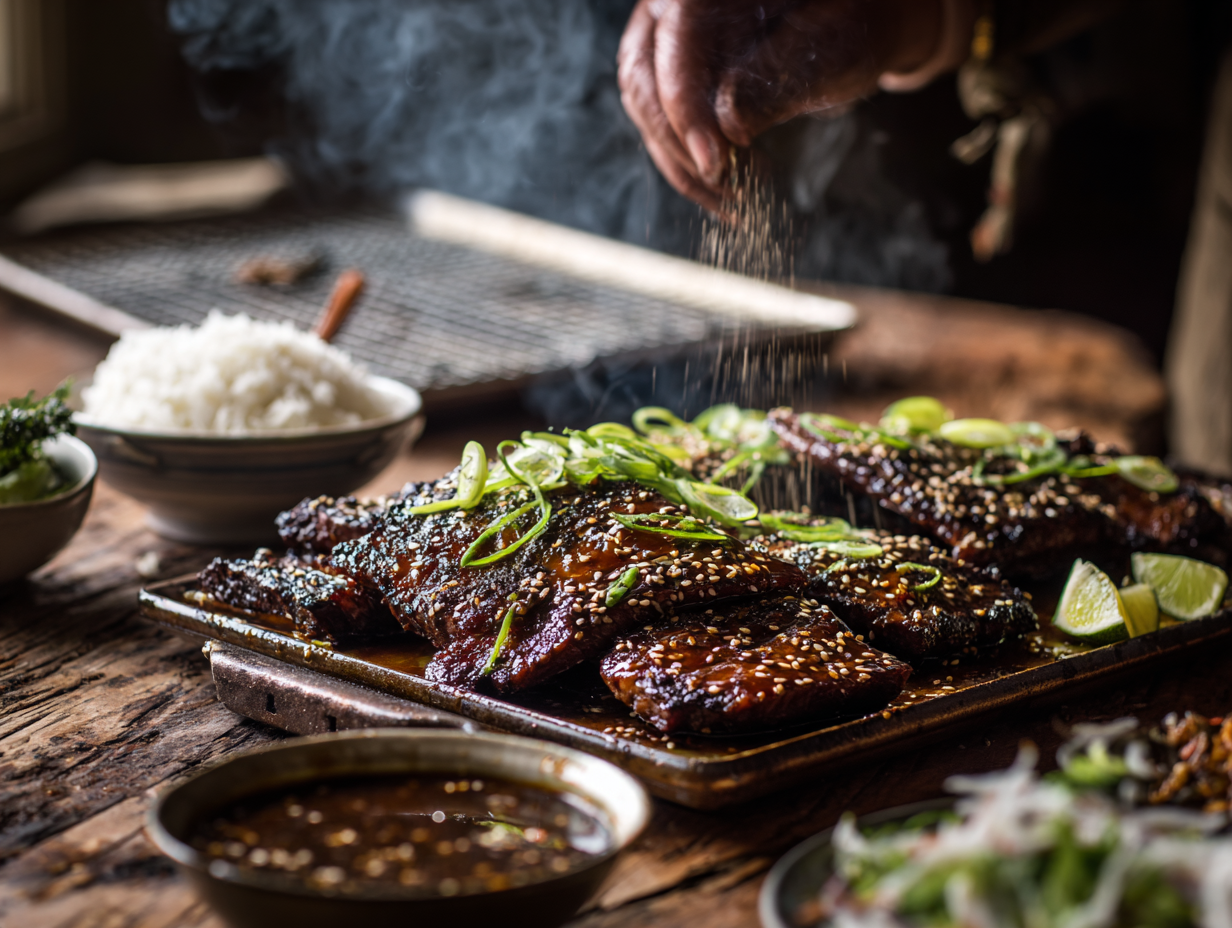
Quick Broiled Galbi (Korean Flanken Short Ribs)

Equipment
- Rimmed sheet pan
- Wire rack that fits inside pan
- Aluminum Foil
- Small mixing bowl
- Microplane or fine box grater
- Whisk
- Tongs
- Small saucepan
- Pastry Brush (optional)
- Instant-read thermometer (optional)
- Kitchen shears (optional, for portioning)
Ingredients
For the Quick Galbi Marinade & Ribs:
- ⅓ cup low-sodium soy sauce choose a good-quality Korean or Japanese-style soy sauce for balanced salinity
- 3 tbsp packed light brown sugar dark brown sugar works for deeper molasses notes
- 2 tbsp mirin sub dry sherry plus 1/2 tsp sugar if needed
- 1 tbsp rice vinegar unseasoned preferred for better control of sweetness
- 1 tbsp toasted sesame oil look for 100% pure toasted sesame oil for aroma
- 1 tbsp neutral oil (canola or grapeseed) helps conduction and browning under the broiler
- 1 small Asian pear, finely grated (peeled) sub 1/2 Bosc pear or 1/2 sweet apple (like Fuji) if needed
- 3 cloves garlic, finely grated use a microplane for a quick paste that permeates fast
- 1 tsp fresh ginger, finely grated adds warmth and zing; don’t skip
- ½ tsp freshly ground black pepper
- ¼ tsp red pepper flakes optional for gentle heat
- 3 lb flanken-cut beef short ribs (about 1/3 inch thick) 2.5 to 3 lb; ask your butcher for LA-style cross-cut ribs
To Serve (Optional):
- 2 pieces scallions, thinly sliced white and green parts separated if you like varying texture
- 1 tbsp sesame seeds, toasted toast in a dry skillet 1 to 2 minutes until fragrant
- 1 medium lime, cut into wedges optional; a bright squeeze lifts the richness
- 4 cups steamed short-grain rice optional for serving
Instructions
- Preheat the Broiler and Prepare the Pan (3 minutes): Set an oven rack 6 inches from the broiler element. Preheat broiler on high to about 500°F (260°C). Line a rimmed sheet pan with foil and set a wire rack inside. Lightly oil the rack to prevent sticking.
- Make the Fast-Penetrating Marinade (3 minutes): In a small bowl, whisk together soy sauce, brown sugar, mirin, rice vinegar, toasted sesame oil, neutral oil, grated Asian pear, garlic, ginger, black pepper, and red pepper flakes (if using). The mixture should smell sweet, nutty, and garlicky. Reserve 1/4 cup in a separate bowl for glazing later.
- Coat the Ribs (5–10 minutes): Pat the flanken-cut short ribs dry with paper towels. Place in a large bowl and pour the remaining marinade over. Massage to coat thoroughly, ensuring the grated pear and aromatics cling to both sides. Let sit 5–10 minutes while the broiler heats—this brief rest noticeably tenderizes thin-cut ribs.
- Arrange for Broiling (1 minute): Lift ribs, letting excess marinade drip off (shake gently). Lay ribs in a single layer on the prepared rack. For maximum browning, avoid puddles of marinade on the surface.
- Broil the First Side (4–5 minutes): Slide the pan under the broiler. Cook until the surface is deeply caramelized with small charred edges and sizzling fat—about 4 to 5 minutes. Visual cue: mahogany sheen and tiny bubbles of rendered fat at the bone edges.
- Flip and Broil the Second Side (3–4 minutes): Turn the ribs with tongs and broil 3 to 4 minutes more, until just cooked through and glossy. For medium doneness, aim around 145°F (63°C) in the thickest area. Thinner pieces may cook faster; pull them first.
- Reduce the Reserved Marinade into a Glaze (2–3 minutes, overlaps with broiling): While the second side broils, bring the reserved 1/4 cup marinade to a boil in a small saucepan over medium-high heat. Simmer 2–3 minutes until slightly thickened and syrupy, stirring occasionally. It should coat the back of a spoon and smell toasty-sweet.
- Rest and Finish (3 minutes): Transfer ribs to a platter and rest 2–3 minutes to relax the juices. Brush generously with the hot glaze for a lacquered finish. Sprinkle with toasted sesame seeds and sliced scallions; add a squeeze of lime if desired.
- Serve: Present family-style over steamed rice, or portion with kitchen shears between bones for easy sharing. Expect aromas of caramelized soy, sesame, and sweet pear.
- Grill Alternative: Heat a grill to medium-high (about 450°F / 232°C). Grill 3–4 minutes per side, glazing during the last minute.
Notes
Jen’s Tips:
- Speed Tenderizing: Asian pear naturally tenderizes. If unavailable, add 1 tsp pineapple juice (no more, or it over-tenderizes) to the apple/pear substitute.
- Browning Boost: Pat ribs lightly before broiling; surface moisture inhibits caramelization.
- Safety Note: Only the reserved marinade (set aside before touching raw meat) should be used for glazing. If you forgot to reserve, rapidly boil used marinade for 3–4 minutes before glazing.
- No Microplane? Mince garlic/ginger very finely or pound in a mortar. A small food processor also works, though the texture will be smoother.
- Heat Control: For spicier ribs, add 1 tsp gochugaru or a drizzle of gochujang to the marinade.
- Rib Cut Matters: This quick method is designed for flanken-cut (LA-style) short ribs, about 1/3 inch thick. For thick English-cut ribs, use pressure cooking or traditional braise (not 30-minute friendly).
Serving Suggestions:
- Plating: Pile ribs on a warm platter, brush with extra glaze for a glassy sheen, and rain toasted sesame seeds over the top. Scatter scallion greens for fresh, emerald contrast.
- Sides: Steamed short-grain rice, kimchi, and a quick cucumber salad (2 cups sliced cucumbers tossed with 1 tbsp rice vinegar, 1/2 tsp sugar, and a pinch of salt).
- Pairings: Crisp lager, chilled soju, or a light red like Gamay.
Culinary Context:
These ribs nod to galbi, a cornerstone of Korean barbecue. The LA-style flanken cut—popularized by Korean-American communities—cooks fast and takes beautifully to broiling when a grill isn’t practical. Pear in the marinade is a classic tenderizer that also adds fragrant sweetness.Optional Advanced Instructions:
- Make-Ahead Marinade: Mix up to 3 days ahead; keep refrigerated.
- Deeper Flavor: Marinate ribs up to 12 hours; pat dry well before cooking to avoid steaming.
- Cast-Iron Method: Heat a large cast-iron skillet over high (about 475°F / 246°C surface temp). Sear 2–3 minutes per side; finish under the broiler if needed.
Timing:
- Prep Time: 15 minutes (includes 5–10 minutes quick marination, pan setup, and glaze prep).
- Cook Time: 10 minutes (broiling both sides and reducing glaze, with overlap).
Course & Origin:
- Course: Dinner / MainCourse
- Cuisine/Origin: Korean (Korean-American influence)
Nutrition
FAQ
Can I use a regular grill instead of the broiler?
Yes — a very hot grill (450–500°F) works well and adds a bit of smoke. Cook the ribs 2 to 3 minutes per side directly over the heat, watching carefully because the sugar in the marinade catches quickly.
Where do I find flanken-cut short ribs?
Most grocery stores with a full-service butcher counter carry them, and Korean or Asian grocery stores almost always stock them pre-packaged. If you’re not seeing them in the case, just ask — butchers can cut them to order from a standard short rib rack.
Do the ribs really only need 5–10 minutes in the marinade?
Yes, for this cut they do. The thin slices and grated-paste marinade mean flavor and tenderizing happen fast. Marinating much longer than 30 minutes can actually make the texture mushy, especially with the pear’s enzymes at work.
If you liked this one
- Spicy Korean Rice Cakes
- Quick Korean Bibimbap Bowls
- Quick Ginger Scallion Wontons
- Sizzling Skillet Steak Fajitas