
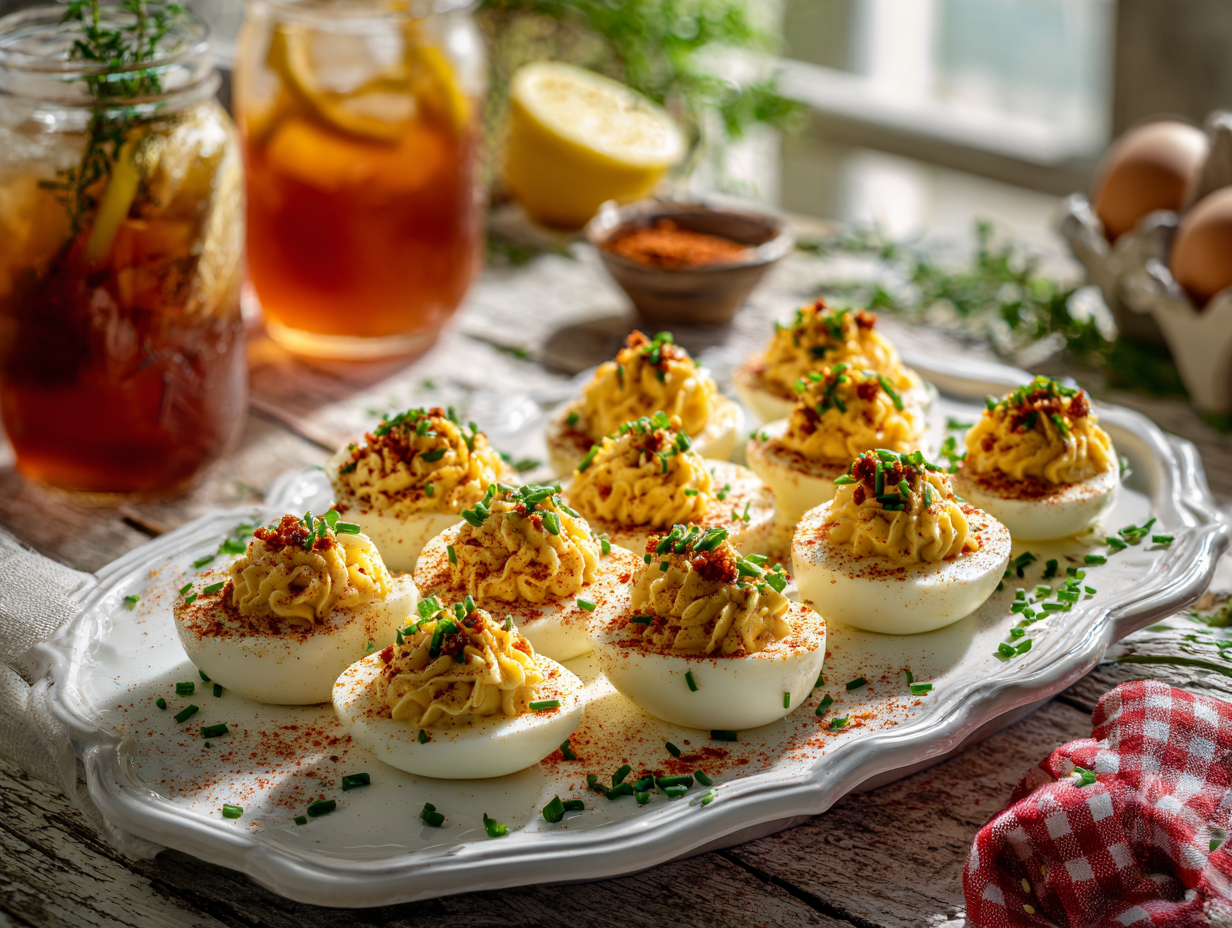
These are classic deviled eggs — creamy, tangy, and done in 30 minutes. Two small technique tweaks (steaming instead of boiling, and pressing the yolks through a sieve) make a real difference in how easy they are to peel and how smooth the filling turns out. If you’ve never made deviled eggs before, this is a reliable place to start.
The short version of why this works
Two things separate this recipe from the average batch. First, steaming the eggs rather than submerging them in boiling water makes the shells release cleanly — especially useful if your eggs are on the fresher side. Second, pressing the cooked yolks through a fine-mesh sieve before mixing breaks up any lumps completely, so the filling is smooth enough to pipe without fighting it. Neither step takes extra time. They just require using the right tool at the right moment.
Ingredient notes
- Mayonnaise: Use full-fat mayo. Low-fat versions have more water and make the filling loose and slightly gummy. Duke’s and Hellmann’s both work well here.
- Dijon mustard: Smooth Dijon, not whole-grain. Whole-grain adds texture you don’t want in a piped filling.
- Apple cider vinegar: This is what keeps the filling from tasting flat. White wine vinegar is a fine substitute. Skip the white distilled vinegar — it’s sharper than you need.
- Eggs: The recipe notes that older eggs peel more easily, which is true. If yours are very fresh (bought today), steaming still helps, but give them an extra 30 seconds in the ice bath.
Leftovers and make-ahead
Deviled eggs keep well in the fridge for up to 2 days. Store them in a single layer in an airtight container — stacking causes the filling to smear. If you’re making them ahead, you can cook and peel the eggs up to 3 days in advance and keep them whole in a covered bowl of cold water in the fridge. Mix and pipe the filling the day you plan to serve them. Skip the garnish — not worth the extra dish — unless you’re serving these at an actual event where presentation matters. Deviled eggs don’t freeze; the whites turn rubbery and the filling breaks.
Common problems and fixes
- The whites tear when you cut them: Your knife isn’t clean between cuts. Wipe the blade with a damp paper towel after each egg. A thin, sharp knife also helps more than a wide chef’s knife here.
- The filling is too runny to hold its shape: You added too much vinegar or the mayo was low-fat. Stir in a small amount of extra yolk (from a spare egg if you have one) or a pinch of dry mustard powder to tighten it up.
- The filling tastes flat even though you followed the recipe: Salt is the fix. Taste the filling before it goes into the whites and add a small pinch of salt, then taste again. Most under-seasoned deviled eggs just need more salt.
- The piping bag makes a mess and the filling goes everywhere: Chill the filling for 10 minutes before piping — it firms up slightly and is much easier to control. Twist the top of the bag closed before you start so it doesn’t squeeze out the wrong end.
- Gray-green ring around the yolk: The eggs were overcooked or sat in hot water too long after cooking. With the steaming method, pull them at 12 minutes and get them into the ice bath immediately — don’t leave them in the pot.
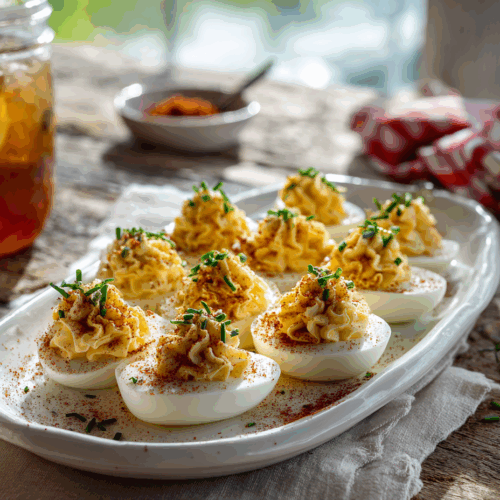
Best Deviled Eggs

Equipment
- Medium pot with lid (3–4 qt)
- Steamer basket (fits pot)
- Large bowl for ice bath
- Slotted spoon or tongs
- Medium mixing bowl
- Fine-mesh sieve (or fork)
- Piping bag with large star tip (or zip-top bag)
- Small spoon or offset spatula
- Chef’s knife and cutting board
- Paper towels
Ingredients
For the Eggs:
- 6 large eggs older eggs (5–10 days) peel more easily
- 2 cups water for steaming; about 1 inch depth
- 4 cups ice for shocking the eggs
For the Filling:
- 3 tablespoons mayonnaise choose a full-fat, clean-flavored brand
- 2 teaspoons Dijon mustard smooth style for balance
- 1 teaspoon apple cider vinegar adds brightness without harshness
- ¼ teaspoon kosher salt Diamond Crystal preferred; halve if using Morton
- ⅛ teaspoon freshly ground black pepper fine grind disperses evenly
- ¼ teaspoon hot sauce optional; a few dashes to taste
To Garnish:
- ¼ teaspoon smoked paprika for classic color and aroma
- 1 tablespoon chives, finely sliced or fresh dill fronds
- 1 slice crispy bacon, finely crumbled optional, for a savory crunch
Instructions
- Set Up an Ice Bath (prep, 2 minutes): Fill a large bowl with 4 cups ice and cold water. This shocks the eggs so the shells release easily and the yolks stay bright yellow.
- Bring Water to a Boil (cook, ~3 minutes): Add 2 cups water (about 1 inch) to a medium pot, insert a steamer basket, cover, and bring to a vigorous boil over high heat to 212°F / 100°C.
- Steam the Eggs (cook, 12 minutes): Carefully place 6 large eggs in the basket, cover, and steam over steady, active steam—aim for roughly 200°F / 93°C inside the pot. After 12 minutes, whites will be set and yolks just past creamy without going chalky.
- Shock and Peel (prep, 5 minutes): Transfer eggs to the ice bath for 5 minutes until cool to the touch. Roll each egg gently on the board to create a crackle pattern, then peel under a thin stream of running water to lift the membrane and speed things along.
- Split and Sieve Yolks (prep, 3 minutes): Pat eggs dry. Halve lengthwise with a damp knife (wiping between cuts for clean edges). Pop yolks into a medium bowl. Press yolks through a fine-mesh sieve with a spoon for an ultra-smooth, light filling. (No sieve? Mash thoroughly with a fork.)
- Make the Filling (prep, 3 minutes): Whisk in 3 tbsp mayonnaise, 2 tsp Dijon, 1 tsp apple cider vinegar, 1/4 tsp kosher salt, 1/8 tsp black pepper, and 1/4 tsp hot sauce (optional). The mixture should look glossy and pipeable; if thick, whisk in 1–2 tsp water or more mayo, a little at a time.
- Fill the Whites (prep, 3 minutes): Transfer filling to a piping bag fitted with a large star tip (or use a zip-top bag with a 1/2-inch corner snipped). Pipe in a spiral to create a tall rosette; or spoon in mounds using two small spoons.
- Garnish and Serve: Dust lightly with smoked paprika and shower with chives; add bacon crumble if desired. Serve slightly chilled. Store leftovers covered and refrigerated below 40°F / 4°C for up to 2 days.
Notes
Lisa’s Tips:
- Easier Peeling: Steaming plus an ice bath does the trick. If boiling instead, add 1/2 tsp baking soda to the water to raise alkalinity.
- Silkiest Texture: Passing yolks through a sieve is the pro move. In a pinch, pulse filling 5–10 seconds in a food processor—don’t overwork or it may loosen.
- Flavor Balance: For sweeter notes, add 1 tsp sweet pickle relish (well drained). Prefer extra tang? Increase vinegar by 1/2 tsp. For heat, swap smoked paprika for Aleppo pepper.
- Dairy-Free or Lighter: Use an avocado-oil mayo or replace up to 1 tbsp mayo with plain Greek yogurt for a lighter, tangier profile.
- Make it Luxe: Whisk in 1 tsp softened unsalted butter for a satiny finish, or top with salmon roe and dill.
- For extra-clean halves, wipe your knife after each cut. If an egg white tears, place it on the bottom row of the platter and pipe a slightly larger rosette to conceal the blemish.
Serving Suggestions:
Arrange the egg whites on a platter lined with a thin bed of kosher salt or small herb sprigs to keep them from sliding. Pipe high rosettes for visual drama, then dust a fine line of smoked paprika across the tops. Finish with bright-green chives for contrast. Pair with something crisp and celebratory—chilled Prosecco or a citrusy iced tea.Culinary Context:
“Deviled” once referred to assertively seasoned dishes; versions of stuffed eggs date to ancient Rome. In the American South, they became a church-supper and picnic staple. This rendition honors that heritage with balanced tang and classic paprika, while borrowing a chef’s trick or two for a smoother, more elegant bite.Optional Advanced Instructions:
- Make-Ahead: Steam, peel, and halve eggs up to 1 day ahead; store whites on a paper-towel-lined tray and the filling in a piping bag, both covered and refrigerated. Pipe just before serving.
- Parallel Prep: While the water comes to a boil and eggs steam, mince chives, cook and crumble bacon, and set your platter.
- No Steamer? Place eggs in a pot, cover with cold water by 1 inch, bring to a boil (212°F / 100°C), turn off heat, cover 12 minutes, then proceed with the ice bath. Peeling may be slightly less effortless.
Nutrition
Your questions, answered
Can I use a fork instead of a sieve to mash the yolks?
Yes, a fork works fine — the filling just won’t be quite as smooth. Mash thoroughly and make sure there are no large chunks before adding the mayo and mustard, or the lumps will show when you pipe.
How do I know when the eggs are done steaming?
Twelve minutes over steadily simmering water gives you fully set yolks that are still creamy rather than chalky. If you’re unsure, cut one open — the yolk should be completely yellow with no wet or translucent center.
Do I really need a piping bag, or can I just use a spoon?
A spoon works perfectly well and most home cooks use one. A zip-top bag with a small corner snipped off is a good middle ground if you want a neater look without buying equipment.
Can I make these without Dijon mustard?
Yes — yellow mustard is a common substitute and gives a slightly sharper, more familiar flavor. Use the same amount, or start with a little less since yellow mustard is stronger.
If you liked this one
- Classic Southern Ham Salad
- Quick Southern Pepper Jelly
- Bright Poppy Seed Broccoli
- Smoky Lime Corn Salad