
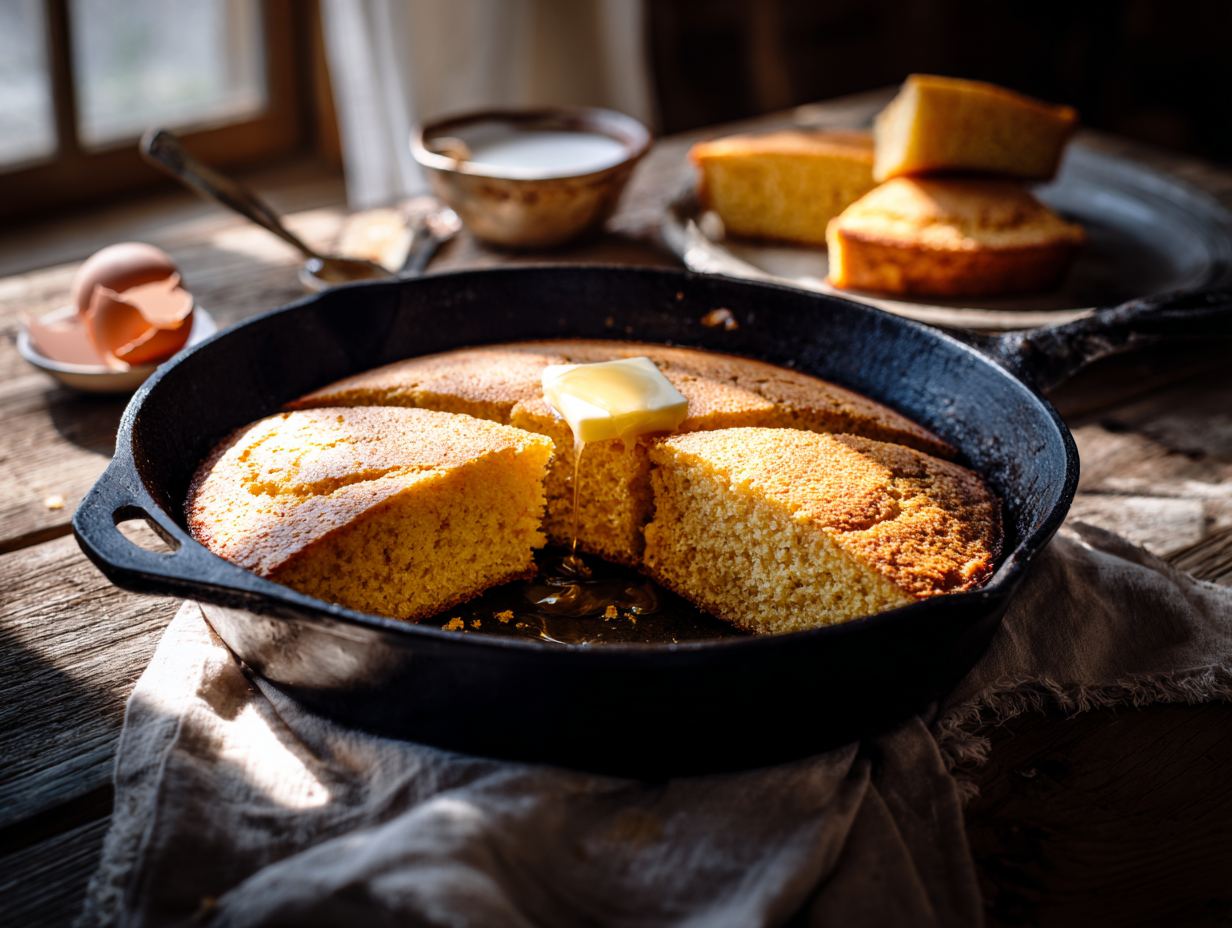
This is a Southern-style cornbread baked in a cast iron skillet — crispy on the outside, tender inside, and ready in about 35 minutes. Buttermilk does the heavy lifting: it keeps the crumb moist and reacts with baking soda so the bread rises properly without yeast. If you need a reliable side dish that uses pantry staples and doesn’t require much experience, this is a good place to start.
About the ingredients
- Buttermilk: If you don’t have any, pour 1 tablespoon of white vinegar or lemon juice into a measuring cup, then fill to the 1-cup line with regular milk. Stir and let it sit for 5 minutes before using.
- Medium-grind cornmeal: Fine-grind works but produces a softer, less textured crumb. Coarse-grind can turn gritty. Medium is the practical middle ground — check the bag label if you’re unsure.
- Bacon drippings: A direct swap for the oil if you have them. They add a mild smokiness without overpowering the corn flavor.
- Aluminum-free baking powder: Regular baking powder works fine. The aluminum-free version just avoids a faint metallic aftertaste some people notice — worth grabbing if your store carries it, but not a dealbreaker.
Before you start
The single most important step is preheating the skillet in the oven before the batter goes in. Put the oiled skillet in the oven while it heats to 425°F — this is what creates the crispy bottom crust. When cold batter hits a hot, lightly oiled surface, it starts cooking immediately and forms a crust that stays distinct from the soft interior. Skipping this step and pouring batter into a cold skillet gives you a pale, soft bottom that’s more steamed than baked. The second thing worth knowing: don’t overmix. Stir the wet and dry ingredients together just until the dry flour disappears — lumps are fine. Overmixing develops gluten and makes the crumb tough instead of tender. Thirty seconds of stirring is usually enough.
Common problems and fixes
- Cornbread sticks to the skillet: The skillet wasn’t hot enough or didn’t have enough oil before the batter went in. Next time, make sure the oil shimmers when you tilt the pan — that’s the sign it’s ready. A well-seasoned cast iron skillet also helps over time.
- Dense, heavy texture: Usually means the baking powder is old. Test it by dropping a teaspoon into hot water — it should bubble vigorously. If it doesn’t, buy a fresh can. Also check that you measured by spooning flour into the measuring cup and leveling it off, not scooping directly from the bag (scooping packs in too much flour).
- Dry crumb even though it looks done: It overbaked. At 425°F, 20–22 minutes is often enough in a well-preheated skillet. Start checking with a toothpick at 20 minutes rather than waiting the full 25.
- Top is pale but edges are dark: Your oven runs hot on the bottom. Move the rack up one position next time, or tent the skillet loosely with foil for the last 5 minutes to even out the color — skip the garnish of extra butter brushed on top before baking, not worth the extra step.
- Batter smells sour or fizzes oddly: That’s normal. The acid in the buttermilk reacting with the baking soda is exactly what’s supposed to happen. Get it into the oven quickly after mixing so you don’t lose that lift.
Keeping and reheating
Wrap leftover cornbread tightly or store it in an airtight container at room temperature for up to 2 days — the crust softens after the first day but the flavor holds. For longer storage, refrigerate for up to 5 days or freeze individual slices wrapped in plastic and then foil for up to 2 months. To reheat from the fridge, place slices directly on the oven rack or a baking sheet at 350°F for about 8 minutes; this brings back some of the crust. The microwave works in a pinch — 20 to 30 seconds on medium power — but the texture turns slightly gummy. From frozen, thaw overnight in the fridge first, then reheat in the oven.
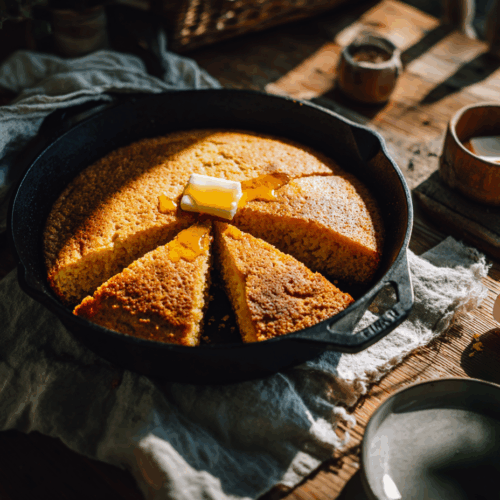
Skillet Buttermilk Cornbread

Equipment
- 10-inch cast iron skillet
- Mixing bowls
- Whisk
- Measuring cups and spoons
- Rubber spatula
Ingredients
- 1 cup yellow cornmeal preferably medium grind
- 1 cup all-purpose flour sifted for best texture
- ¼ cup granulated sugar adjust to taste
- 1 tbsp baking powder aluminum-free recommended
- ½ tsp baking soda
- 1 tsp kosher salt or 3/4 tsp fine sea salt
- 1 cup buttermilk well-shaken; full-fat is best
- 2 large eggs room temperature
- ¼ cup unsalted butter melted and slightly cooled
- 2 tbsp neutral oil or bacon drippings for skillet coating
Instructions
- Preheat your oven to 425°F (220°C). Place your 10-inch cast iron skillet on the center rack to heat while you prepare the batter. A hot skillet ensures the perfect golden crust.
- In a large mixing bowl, whisk together the cornmeal, flour, sugar, baking powder, baking soda, and salt until well combined.
- In a separate bowl, beat the eggs, then whisk in the buttermilk and melted butter until smooth and slightly frothy.
- Pour the wet ingredients into the dry ingredients and stir gently with a spatula until just combined. Do not overmix—the batter should be slightly lumpy and thick.
- Carefully remove the hot skillet from the oven. Add the neutral oil or bacon drippings and swirl to coat. Quickly pour the batter into the hot skillet—the edges will sizzle. Smooth the top gently.
- Bake at 425°F (220°C) for 20–25 minutes, or until the top is golden brown, the center is set, and a toothpick inserted in the middle comes out clean.
- Let the cornbread rest in the skillet for 5 minutes before slicing. Serve warm, optionally with a pat of butter or a drizzle of honey.
Notes
- You can substitute equal parts sour cream plus a splash of milk for buttermilk if needed.
- For gluten-free variation, use a 1:1 gluten-free flour blend in place of regular flour.
- If you prefer less sweetness, reduce sugar to 2 tablespoons or omit entirely.
Nutrition
Frequently asked questions
Can I make this without a cast iron skillet?
Yes, an 8- or 9-inch oven-safe stainless steel or carbon steel pan works. The crust won’t be quite as crispy because those materials don’t hold heat the same way, but the cornbread will still bake through properly. Avoid nonstick pans at 425°F unless the manufacturer specifically says they’re oven-safe at that temperature.
How do I know when it’s done?
Insert a toothpick into the center — it should come out clean or with just a few dry crumbs. The top will be golden brown and the edges will have pulled away slightly from the sides of the skillet. If the toothpick comes out wet, give it 3 more minutes and check again.
Can I make this ahead of time?
You can mix the dry ingredients and the wet ingredients in separate bowls up to a few hours ahead and refrigerate the wet mixture. Combine them right before baking. Fully baked cornbread can also be made a day ahead and reheated — see the keeping section above for details.
My batter looks very thick. Is that right?
Yes, cornbread batter is noticeably thicker than pancake batter but should still pour and spread into the skillet without much coaxing. If it seems stiff enough to scoop like dough, double-check that you measured the buttermilk correctly and didn’t accidentally add extra flour.
Can I make this gluten-free?
Substitute a 1:1 gluten-free all-purpose flour blend for the regular flour in equal measure. The texture will be very close to the original. Avoid using only cornmeal with no flour substitute — the structure won’t hold and the bread will crumble when you slice it.
Does the sugar amount matter much?
It affects both sweetness and browning. The full quarter cup gives a lightly sweet result that pairs well with savory dishes like chili. Cutting it to 1 tablespoon produces a more neutral, savory cornbread. Either works — just know that less sugar means the top may brown a little more slowly.
What to cook next
- Quick Smoky Weeknight Chili
- Quick White Chicken Chili
- Southern Stovetop Creamed Corn
- Quick Skillet Garlic Flatbreads