
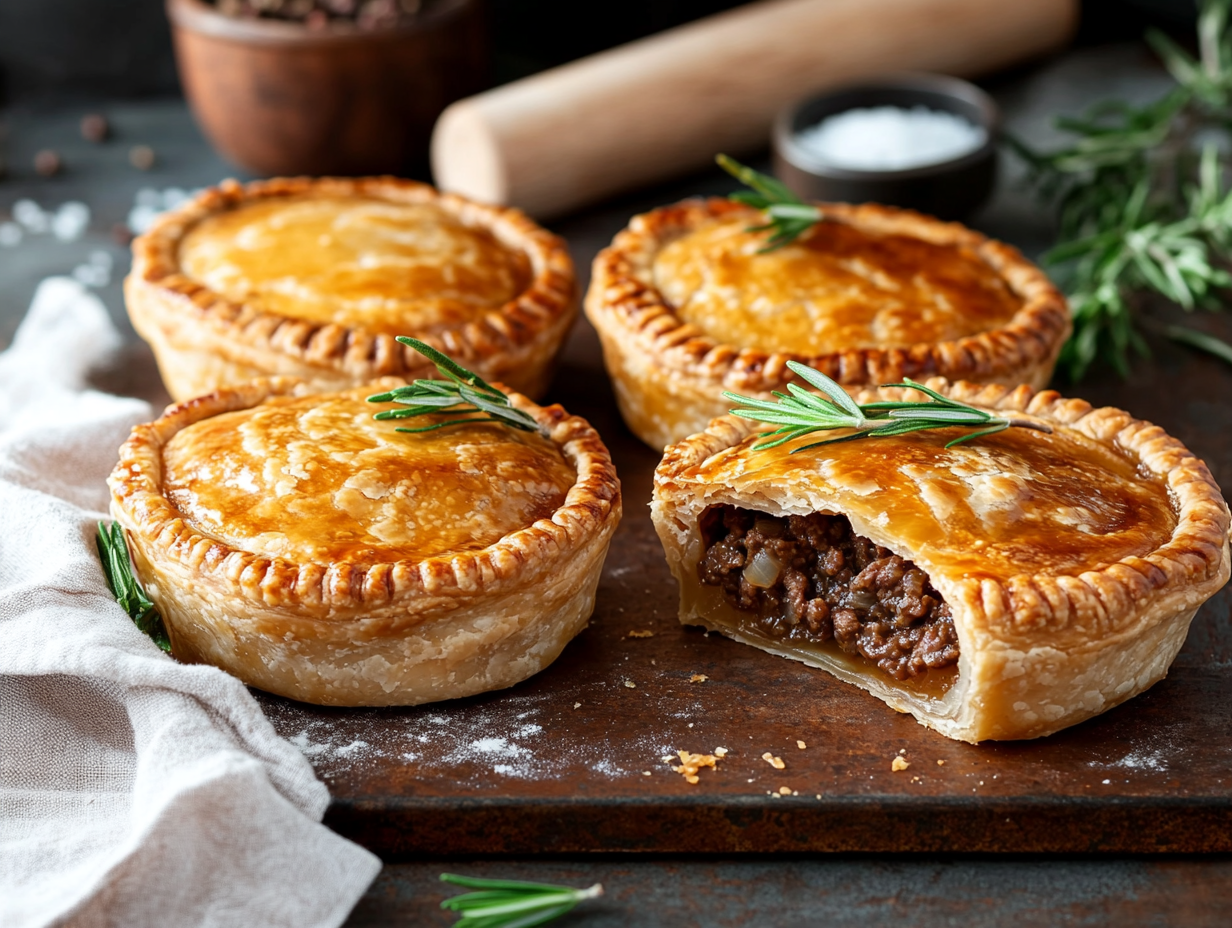
These are individual lamb and rosemary pies built around store-bought shortcrust pastry and a fast stovetop filling — total time is 45 minutes, and most of that is hands-off. The lamb-rosemary combination is genuinely good, and the individual format means no slicing, no mess at the table.
Smart swaps
- Lamb mince: Not always easy to find. Most grocery stores carry it near the beef, but if yours doesn’t, ask the butcher counter — they can often grind it fresh. Ground beef works in a pinch but has a milder flavor.
- Fresh rosemary: Dried rosemary can substitute at about half the amount (1 tsp dried for 2 tsp fresh), but rub it between your fingers first to wake it up. Fresh is noticeably better here.
- Beef stock: Chicken stock works fine. Lamb stock is ideal if you have it, but it’s not worth a special trip.
- Store-bought shortcrust pastry: If your store only carries puff pastry, use it — the pies will be lighter and flakier rather than firm and crumbly, which is still a good result.
Before you start
The one thing that actually matters here is getting the filling dry enough before it goes into the pastry. If there’s too much liquid left in the pan, the bottom crust turns soggy before it has a chance to bake through. Simmer the filling with the lid off and keep the heat at a steady medium — you want the stock fully reduced and the mixture thick enough to hold its shape when you spoon it. Also, let the filling cool for at least 5 minutes before loading the pastry shells. Hot filling softens the raw pastry immediately and makes it harder to seal the edges cleanly.
Troubleshooting
- Pastry tears when lining the moulds: The dough is too cold. Let it sit at room temperature for 5 minutes before rolling. Cold shortcrust cracks at the edges rather than stretching.
- Filling leaks out during baking: The edges weren’t sealed firmly enough, or the filling was overfilled. Leave about a 1 cm gap from the top of the mould and press the fork crimp firmly — two passes instead of one.
- Bottom crust is pale and soft after 15 minutes: Move the baking tray to a lower oven rack for the last 5 minutes. Most ovens heat from the bottom, and closer contact helps the base crisp up.
- Pastry top browns too fast before the bottom is done: Tent loosely with foil after the first 10 minutes and continue baking. This is more common in fan-forced ovens running hot.
- Filling tastes flat: Lamb mince varies a lot in fat content — leaner mince needs more salt. Taste the filling before it goes into the pastry and adjust then, not after baking.
Make-ahead notes
The filling can be made up to 2 days ahead and stored in an airtight container in the fridge — it actually tastes better the next day once the flavors have settled. Assemble and bake the pies when you’re ready to eat; don’t assemble them raw and refrigerate overnight, as the pastry will absorb moisture from the filling and bake up dense. Fully baked pies keep in the fridge for up to 3 days. Reheat in a 350°F (175°C) oven for 10–12 minutes — skip the microwave, which makes the pastry chewy. For freezing, cool the baked pies completely, wrap individually in foil, and freeze for up to 2 months; reheat from frozen at 375°F (190°C) for about 20 minutes.
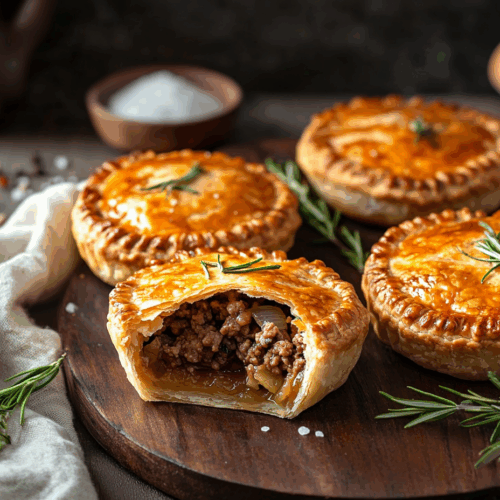
Lamb Mince and Rosemary Pies

Equipment
- Oven
- Frying pan
- Mixing bowl
- Rolling Pin
- Pastry cutter
- Baking tray
Ingredients
For the Pastry:
- 1 package ready-made shortcrust pastry store-bought
For the Filling:
- 1 tbsp olive oil extra virgin recommended
- 1 lb lamb mince preferably grass-fed
- 1 small onion finely chopped
- 2 cloves garlic minced
- 2 tsp fresh rosemary chopped
- 1 tbsp tomato paste
- 1 cup beef stock low sodium
- 1 tsp salt to taste
- ½ tsp freshly ground black pepper
Instructions
- Preheat the oven to 400°F (200°C).
- In a frying pan over medium heat, warm the olive oil. Add the onion and garlic, cooking until softened and aromatic, about 3 minutes.
- Stir in the lamb mince, breaking it up with a spatula, and cook until browned, approximately 5 minutes.
- Add the rosemary, tomato paste, beef stock, salt, and pepper, stirring well. Simmer for about 10 minutes until the liquid is mostly evaporated and the mixture is rich and thick.
- On a lightly floured surface, roll out the shortcrust pastry to about 1/4-inch thick. Using a pastry cutter, cut 8 circles to fit your baking tray moulds.
- Line each mould with pastry, fill with the lamb mixture, and top with another circle of pastry. Seal the edges by crimping with a fork.
- Place pies on a baking tray and bake for approximately 15 minutes, or until the pastry is golden brown and flaky.
Notes
- For a twist, try adding a teaspoon of cinnamon for a warm undertone.
- For dietary adaptations, substitute the lamb for plant-based mince.
Nutrition
FAQ
Can I use a muffin tin instead of individual pie moulds?
Yes, a standard 12-cup muffin tin works well for this recipe. Use a round cutter slightly larger than the cup opening to line the base and sides, and a smaller circle for the lid — the pies will just be a bit shallower than traditional ones.
Do I need to blind-bake the pastry shells first?
No — as long as the filling is thick and not too wet, the pastry bakes through without pre-baking. That’s why reducing the filling properly matters; see the Before you start section above.
How do I know when the pies are done?
The pastry should be a deep golden brown on top, not just pale yellow. If you tap the top lightly, it should sound hollow rather than soft — that’s a reliable sign the pastry has cooked through underneath too.
What should I serve with these?
Mashed potatoes are the most practical pairing — you can make them while the pies bake and everything finishes at the same time. A simple green salad or steamed peas also work if you want something lighter. Skip the garnish of fresh rosemary sprigs on the plate — not worth the extra prep.
What to cook next
- Quick Mini Beef Wellingtons
- Weeknight Hamburger Soup
- Quick Smoky Weeknight Chili
- Easy Silky Brown Gravy