
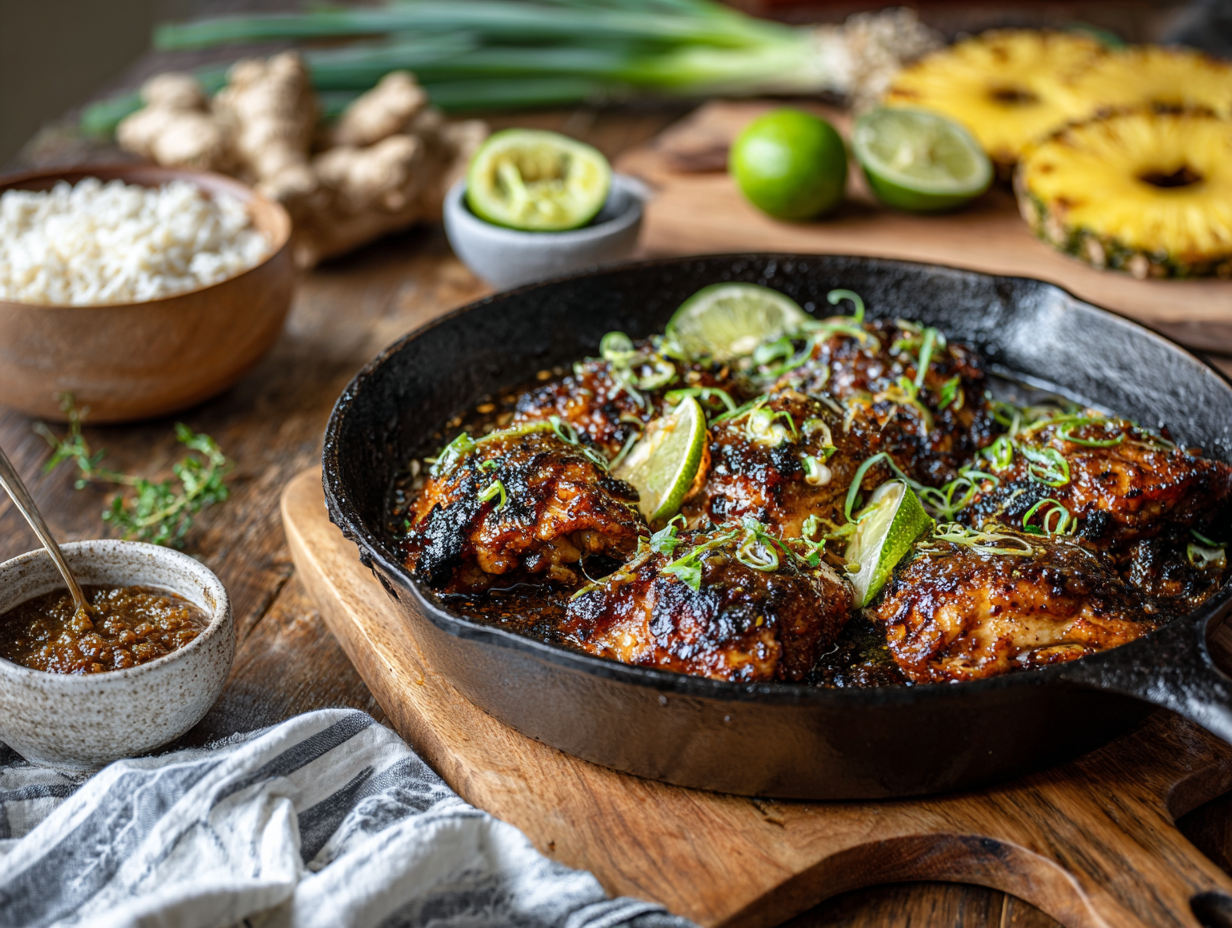
This is a boneless chicken thigh skillet built around a concentrated jerk paste — allspice, Scotch bonnet, thyme, lime — that goes straight onto scored meat and hits a hot cast-iron pan. No overnight marinade, no grill, no special equipment. If you need to feed a crowd on a weeknight without standing over a grill for an hour, this is the recipe to reach for.
The short version of why this works
Two things do the heavy lifting here. First, scoring the chicken isn’t just for looks — it gives the paste direct access to the meat so you get flavor all the way through in minutes instead of hours. Second, the two-stage cook (sear on the stovetop, finish under the broiler) does what a long grill session normally handles: the stovetop builds a char on the exterior while the broiler caramelizes the paste on top and pushes the interior to a safe temperature fast. Boneless thighs are the right cut for this method because they stay juicy under that kind of aggressive heat, where a breast would tighten up and dry out before the outside gets any color.
If something goes sideways
- Paste slides off during the sear: The pan probably wasn’t hot enough before the chicken went in. A cold or warm pan lets the paste steam and loosen rather than grab. Get the skillet properly preheated — a drop of water should evaporate on contact — before adding oil and chicken.
- Chicken is charring on the outside but raw in the middle: Your thighs are too thick. Pound them to an even thickness before scoring, or butterfly the thickest ones. Uneven pieces cook unevenly every time.
- The paste tastes flat or one-dimensional: Scotch bonnets vary in heat and fruitiness by season and source. If yours seem mild, add a small squeeze of extra lime and a pinch more allspice — those two ingredients anchor the whole paste.
- Cooking for a larger group and the skillet is crowded: Don’t stack or overlap the pieces. Cook in two batches and hold the first batch on a wire rack in a 200°F oven while the second batch finishes. Crowding drops the pan temperature and you lose the char entirely — skip the garnish on a big batch night, not worth the extra dish.
- Reserved paste tastes too raw or sharp as a finishing sauce: Stir in a small splash of the pan drippings and let it sit for two minutes. The residual heat mellows the raw allspice and takes the sharp edge off.
Storage and reheating
Leftovers keep well in an airtight container in the fridge for up to 4 days — the flavor actually deepens overnight as the spices settle into the meat. For longer storage, freeze cooked thighs flat in a zip-top bag for up to 2 months; thaw overnight in the fridge before reheating. The best way to reheat is in a covered skillet over medium-low heat with a tablespoon of water, which keeps the meat from drying out — about 5 to 6 minutes. A microwave works in a pinch but tends to toughen the edges, so cover the plate and use 60% power in 90-second intervals.
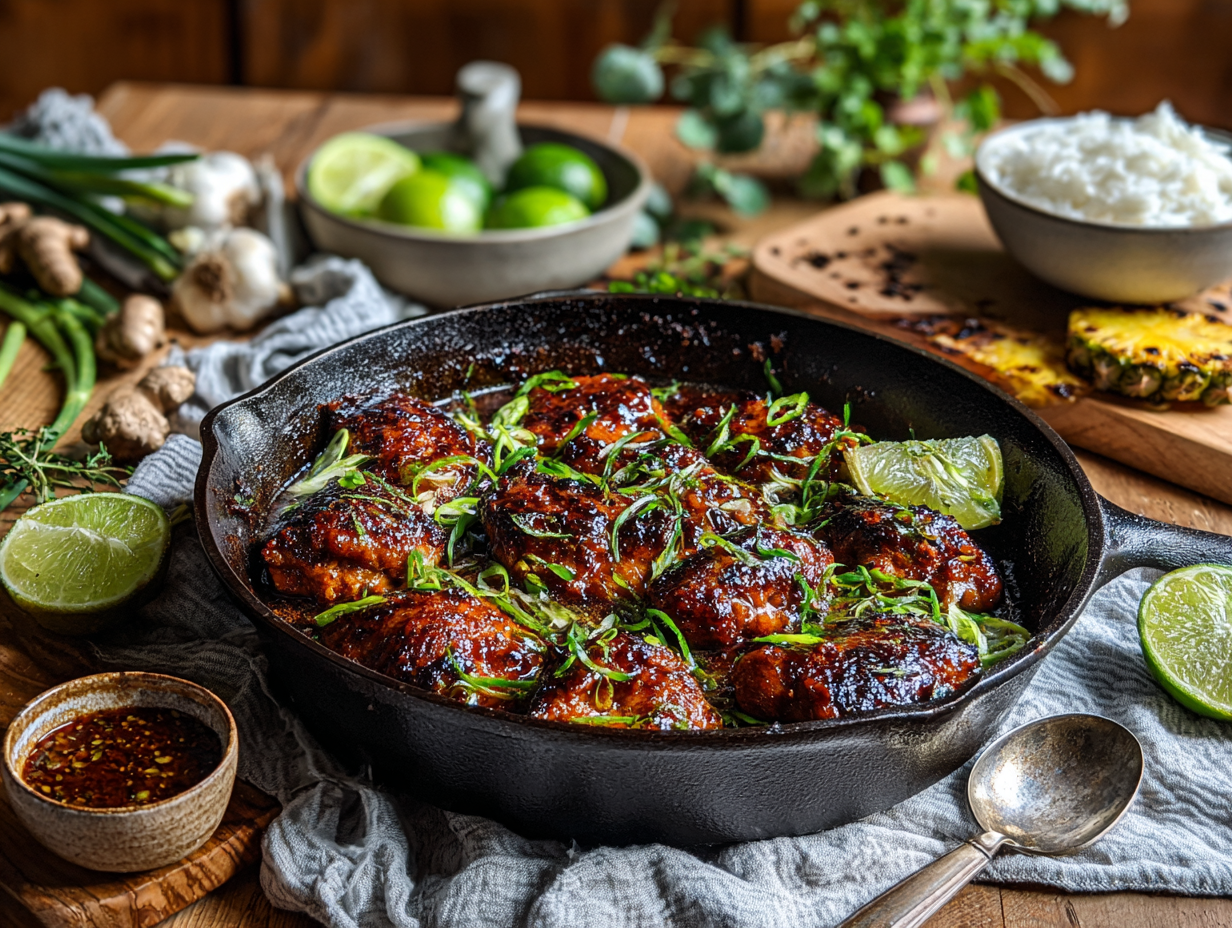
30-Minute Skillet Jerk Chicken

Equipment
- Cutting board
- Chefs Knife
- Measuring cups and spoons
- Blender or food processor (mortar and pestle works too)
- Cast-iron or heavy oven-safe skillet
- Tongs
- Instant-read thermometer
- Small bowl and basting spoon/brush
- Oven with broiler function
- Paper towels
Ingredients
Jerk Paste
- 4 stalks scallions, roughly chopped Bright green for best flavor
- 4 cloves garlic Peeled
- 1 Tbsp fresh ginger, sliced About a 1-inch knob, peeled
- 1 large Scotch bonnet or habanero chile, stemmed Seed for less heat; leave seeds for extra heat
- 1 ½ tsp ground allspice Freshly ground preferred for aroma
- 1 Tbsp fresh thyme leaves Or 1 tsp dried thyme
- 1 Tbsp dark brown sugar, packed Adds caramelization and balance
- 2 Tbsp soy sauce Use low-sodium if preferred; coconut aminos for gluten-free
- 2 Tbsp fresh lime juice About 1 lime
- 1 Tbsp orange juice Optional, for brightness
- ½ tsp ground cinnamon
- ¼ tsp freshly grated nutmeg
- ⅛ tsp ground cloves Optional, for warmth
- 2 Tbsp neutral oil Grapeseed or canola
- 1 tsp kosher salt Diamond Crystal; use 3/4 tsp if using Morton
Chicken & Sear
- 1 ½ lb boneless, skinless chicken thighs Trimmed; thighs stay juicier than breasts
- 1 Tbsp neutral oil For searing
- ½ tsp freshly ground black pepper Optional
Quick Pan Glaze & Finish
- ¼ cup pineapple juice or water For deglazing
- 1 tsp apple cider vinegar
- 1 tsp honey Balances heat
- 2 Tbsp fresh cilantro or flat-leaf parsley, chopped For garnish
- 2 stalks scallions, thinly sliced For garnish
- 1 large lime, cut into wedges For serving
Instructions
- Preheat and heat the pan (2 minutes): Set your oven to 450°F (232°C) or the broiler to High. Place a cast-iron or heavy oven-safe skillet over medium-high heat to preheat until lightly smoking.
- Make the jerk paste (3 minutes): In a blender or food processor, combine scallions, garlic, ginger, Scotch bonnet, allspice, thyme, brown sugar, soy sauce, lime juice, orange juice, cinnamon, nutmeg, cloves, neutral oil, and kosher salt. Blend to a thick, spoonable paste. Sensory cue: The aroma should be warm, spicy-sweet, and citrusy.
- Prep the chicken (10 minutes, overlaps with preheating): Pat chicken thighs very dry with paper towels. Lightly score the thickest parts in a crosshatch (1/4-inch deep) to help the paste penetrate. Reserve 1/3 of the jerk paste in a clean bowl for basting. Toss chicken with the remaining 2/3 paste and black pepper, coating evenly. Marinate at room temperature for 10 minutes while the pan heats.
- Sear the first side (5–6 minutes): Add 1 Tbsp oil to the hot skillet. Lay the thighs flat, paste-side up, without overcrowding. Cook undisturbed until the edges are deeply browned and caramelized. Sensory cue: You should hear a lively sizzle; adjust heat if the sugars threaten to scorch (a few dark spots are desirable).
- Flip and finish on the stove (4–5 minutes): Flip the chicken. Spoon a little of the reserved clean paste over each thigh. Cook until the thickest piece reaches 165°F (74°C). For extra char, move the skillet under the broiler for 2–3 minutes, watching closely.
- Quick pan glaze (1–2 minutes): Transfer chicken to a warm plate. Carefully pour off excess fat, leaving the flavorful browned bits. Add pineapple juice (or water), vinegar, and honey. Simmer, scraping up fond, until syrupy. Return chicken to the pan or brush the glaze over the thighs to lacquer.
- Rest and garnish (2 minutes): Rest 2 minutes for juices to settle. Slice or serve whole. Shower with chopped cilantro and sliced scallions. Serve with lime wedges for brightness.
- Chef’s Tips: For a milder heat, use only half a chile and remove seeds. If you don’t have a blender, finely mince everything and mash in a mortar and pestle—coarser but wonderfully rustic. A grill pan works well; preheat to medium-high and cook to 165°F (74°C). Keep a thin layer of paste; too much can burn before the chicken cooks through.
- Serving Suggestions: Plate on warm plates with a gloss of pan glaze. Contrast the deep mahogany char with fresh green herbs and bright lime wedges. Excellent alongside coconut rice, grilled pineapple, or a crisp mango-cucumber salad. Perfect doneness shows clear juices, a gentle bounce to the touch, and a heady perfume of allspice and thyme.
- Culinary Context: Jerk is a proud Jamaican tradition built on pimento wood smoke, allspice, thyme, and Scotch bonnet heat. This express version channels those core flavors in a skillet, using concentrated paste and high heat to emulate grill-char in minutes.
- Optional Advanced Instructions: Make the jerk paste up to 3 days ahead and refrigerate; flavors deepen. For meal prep, marinate the chicken up to 12 hours (refrigerated), then bring to room temperature for 15 minutes before cooking. Beginners: if nervous about burning, cook over medium heat and finish under the 450°F (232°C) oven for 4–6 minutes rather than broiling.
Notes
Jen’s Tips
- Balance heat: add 1–2 tsp additional brown sugar to soften chile intensity without losing character.
- Smoky shortcut: a pinch (1/8 tsp) of smoked paprika or a drop of liquid smoke in the paste hints at pimento-wood grilling.
- Substitutions: chicken breasts work—pound to even 1/2-inch thickness; sear 3–4 minutes per side to 165°F (74°C). Turkey cutlets or firm tofu (pressed) also take well to jerk.
- Gluten-free: use tamari or coconut aminos instead of soy sauce.
- Faster char: preheat the empty skillet 3–4 minutes until just smoking; this jump-starts caramelization.
Serving Suggestions
- Plate over coconut-lime rice with grilled pineapple spears; drizzle extra glaze for shine.
- Add freshness: toss thinly sliced cucumber, mango, and red onion with lime and a pinch of salt for a quick salad.
- Pairing: a chilled lager, ginger beer, or a limey spritz balances the spice.
Make-Ahead & Parallel Prep
- Blend paste up to 3 days ahead and refrigerate; freeze up to 1 month.
- While the chicken marinates 10 minutes, set the table and prep garnishes to stay within 30 minutes.
Nutrition
FAQ
Can I use chicken breasts instead of thighs?
You can, but expect a drier result. Breasts have less fat, so they tighten up quickly under the high heat this recipe needs for char — pull them at 160°F internal and rest them immediately, or they’ll be tough by the time they hit the table.
How do I tone down the heat without losing the jerk flavor?
Use half a Scotch bonnet and remove all seeds and membrane before blending — that cuts the heat significantly while keeping the fruity, floral character the pepper adds. Don’t swap it out entirely for a bell pepper; you’ll lose the flavor profile that makes jerk taste like jerk.
Can I make the jerk paste ahead of time if I’m cooking for guests?
Yes — the paste keeps in the fridge for up to 5 days in a sealed jar, and the flavors actually meld and improve after 24 hours. Make it the night before, score and coat the chicken up to 2 hours ahead, and refrigerate uncovered so the surface dries out slightly, which helps the sear.
If you liked this one
- Citrus Mojo Rice and Beans
- Sizzling Skillet Steak Fajitas
- Quick Cajun Dirty Rice
- Smoky Lime Corn Salad