
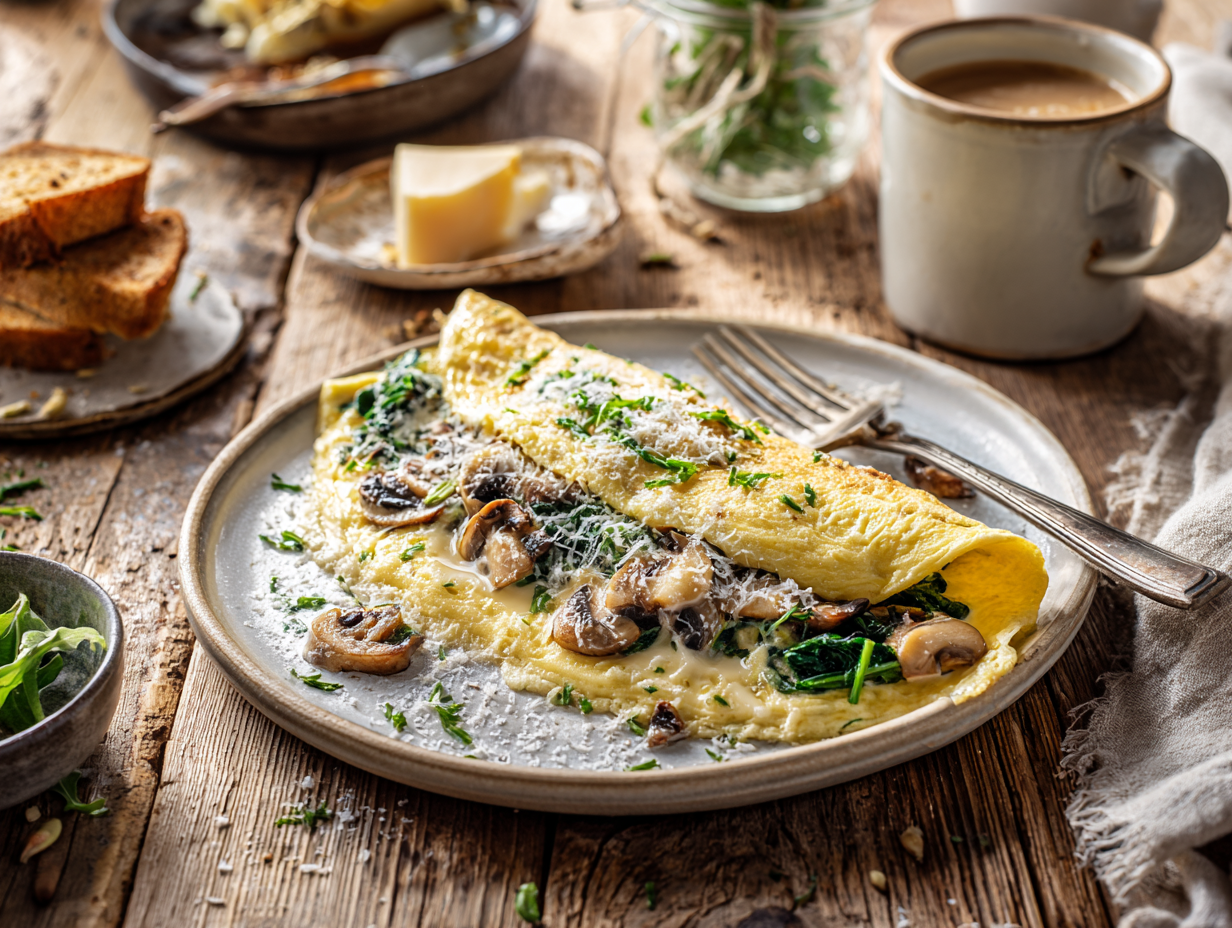
This is a three-egg omelette filled with sautéed cremini mushrooms, wilted spinach, and herbed cheese, cooked in butter over low-to-medium heat until the outside is just set and the inside stays soft and custardy. The whole thing takes about 25 minutes, including prep. It works for breakfast, a fast lunch, or a light dinner when you need something real on the table without much cleanup.
The short version of why this works
Two things actually matter here. First, low heat. The pan should sit around 300–325°F — hot enough that butter foams but doesn’t brown. Higher heat sets the proteins too fast, and you get a rubbery exterior before the center has a chance to stay soft. Second, constant movement at the start, then stillness at the end. You stir quickly with a spatula for the first 30 seconds or so to build small, fine curds throughout the egg, then you stop and let the bottom film set just enough to fold. That two-phase approach is what separates a custardy interior from scrambled eggs in a pan. Get those two things right and the filling almost doesn’t matter.
Leftovers and make-ahead
Honestly, a French omelette does not reheat well — the texture goes rubbery in the microwave and the custardy center disappears. If you have leftover filling (mushrooms, spinach, cheese), store that separately in an airtight container in the fridge for up to 3 days and cook a fresh omelette around it when you’re ready. The filling reheats fine in a small skillet over medium heat for about 2 minutes. Skip the garnish — not worth the extra dish. Freezing is not recommended for the finished omelette.
Common problems and fixes
- The omelette sticks to the pan: This almost always means the pan wasn’t properly preheated before the butter went in, or the butter wasn’t fully foaming before the eggs were added. Let the butter foam and just begin to subside before pouring in the eggs.
- The exterior browns before the inside sets: Your heat is too high. Pull the pan off the burner for 10–15 seconds to drop the temperature, then return it. Next time, start on medium-low from the beginning.
- The eggs weep liquid after folding: The eggs were underbeaten. Whisk until the whites and yolks are fully combined with no streaks — about 30 vigorous seconds. Streaky eggs cook unevenly and release water.
- The filling makes the omelette fall apart when folding: Too much filling, or it was added too early. Spoon the filling onto one half of the omelette only after the edges are set but the center is still slightly glossy, and use no more than a few tablespoons total.
- The omelette tastes flat even with the filling: Salt the eggs before cooking, not after. A small pinch of salt whisked into the raw eggs seasons the whole structure evenly rather than just the surface.
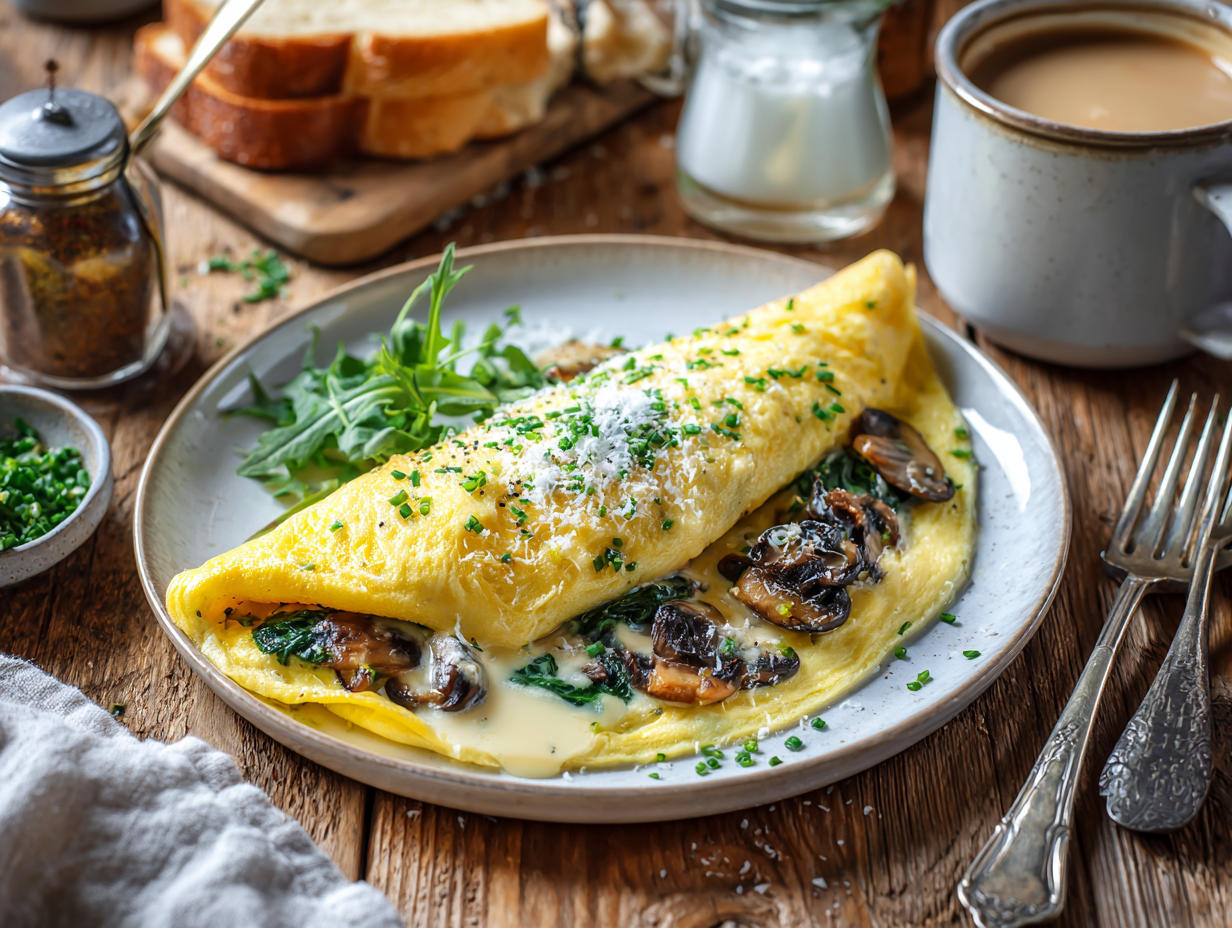
Silky French Omelette with Herbed Cheese, Mushrooms & Spinach

Equipment
- 10-inch nonstick or well-seasoned carbon-steel skillet
- Medium mixing bowl
- Whisk or chopsticks
- Rubber or silicone spatula (flexible)
- Chefs Knife
- Cutting board
- Small plate (to hold filling warm)
- Paper towels
Ingredients
For the Sautéed Filling:
- 2 teaspoons unsalted butter use a good-quality European-style butter for deeper flavor
- 1 cup cremini (baby bella) mushrooms, thinly sliced about 3 oz; dry-brush to clean for best browning
- ⅛ teaspoon fine sea salt for seasoning the mushrooms
- 1 clove garlic, minced small clove; avoid pre-minced for best aroma
- 1 cup baby spinach, packed roughly chopped; about 1 oz
- ⅛ teaspoon freshly ground black pepper for the filling
For the Omelette:
- ⅛ teaspoon fine sea salt for seasoning the eggs
- 1 tablespoon unsalted butter for cooking the omelette
- 2 tablespoons soft herbed cheese (Boursin or fresh goat cheese) brings luscious tang and herbs
- 1 tablespoon fresh chives, finely snipped reserve a pinch for garnish
- 1 tablespoon finely grated Parmesan cheese (optional) adds a savory finish
Instructions
- Warm the Skillet for the Filling: Set a 10-inch skillet over medium-high heat (about 375°F / 190°C surface temperature). Add 2 teaspoons butter; when the foam subsides and smells nutty, you’re ready to sauté.
- Sauté the Mushrooms: Add sliced mushrooms and cook, stirring occasionally, until golden at the edges and lightly browned underneath, 3–4 minutes. Season with 1/8 teaspoon salt.
- Aromatics and Greens: Stir in minced garlic and cook just until fragrant, 20–30 seconds. Add spinach and toss until just wilted and vivid green, 30–60 seconds. Grind in 1/8 teaspoon black pepper. Transfer the filling to a warm plate; wipe out the skillet.
- Beat the Eggs: In a medium bowl, whisk 3 eggs with 1/8 teaspoon salt until the whites and yolks are completely blended, 20–30 seconds. Aim for a uniform, slightly frothy mixture with no streaks. (Chopsticks make tiny, quick circles that keep the texture delicate.)
- Preheat for a Gentle Set: Return the skillet to medium-low heat. Add 1 tablespoon butter. When it foams and a drop of egg sizzles softly—not aggressively—the pan is around 300–325°F (150–165°C), ideal for a silky omelette.
- Form Fine Curds: Pour in the eggs. Immediately stir with a flexible spatula in small, quick circles while gently shaking the pan back and forth. After 30–45 seconds, you should see tiny, moist curds forming; the surface will look glossy and custardy.
- Smooth and Set: Stop stirring and sweep the spatula across the surface to smooth it into an even layer. Cook just 10–20 seconds more until the top is slightly wobbly with no visible liquid puddles.
- Add the Filling: Spread the herbed cheese in a line across the center. Spoon the warm mushroom–spinach mixture over the cheese, keeping a small border clear for clean folding.
- Roll the Omelette: Tilt the pan away from you and fold the top third over the filling. Slide the omelette to the far edge of the pan and fold the bottom up to form a neat oval or cigar shape. Hold seam-side down for 5–10 seconds to seal.
- Finish and Serve: Slide onto a warm plate. Sprinkle with chives and Parmesan (if using). Serve immediately—interior should be custardy and softly set, with a buttery sheen.
Notes
Lisa’s Tips:
- Pan Matters: A well-seasoned carbon-steel or quality nonstick skillet ensures easy rolling and a tender exterior.
- Control Heat: Gentle heat (300–325°F / 150–165°C) keeps the omelette silky; too hot and it browns or toughens.
- Very Fresh Eggs: Fresher eggs yield a finer curd and glossier finish. If unsure, crack into a bowl first.
- Dairy-Free: Cook in olive oil or dairy-free butter and swap the herbed cheese for a dairy-free spread or mashed avocado with chives.
- Filling Flexibility: Try sautéed bell peppers, asparagus tips, smoked salmon, or diced ham. Keep fillings dry and warm so they don’t weep into the eggs.
- No Herbed Cheese? Mix 2 tablespoons cream cheese with a pinch of garlic powder, lemon zest, and chopped herbs.
- Faster Onions: If adding onions, slice thin and sauté over medium-high with a pinch of salt and a splash of water to steam-caramelize in ~6 minutes.
Serving Suggestions:
- Plate: Place the omelette seam-side down, brush lightly with melted butter for gloss, and shower with chives.
- Color & Texture: A pale yellow exterior with no browning, and a custardy center that gently oozes, signals perfection.
- Sides: Pair with a lemony dressed frisée or arugula salad, buttered sourdough toast, and fresh berries. Drink with café au lait or sparkling water with a citrus twist.
Culinary Context:
The French omelette is a pillar of bistro cooking—simple, precise, and endlessly adaptable. Its trademark is a tender, unbrowned exterior and baveuse (soft) center. I learned to listen for the hush of foaming butter and to stir in tiny circles—techniques that guarantee a plush, custard-like texture every time.Optional Advanced Instructions:
- Make-Ahead Filling: Sauté mushrooms and spinach up to 2 days in advance; rewarm briefly over medium heat before filling.
- Batch Service: Keep plates warm in a 200°F (95°C) oven. Cook omelettes one at a time; each takes ~2–3 minutes once eggs hit the pan.
- Beginner Alternative: For an American-style fold, cook on medium heat slightly longer, letting the bottom set more before folding; the result will be firmer and lightly browned.
Timing:
- Prep Time: 15 minutes (slice mushrooms, mince garlic, chop spinach and chives, gather ingredients)
- Cook Time: 10 minutes (4–5 minutes filling; 3–4 minutes omelette; brief finishing)
Course:
BreakfastOrigin:
FrenchNutrition
Common questions
Can I use a regular stainless steel pan instead of nonstick?
A well-seasoned carbon-steel pan works well, but bare stainless steel is not a good choice here — eggs stick to it aggressively at the low temperatures this recipe requires. If nonstick or carbon steel isn’t available, a well-buttered cast iron pan on the lowest burner setting is a workable backup.
Can I leave out the mushrooms and spinach for a plain omelette?
Yes, and it still works great. Just skip the filling steps entirely and fold the plain omelette onto a plate. The cook time on the eggs stays the same.
What can I substitute for herbed cheese if I don’t have it?
Cream cheese with a pinch of dried chives or a small amount of shredded gruyère both work. Even plain cream cheese is fine — it melts into the filling and adds creaminess without a strong flavor that might put off picky eaters.
My eggs are straight from the fridge. Does that matter?
Cold eggs take slightly longer to set and can cook unevenly. Let them sit on the counter for 10 minutes before you start, or set them in a bowl of warm (not hot) water for 5 minutes. It’s a small step that makes the texture more consistent.
Can I make two omelettes at once in one pan?
No — cook them one at a time. Doubling the eggs in a single pan makes the layer too thick to cook through gently without either browning the outside or leaving the inside raw. The second omelette takes only about 5 extra minutes.
How do I know when to stop cooking and fold?
The edges should look set and matte, but the center should still have a slight shine and jiggle when you shake the pan. If the whole surface looks dry and matte, it’s already past the ideal point — still edible, just firmer than intended.
More quick recipes to try
- Easy Classic French Crêpes
- Quick Vanilla Cinnamon French Toast
- Weeknight Shakshuka Recipe
- Quick No-Yeast Beignets