
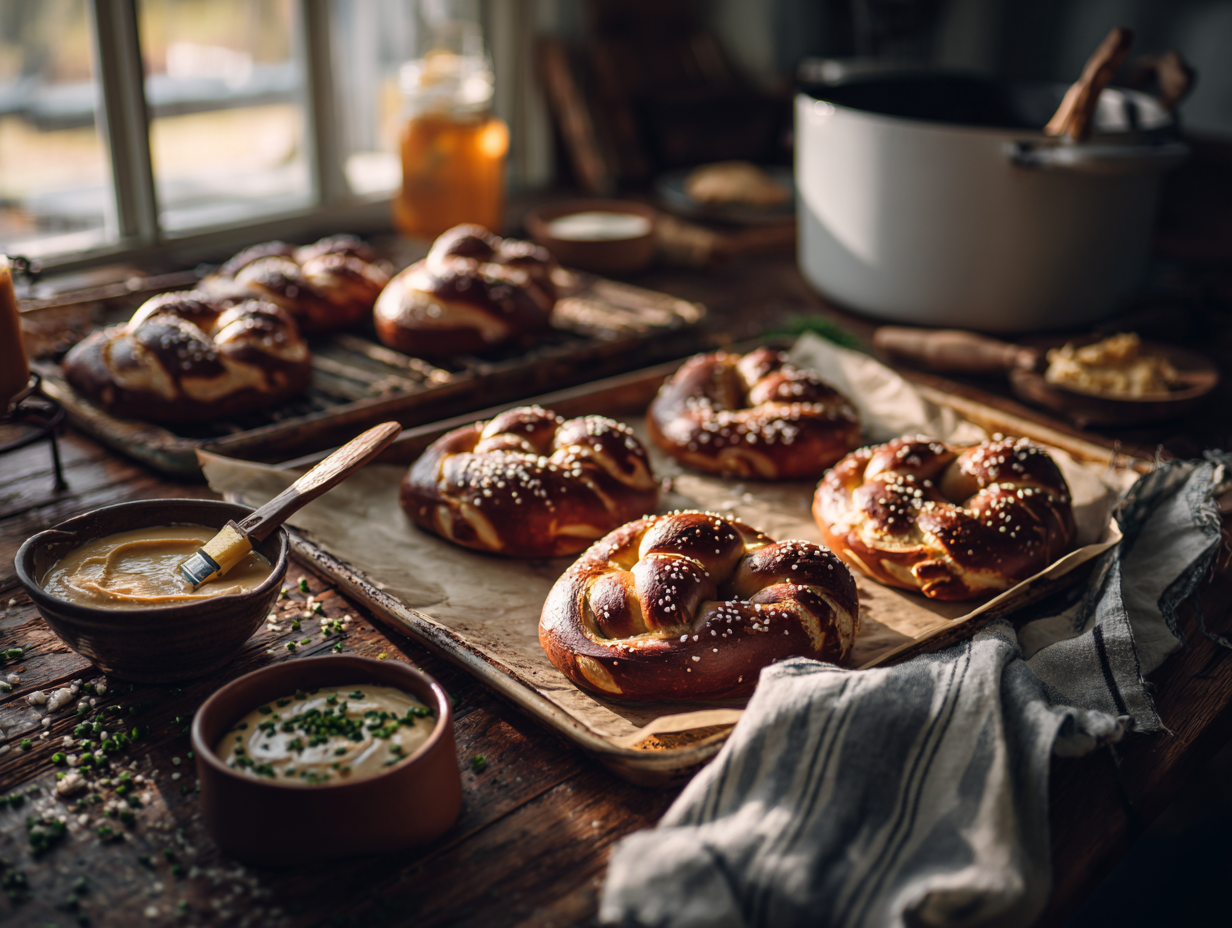
These are soft pretzels with a genuine bronze crust and chewy crumb, made start-to-finish in about 40 minutes using a baking-soda bath instead of lye. Bread flour and a little butter keep the inside tender without making the dough fussy. If you want something warm and shareable on a weeknight without a pile of dishes afterward, this is a solid choice.
Before you start
The baking-soda bath is the one step that separates these from plain bread rolls, so get your pot of water heating before you shape a single pretzel. The bath needs to be at a low boil — not a simmer, not a rolling boil — and each pretzel goes in for 20 to 30 seconds per side. Rushing that step or skipping it entirely means you’ll get a pale, soft crust with no pretzel flavor. The other thing that matters: water temperature for the dough. Too hot (above 120°F) and you kill the yeast before it does anything; too cool and the dough won’t come together in time. A kitchen thermometer takes the guesswork out of both steps and is the only extra tool worth grabbing.
Ingredient notes
- Baking soda for the bath: Use plain baking soda, not baking powder. Some recipes call for baked baking soda (toasted in the oven first) for a stronger alkaline effect — it works, but the standard version is fine here and saves you a step.
- Bread flour: The higher protein content gives the pretzels their chew. All-purpose flour works in a pinch but produces a noticeably softer, less chewy result.
- Brown sugar: A small amount feeds the yeast and adds a little color. Honey is a direct swap if that’s what you have open.
- Coarse salt topping: Pretzel salt or kosher salt both work. Table salt dissolves too fast and turns gummy — skip it for the topping.
What can go wrong
- Pretzels puff up but stay pale: The baking-soda bath wasn’t hot enough, or the pretzels didn’t stay in long enough. Make sure the water is at a low boil and time each side — 20 seconds minimum.
- Dough tears when shaping: The gluten is too tight. Let the dough rest uncovered for 3 to 4 minutes before you roll it out. It will relax and stretch without snapping back.
- Bottoms are soggy or stick to the pan: Parchment is non-negotiable here. The baking-soda bath leaves a residue that welds wet dough to an unlined pan. Lightly oiling the parchment adds extra insurance.
- Crust is chewy but not crisp: The oven wasn’t fully preheated. At 450°F the crust sets fast; if the oven is still climbing when the pretzels go in, you lose that snap.
- Salt falls off after baking: Press the coarse salt in gently right after the egg wash, before baking. Salt added after the oven has no adhesive to hold it.
Storage and reheating
Soft pretzels are best the day they’re made — the crust softens noticeably within a few hours. If you have leftovers, store them uncovered or loosely wrapped at room temperature for up to one day; airtight storage traps steam and makes them rubbery. For longer storage, freeze them individually on a baking sheet, then transfer to a zip bag for up to one month. Reheat straight from frozen in a 350°F oven for 10 to 12 minutes — skip the microwave, which turns them dense and chewy in the wrong way. A quick 5-minute oven refresh works well for day-old room-temperature pretzels too. Skip the garnish of extra salt before reheating — not worth the extra dish, and the original salt is still there.
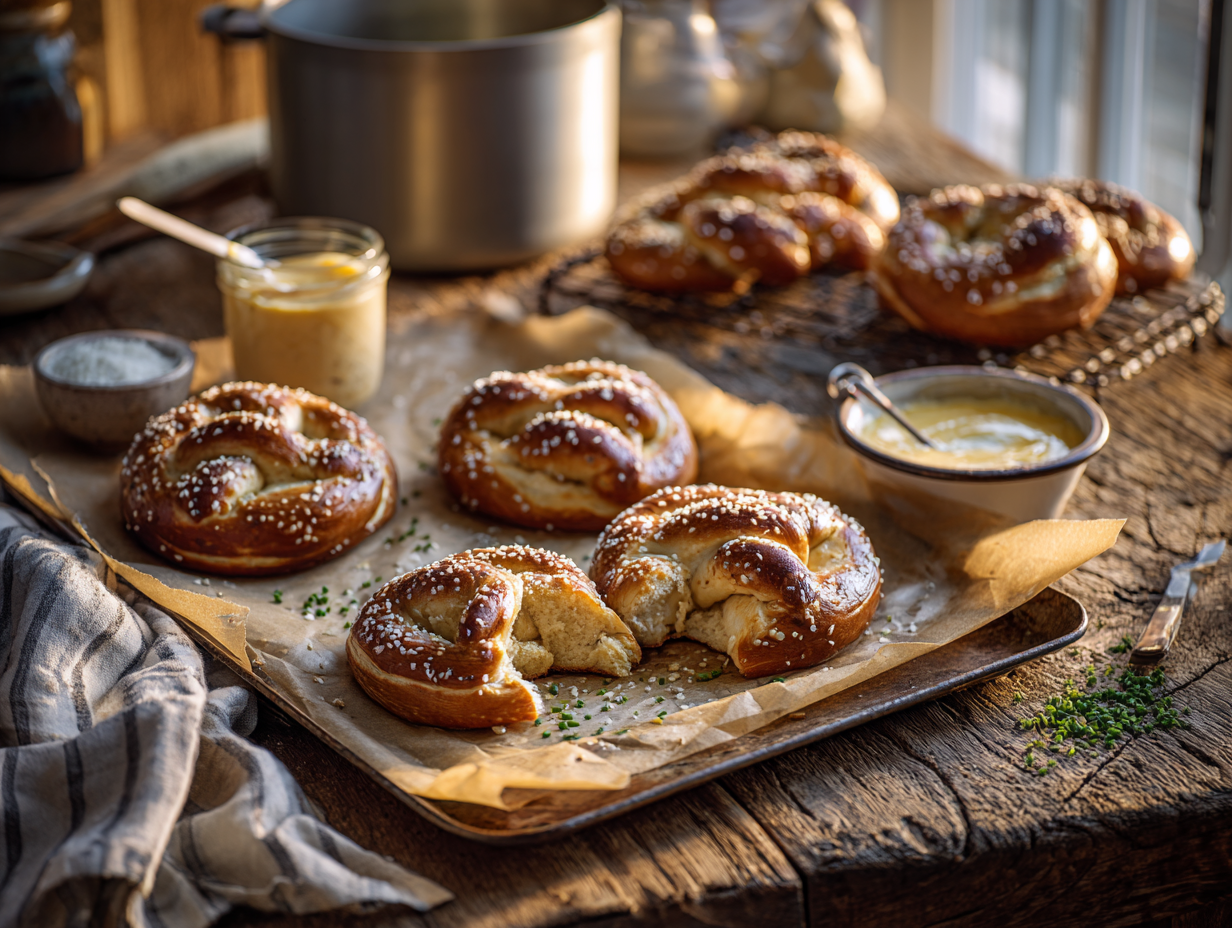
Quick Bavarian-Style Soft Pretzels (30–40 Minutes)

Equipment
- Oven
- Large mixing bowl
- Wooden Spoon or Dough Hook (stand mixer optional)
- Bench scraper or knife
- Measuring cups and spoons
- Wide pot or deep saucepan (at least 4-quart)
- Slotted spatula or spider
- Baking sheet
- Parchment paper
- Pastry Brush
- Wire Rack
Ingredients
For the Pretzel Dough:
- 1 cup warm water (110°F/43°C) warm like a hot bath—comfortably warm to the touch, not hot
- 1 tablespoon light brown sugar, packed honey works too for a floral sweetness
- 2 ¼ teaspoons instant yeast one 0.25 oz packet; SAF Red or Red Star recommended
- 2 ½ cups bread flour for classic chew; use all-purpose if needed. Keep up to 1/4 cup extra for dusting
- 1 teaspoon fine sea salt fine grind disperses evenly
- 1 tablespoon unsalted butter, melted and slightly cooled adds tenderness and flavor
For the Baking Soda Bath:
- 8 cups water enough to give pretzels room to float
- ¼ cup baking soda creates classic pretzel color and flavor
For Finish & Toppings:
- 1 large egg for egg wash; vegan option in tips
- 1 tablespoon water to thin the egg wash lightly
- 2 teaspoons pretzel salt (or coarse kosher salt) use pretzel salt for the classic crunch
- 2 tablespoons unsalted butter, melted optional for brushing after baking
Instructions
- Preheat the Oven: Heat to 450°F (232°C) with a rack in the middle. Line a baking sheet with parchment.
- Make the Dough (5–7 minutes): In a large bowl, combine 1 cup warm water (110°F/43°C), 1 tablespoon packed light brown sugar, and 2 1/4 teaspoons instant yeast. If using active dry, let sit 5 minutes until foamy; instant yeast can be used immediately. Stir in 2 1/2 cups bread flour, 1 teaspoon fine sea salt, and 1 tablespoon melted butter until a shaggy dough forms.
- Knead (3–4 minutes): Turn the dough onto a lightly floured counter. Knead with the heel of your hand—push, fold, rotate—until smooth and slightly springy. The dough should be soft, barely tacky. If sticky, dust with up to 1–2 tablespoons extra flour as needed.
- Rest (5 minutes): Cover the dough with a bowl or towel and let it relax. This short rest makes shaping faster and smoother.
- Prepare the Soda Bath: In a wide pot, bring 8 cups water to a gentle boil over medium-high heat, then carefully add 1/4 cup baking soda. Maintain a lively simmer, about 205°F (96°C).Tip: Add soda slowly to avoid foaming over.
- Portion and Shape (8–10 minutes): Divide dough into 6 equal pieces. Working one at a time, roll into a 22-inch rope, slightly thicker in the middle. Make a U-shape, cross the ends twice, then fold the twisted ends down to the base and press to seal—a classic pretzel knot. If dough resists rolling, let it rest 1 minute to relax.
- Dip in Baking-Soda Bath (about 8 minutes total): Working in 2–3 pretzels at a time, simmer each pretzel for 20–30 seconds per side until slightly puffed. Lift with a slotted spatula, drain well, and place on the lined sheet. Surface will look slightly tacky—perfect for the glaze.
- Glaze and Season (1–2 minutes): Beat 1 large egg with 1 tablespoon water. Brush pretzels all over and sprinkle with pretzel salt.
- Bake (10–12 minutes): Bake at 450°F (232°C) until deep mahogany brown with a glossy crust and hollow sound when tapped on the side, 10–12 minutes.
- Finish: For a bakery-style sheen and flavor, brush hot pretzels with 2 tablespoons melted butter (optional). Cool on a wire rack for 5 minutes to set the crust.
Notes
Lisa’s Tips:
- No Egg? Brush with milk, cream, or olive oil for color; for vegan, use aquafaba (chickpea liquid) as a wash.
- All-Purpose Flour Swap: Use the same amount; knead 1 minute longer for extra chew.
- Malt Note: Add 1 teaspoon barley malt syrup in place of sugar for classic beer-garden depth.
- Extra Dark Crust: Increase bath time to 45 seconds per side or bake 1–2 minutes longer, watching closely.
- Flavor Twists: After the wash, try everything bagel seasoning, cinnamon sugar (brush with butter after baking, then toss), or sesame seeds.
- Shaping Help: If ropes spring back, cover and rest 2 minutes; the gluten will relax and roll easily.
- Pro Tip for Faster Bronzing: Bake on a preheated, inverted sheet pan or pizza steel to jump-start oven spring and color. Keep the baking-soda bath at a lively simmer—not a rolling boil—to prevent rough surfaces.
Serving Suggestions:
- Classic: Serve warm with grainy mustard—golden crust, snowy salt crystals, and steamy interior are your cues it’s perfect.
- Cheese Service: Pair with warm beer cheese or a sharp cheddar dip; the salty crust loves tang and richness.
- Board Style: Plate on a wooden board, nestle ramekins of mustard and pickles, and finish with a scatter of chives for a fresh green pop.
- Drink Pairing: Crisp pilsner, hefeweizen, or iced black tea with lemon.
Culinary Context:
Pretzels trace back to medieval Europe, with strong roots in Southern Germany (Bavaria) and Alsace. The hallmark alkaline dip historically used lye; our baking-soda bath safely mimics that chemistry for home kitchens, creating the unmistakable pretzel color and flavor. I fell for these on a chilly morning in Munich—steam rising into the winter air—and I’ve been chasing that aroma at home ever since.Optional Advanced Instructions:
- Make-Ahead: Shape pretzels, refrigerate up to 8 hours covered. Dip straight from the fridge, then bake 1–2 minutes longer.
- Freezer-Ready: Par-bake for 6 minutes, cool, freeze. Reheat at 400°F (204°C) for 8–10 minutes.
- Stand Mixer: Mix on low 1 minute, knead on medium-low 3 minutes for a super-smooth dough.
Timing:
- Prep Time: 20 minutes (0 hr 20 min) total for mixing, brief rest, shaping, and setup.
- Cooking Time: 20 minutes (0 hr 20 min): about 8 minutes for boiling in batches, plus 10–12 minutes baking.
- Total Time: About 40 minutes.
Nutrition
Common questions
Can I use active dry yeast instead of instant yeast?
Yes, but proof it first in the warm water with the sugar for about 5 minutes until foamy before adding the flour. Instant yeast can go straight into the dry ingredients; active dry yeast needs that activation step or the dough may not rise in time.
Do I really need to boil the pretzels before baking?
Yes — this step is what makes them taste like pretzels rather than bread rolls. The alkaline water gelatinizes the surface starch and creates the chewy, dark crust you’re after. There’s no shortcut that produces the same result.
My dough is sticky. How much extra flour should I add?
Add it a tablespoon at a time until the dough pulls away from the bowl sides but still feels slightly tacky — not dry. Over-flouring is the most common reason pretzels turn out dense; the dough should feel softer than you expect.
Can I make the dough ahead of time?
Yes. After the first mix, cover the dough and refrigerate it for up to 12 hours. Pull it out 15 minutes before shaping to let it come closer to room temperature, then proceed with the bath and baking as normal.
What dipping sauces work well with these?
Whole-grain or yellow mustard is the most straightforward pairing. Beer cheese (a simple mix of melted cheddar, beer, and a little mustard) works well if you have 10 extra minutes, and plain melted butter with a pinch of garlic salt is the lowest-effort option.
Can I double the batch without changing anything?
Yes, the recipe scales cleanly. The one adjustment: boil the pretzels in two or three batches so the water temperature stays consistent — crowding the pot drops the temperature and gives you uneven results.
If you liked this one
- Quick Soft Pretzels
- Quick Skillet Garlic Flatbreads
- Quick No-Yeast Beignets
- Quick Weeknight Calzone Recipe